The film asks what the unfinished play might have become and why the gaps exist.

Camila Brugés on bringing one of the masterpieces of Spanish-language literature to the screen.
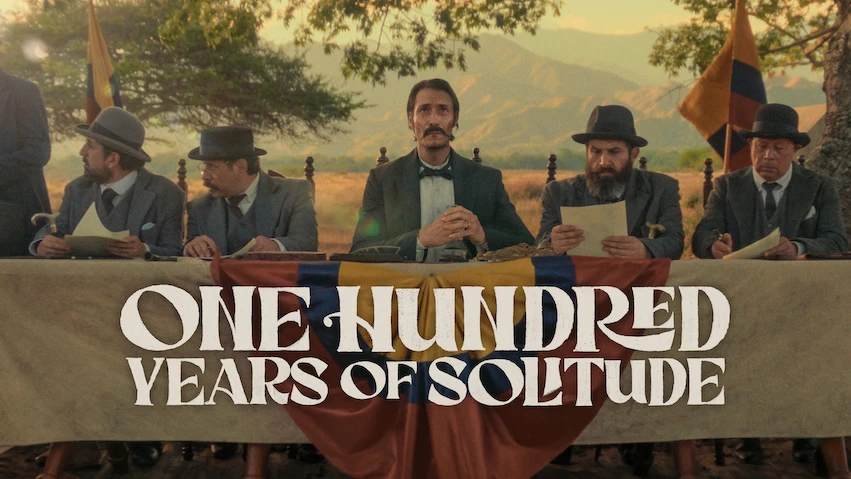
For Colombian writer Camila Brugés, working on the series adaptation of One Hundred Years of Solitude by Gabriel García Márquez was exactly what she expected: a process of the utmost rigor and intensity, not without its own — very necessary — delusions. “We had a million challenges, but there was always this certainty that we were going to make it. And I find that completely absurd,” the screenwriter says, laughing. “That seems to me like the greatest event of magical realism.”
But they did make it. The response was such that the show made it to the Global Top 10 of non-English series on Netflix. The writing team Brugés is part of is already working on the second season of a story that, until recently, was thought to be unadaptable. With prose that revives the folklore and oral tradition of the Caribbean, One Hundred Years of Solitude is a portrait of a family through several generations, but also tells the evolution of a town over a hundred years of Colombian history.
Bringing the novel to the screen was an involved process, as it features around 50 significant characters. To further complicate things, the narrative is nonlinear, jumping through time. “Organizing the events chronologically … was like having a clean slate,” says Brugés. “The great epiphany was asking ourselves, ‘What are the dramatic arcs of the characters?’ ”
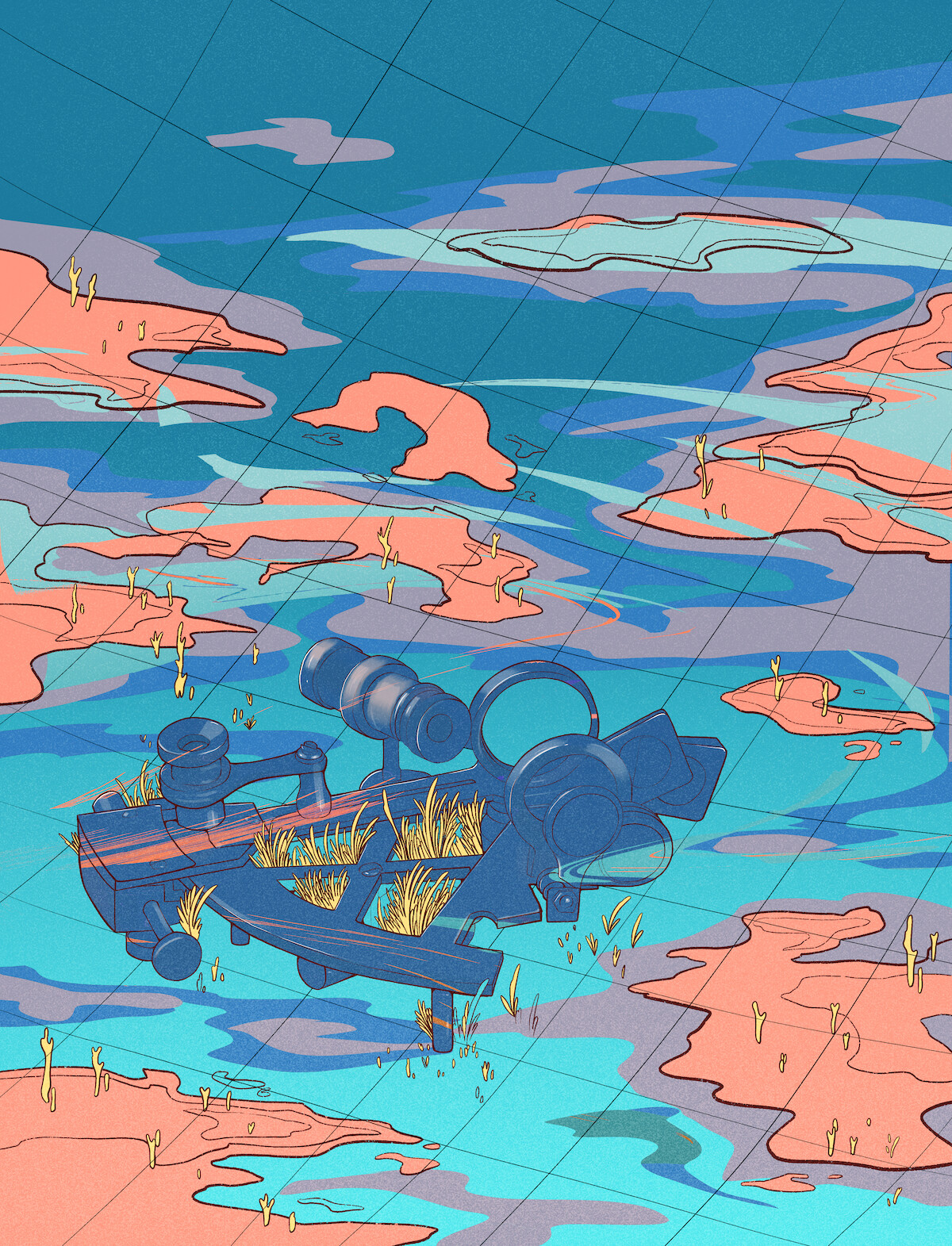
José Arcadio Buendía’s sextant
Brugés, who is also a playwright, says that this angle was key. Focusing on the lives within the story, rather than just the sequence of events, allowed the writers to enter the complex universe conceived by García Márquez. Maneuvering the ebb and flow of the novel’s dizzying pace, the writer and her colleagues undertook the laborious task of tracing the life lines of José Arcadio Buendía, his wife Úrsula Iguarán, and their many descendants, understanding their motivations, their conflicts, and the defining moments of their existence.
The first part of the series, composed of eight episodes, recounts the beginnings of the town of Macondo, and introduces the first generations of the Buendía family. But time is unforgiving, and the writers are now preparing to bid farewell to main characters who have grown old.
While penning the second part, Brugés sat down with Queue to discuss new challenges, and how the team navigated the seemingly impossible task of bringing the novel to the screen.

Lab equipment procured by José Arcadio Buendía
One of the biggest decisions we made from the beginning was to give Úrsula the point of view of this story, even though it remains a collective one. When you see her life, you realize that she has seen it all. And she is also the driving force behind one of the story’s major motors, which is the fear that a curse will come true, causing them to leave and build Macondo. Úrsula consistently shows us that it was her who set the plot in motion, always using her own tools. So, in the series, she becomes a character that articulates the structure and the action in general. And the same goes for the other women, who acted in relation to Úrsula, as they were the ones who challenged her authority.
We wanted to make a faithful adaptation. But we wanted people to feel like they were watching the novel, not a series inspired by it, which is something different. The question was, “How do we translate the tone, the fast-paced rhythm of the novel?” And that was a big conversation with the directors, because as screenwriters we want moments to slow down, to let the story be felt, to make it hurt, while the directors are more visual. They said, “No, we have to go with the novel’s fast rhythm, moving forward.” I think we managed to strike a balance.
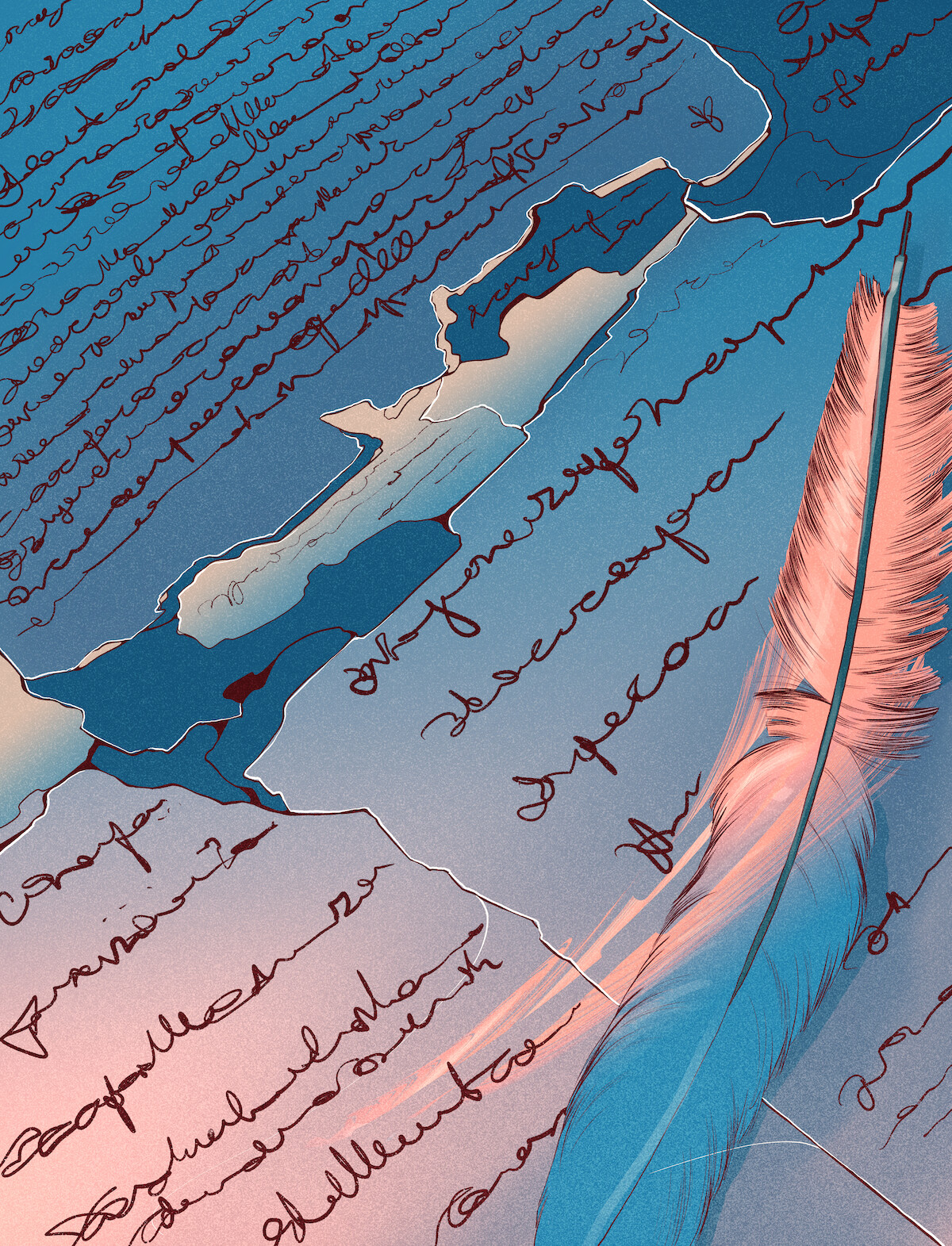
Melquíades’s manuscript
It seems like there’s a collective memory of One Hundred Years of Solitude even for people who haven’t read it, because the images of butterflies, flowers, and all those beautiful and magical elements have spread. But the events that take place in the novel are actually terrible — it’s a tragedy. García Márquez makes hard reality coexist with magical elements, which is how people speak in the Caribbean.
If you are adapting a literary work, you have to ask yourself what it is that you truly want to carry from one place to another, and stick to that decision. At first, we didn’t want to have a narrator, but soon we realized that the voice of the novel wasn’t translating. So we had to accept the narrator’s voice. We tried to set rules: We wouldn’t use it to explain things or move the story forward, as in, “Thirty years later … ” On the other hand, sometimes I wish I could copy-paste that voice, which is magnificent, and have entire scenes described by it. But we can’t do that. It’s untranslatable.

Aureliano’s gold fish
We all thought it was going to be easier to write. But the truth is, it’s a completely different story. A different historical moment, a new generation of characters. Cinema arrives in Macondo, as well as electricity, the army, and the Americans. As screenwriters, we’re holding on to the certainties of what we think worked, which is that we always have to ask ourselves what is happening to the characters. That has to be our compass, staying true to our intuition.