Explainer
Does Mizu Get Her Revenge at the End of Blue Eye Samurai Season 1?
“Mizu makes her best and worst decisions for the purposes of revenge.”
Dec. 8, 2023
One down. Three to go.
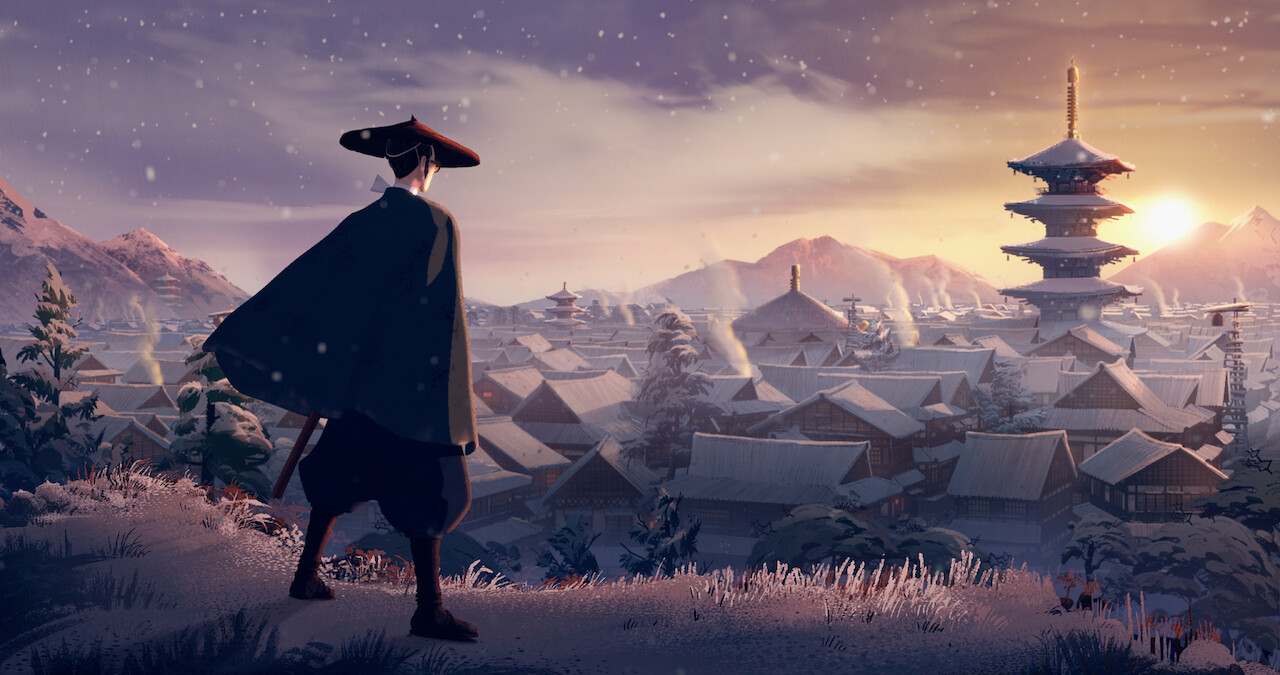
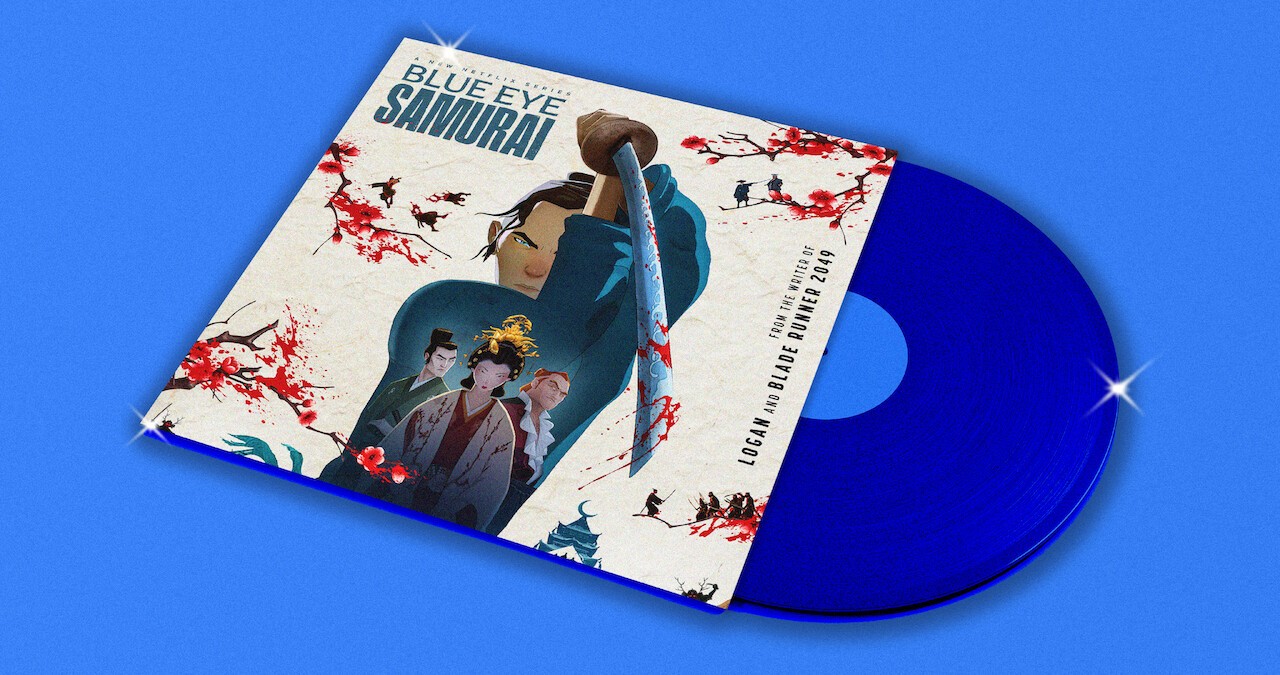
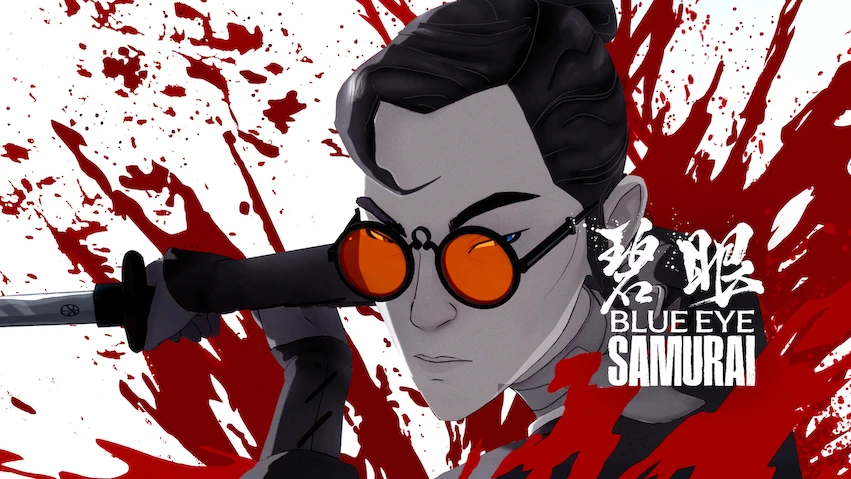
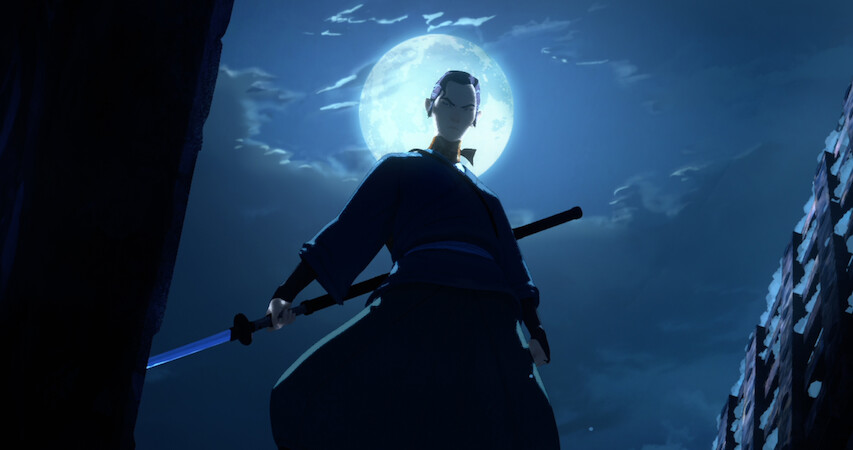
That’s how we meet mixed-race master of the sword Mizu (voiced by Maya Erskine) in Blue Eye Samurai — in the midst of her quest for vengeance on her four potential fathers. All of whom were the only white men in 17th-century Edo-period Japan during the time of her birth.
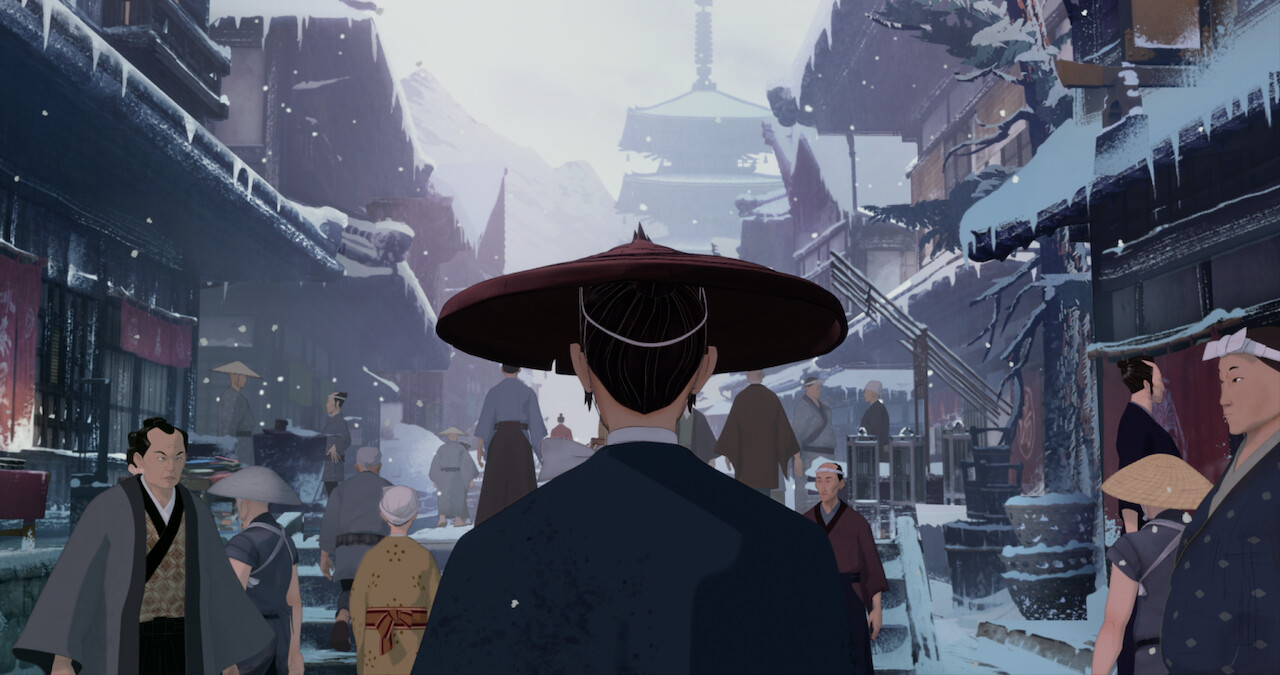
Blue Eye Samurai takes place in an era when Japan’s borders were closed to the outside world so citizens would never see a face that wasn’t Japanese (except in rare cases of illegal trade). Because of Mizu’s inherited blue eyes, she’s treated as if she’s “less than human,” “pitiable,” “monstrous,” and a “creature of shame.” And that cannot stand. As a woman, she wouldn’t be allowed to pursue her enemies. So she disguises herself as a man, ready to inflict her justice by whatever means necessary.
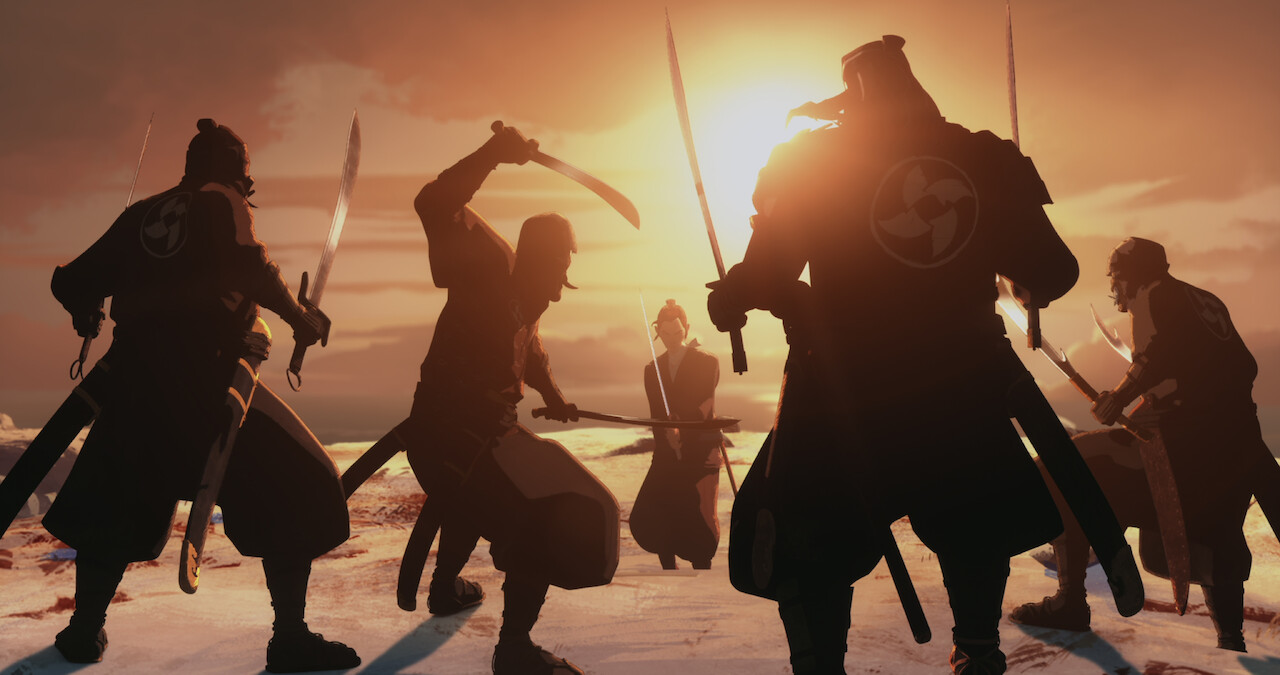
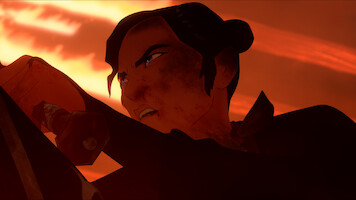
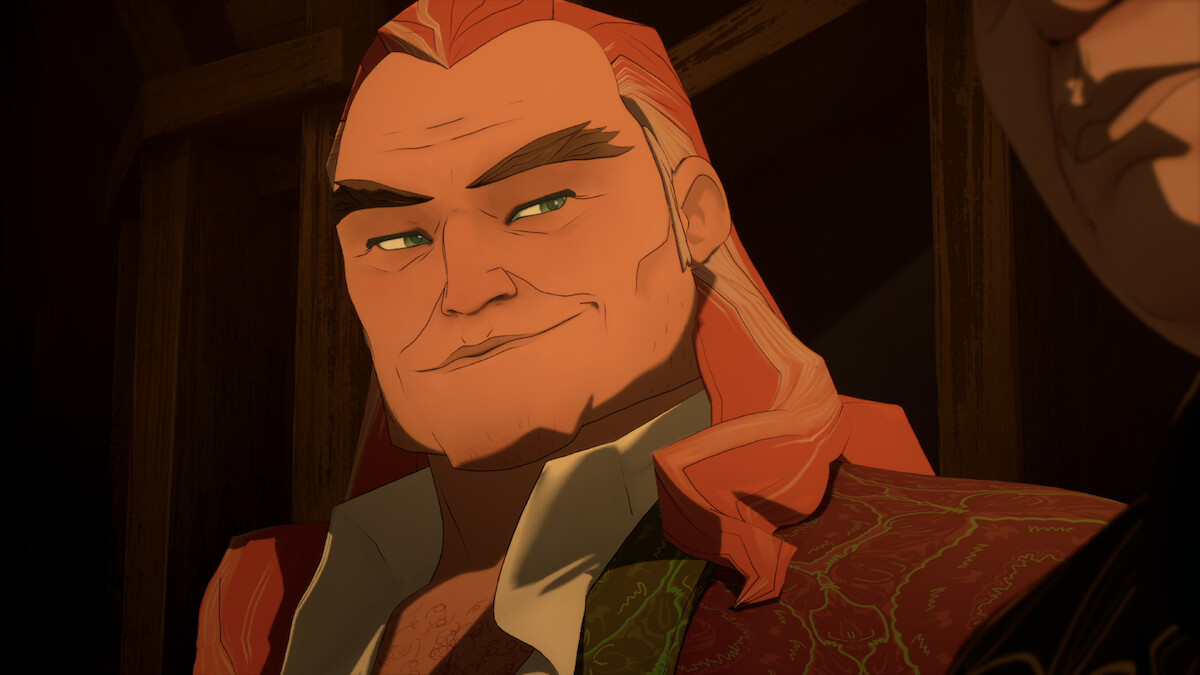
She’d already killed one man, Violet, before the events of Season 1, and, by the finale, she has Irishman Abijah Fowler (Kenneth Branagh) in her clutches. Amidst a blaze of fire and fury, she’s about to strike… but spares him. Why?
Let’s unpack that fiery ending to Blue Eye Samurai Season 1 below.
“The short answer is Mizu makes her best and worst decisions for the purposes of revenge,” said co-creator Michael Green. In this instance, she spares Fowler because he has the information Mizu needs to find the other two men on her hit list, Skeffington, who’s tall like she is, and Routely “with his pretty eyes.”
“She fully plans to kill him, but she needs him first,” said Green. “He has function, he’s a road map to the others.” Fowler’s near-death revelations are too tempting for Mizu to resist, since he knows her life’s mission is to find out who tried to murder her as a baby after impregnating her mother (not the abusive woman who’d raised her, who Fowler reveals was actually her mother’s maid). And only he has the magic answer as to where they’re hidden: London.
You bet. “There’s adventure to be had,” said Green. “We have Season 2 broken and hope enough people turn out that we get to make it.”
The last we see of Mizu in Season 1 is her on the deck of a ship, wind in her hair, and Fowler locked away in the bowels of the vessel below as they sail off into the distance. “It would be an interesting part of Mizu’s personal journey to see how Europeans react to her,” said co-creator Amber Noizumi. “What would she think of Western culture when she’s suddenly immersed in it? Are they all the monsters she thinks they are?”
After Mizu has Fowler pinned in the finale, he tells her, “The biggest city in the world is burning to the ground as a blood sacrifice to your revenge.” The Great Fire of Edo in Blue Eye Samurai begins when Mizu tosses a candle in front of Fowler so he can’t escape, setting Edo Castle aflame and, later, the entire city of Edo.
Although how the fire starts in the series is fictional, the Great Fire of 1657 in Japan was very real. It is also known as the Furisode Fire and the Great Fire of Meireki. The fire raged for three days and is estimated to have killed over 100,000 people — at least a quarter of Edo’s population at the time. “We really gave ourselves over to the realities of the time, and there were a lot of fortuitous accidents that helped us,” said Green. “When we found out that [the Great Fire of 1657] took place at the time, we were like, ‘Oh my God, that's our finale.’ ”
Production designer Toby Wilson told Tudum that historically, there were three versions of Edo Castle and all three burned down. “Our depiction, and also historically, the actual fire burned down the last incarnation of the castle,” he said. “It was the largest castle structure in Japan at that time.”
Episode 8 was the team’s fictional, not historical, interpretation of what happened.
The myth that kept coming back to the team over and over again in their research tells the story of the “cursed kimono.” The kimono was cursed because “the woman who wore it was murdered,” said Wilson. “These priests at a shrine were keeping it at bay. They had fallen asleep on the job, and then the wind gust blew the kimono into a candle.”
If you watch the scene again, you may spot an Easter egg Wilson and his team hid as an homage to the folk tale — a kimono that has a phoenix, or “fire bird,” on it in the room that started the fire. You might also see the phoenix as a symbol for Mizu’s backstory, rising again from the ashes of her pain and still living through it. “I love that about Episode 5 and how they wrote the Bunraku [puppetry] story to mirror Mizu’s path,” said Wilson.
You learn how Mizu came to be called an onryō, and see the sliding doors version of the idyllic life she might have had long-term. “An onryō is a revenge demon, a revenge ghost, somebody who has died as a result of somebody’s betrayal,” said Noizumi. “We had this idea that Mizu would be called that because her blue eyes and her paler skin would [make her] appear like this dead ghost to people who wouldn’t recognize that.” And they loved that she would in effect become a revenge demon.
So Noizumi asked herself, “What’s a story that creates a revenge demon? What could make her that angry?” And not just internalized hatred. Enter: Love, poisoned by betrayal. Betrayal by your husband who you’d grown to love and the woman who you thought was your mother. Believing no one could ever love you for who you really are.
Blue Eye Samurai chose to tell Mizu’s origin story of badassery and rage she uses to hype herself to fight through the storytelling medium of the day, Bunraku puppetry, intercut with her present-day fight against the Thousand Claw Army of thugs. It’s Green’s personal favorite story in the whole show, and Noizumi wrote it all down in one sitting. “She pitched it out, the entire thing, top to bottom, broken in one sitting, and my mouth dropped,” he said.
Honorable samurai Taigen (Darren Barnet) and Mizu may have been enemies as children, but if you detected an undeniable chemistry between them, then you’re right on the money. “Taigen is a brash, selfish character who has never really had to look outside himself. And Mizu is a character that forces him to see something greater than himself. At first, he’s frustrated by it, but maybe he starts to have feelings he doesn’t understand,” said Green. Taking a look at Mizu’s perspective now for the first time since childhood, “it makes him re-evaluate everything he thought he knew about himself and about what’s important in his world.”
Noizumi has likened Blue Eye Samurai to “Kill Bill meets Yentl,” and Taigen and Mizu’s relationship is where Barbra Streisand’s film of a woman disguising herself as a man to study the Torah and finding love with her male study partner (Mandy Patinkin) comes in. “We are big fans of Yentl, and the idea of falling for someone and not knowing why or how became very appealing,” said Green.
Just like nobody cared more about studying the Torah in Yentl than the two of them, Mizu and Taigen’s connection builds from how they both cared so much about sword fighting. “Nobody cared more about being a great swordsman than Mizu. And Taigen — it was for different reasons — but the two of them could have this meeting of the minds, this meeting of the swords, that they could not share with anybody else,” said Noizumi. “Whether that ended up being a great love story, that’s a question for another day, but they were always bound to connect on that level.”
As Taigen tells Mizu in the finale, “We’re not done yet.”
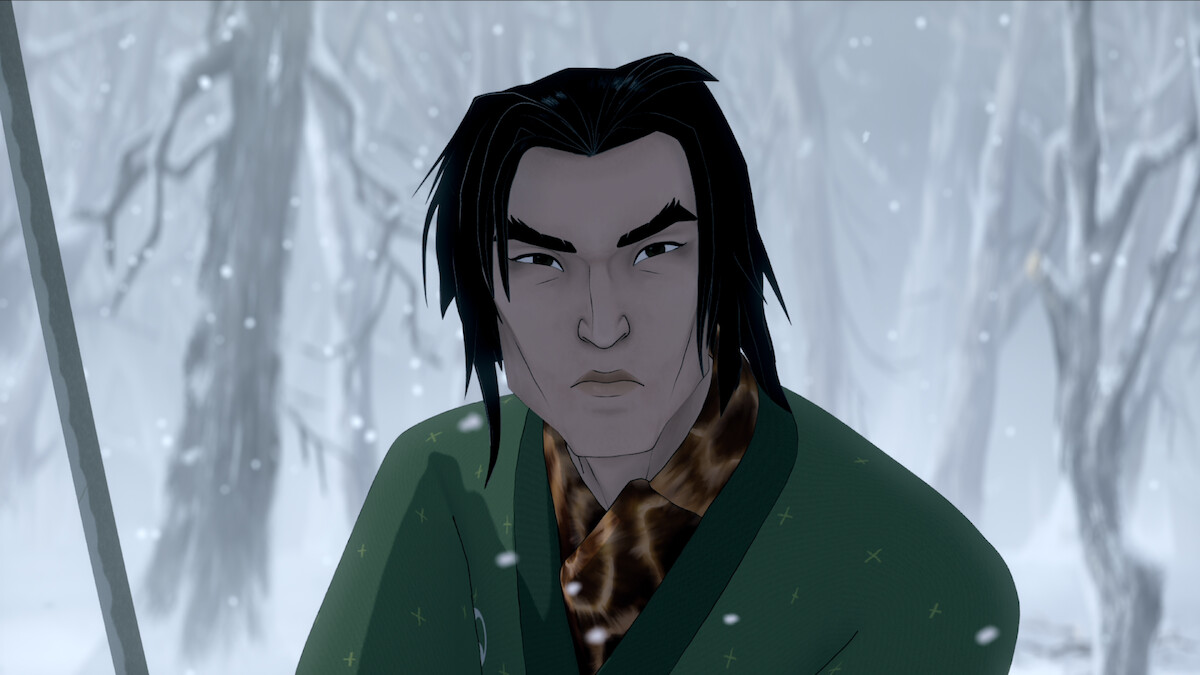
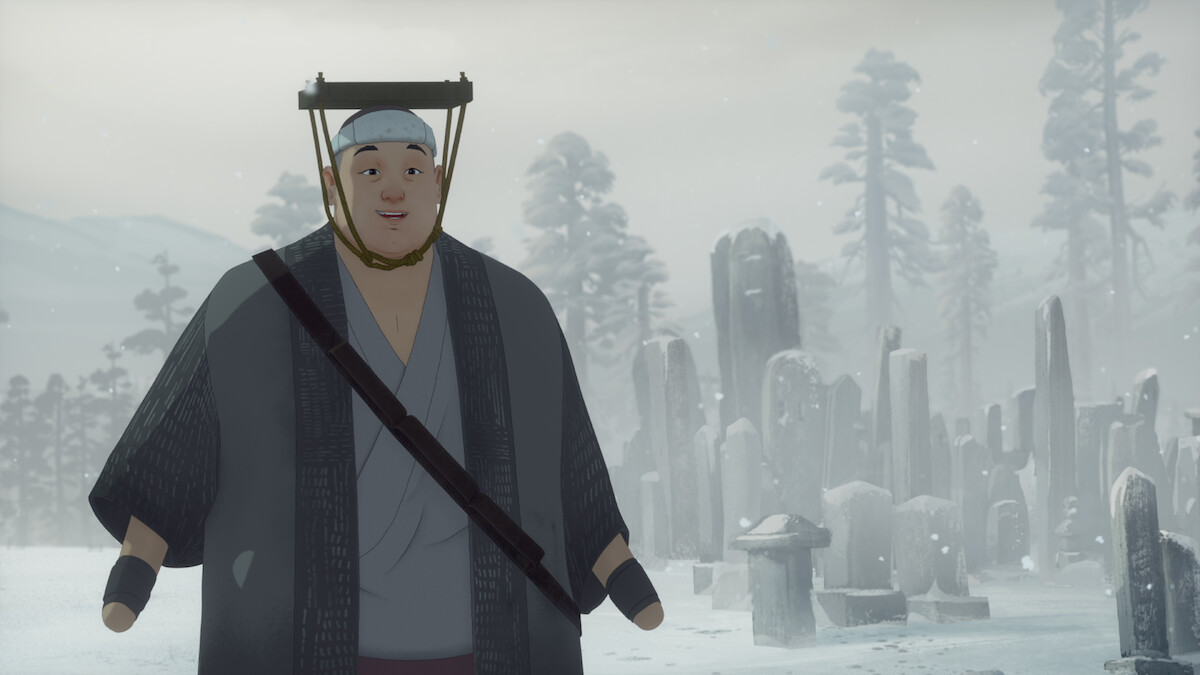
Born without hands, soba maker Ringo (Masi Oka) follows Mizu on her revenge quest, in the hope of becoming a great samurai like her. He repeatedly shows how useful he is along the way, and essentially acts as her conscience. He’s also one of the only characters to know that she’s a woman. “We always wanted everyone to know he was the heart of the show,” said Noizumi.
They both offer each other unconditional acceptance. “Mizu has never had a single person in her life who has truly known all of her secrets, and not only accepted, but admired her for it. And Ringo, it’s the same thing, but he wants to be useful, and she allows him to be that,” she said. And that support allows him to begin his own path of greatness.
Princess Akemi (Brenda Song) is Mizu’s foil in Blue Eye Samurai. In the series, Akemi represents the caged woman. “When you meet her, she is in a palanquin that has bars. And there’s gold. It’s literally a gilded cage that she lives in,” said Noizumi. And her arc sees her try to find a way to break out of that cage.
“She’s our princess, and we weren’t telling a Disney story,” said Green. “We want our princess to grow up in a very different way and to wrest control of her own destiny in a very brave, difficult way. That takes time. But first, she had to figure out what her own ambition is, and then she had to figure out how to accomplish it.”
As she and Mizu learn from each other throughout the series, Akemi is an example of the limited options available to women at the time. “In that time, women didn’t own their freedom,” explained Green. “They belonged to their fathers until the day they belonged to a husband, or were sold into either physical slavery or physical work or brothel. Her best options are the best options available, and they’re still terrible by modern standards.”
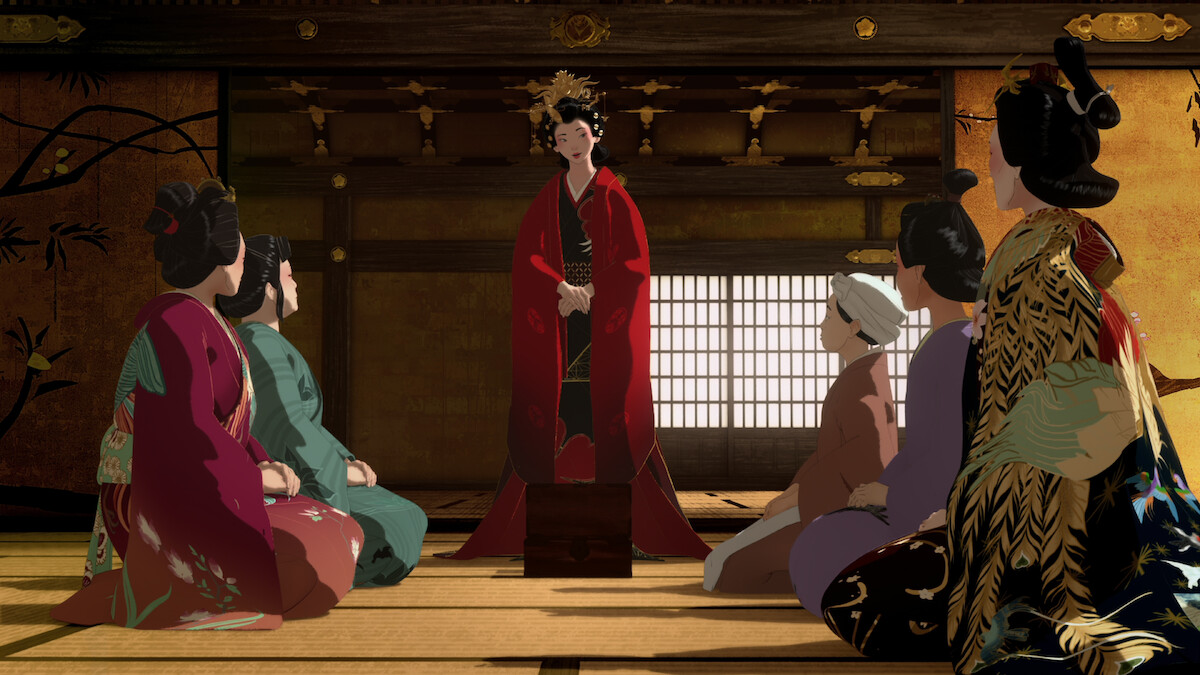
Both women seek control society doesn’t permit them to have. All of Akemi’s goals are about “controlling her life, controlling her body, and essentially, that’s what Mizu seeks,” said Noizumi. “She had no control over how she was made and how she’s perceived, and she has no other option but to pursue this life of vengeance that this anger has led her to because she has no control.”
In case you were wondering, Mizu means “water,” and that was completely intentional.
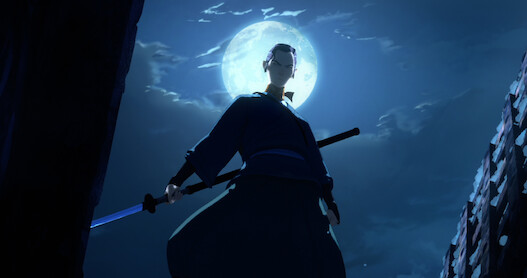
As she learns from the Swordmaker, every swordsmith has a signature hamon on their blade. A hamon is the result of the clay a sword maker puts on a katana that causes the blade to bend. “So if you look at Mizu’s sword, her signature hamon is in the shape of ocean waves,” said Wilson.
Think back to Episode 2’s title, “An Unexpected Element.” Yeah, that’s water, and it’s what helps Mizu win her final duel with Chiaki (Mark Dacascos). “It’s the sound of the ocean waves that helps center her so she can, after being injured, still come out the victor. She found her power and her energy from water,” said Wilson. Every hallucination Mizu faces in her race up to the top of Fowler’s castle in Episode 6 is water-based, too. Not only does this warrior move through life like water — it’s what fuels her.
After viewers finish Blue Eye Samurai, Green hopes that a lot of people say, “ ‘I can’t believe my favorite show this year was animated,’ ” he said. “I want people to be surprised that they love it, and then go tell everyone about it.”
Stream Blue Eye Samurai now, only on Netflix.