Interested in how the team behind The Dinosaurs balanced cutting-edge science with cinematic storytelling to create one of the most accurate depictions of prehistoric life ever put to screen?
Showrunner Dan Tapster of Silverback Films and senior science researcher Dr. Tom Fletcher recently held an “Ask Me Anything” on Reddit with the dinosaur enthusiasts of r/Paleontology. This recap features excerpted questions and answers from that event, edited for clarity. The full AMA is available to read here.
Here are the highlights:
Looks may be one thing, but how do scientists know how dinosaurs behaved?
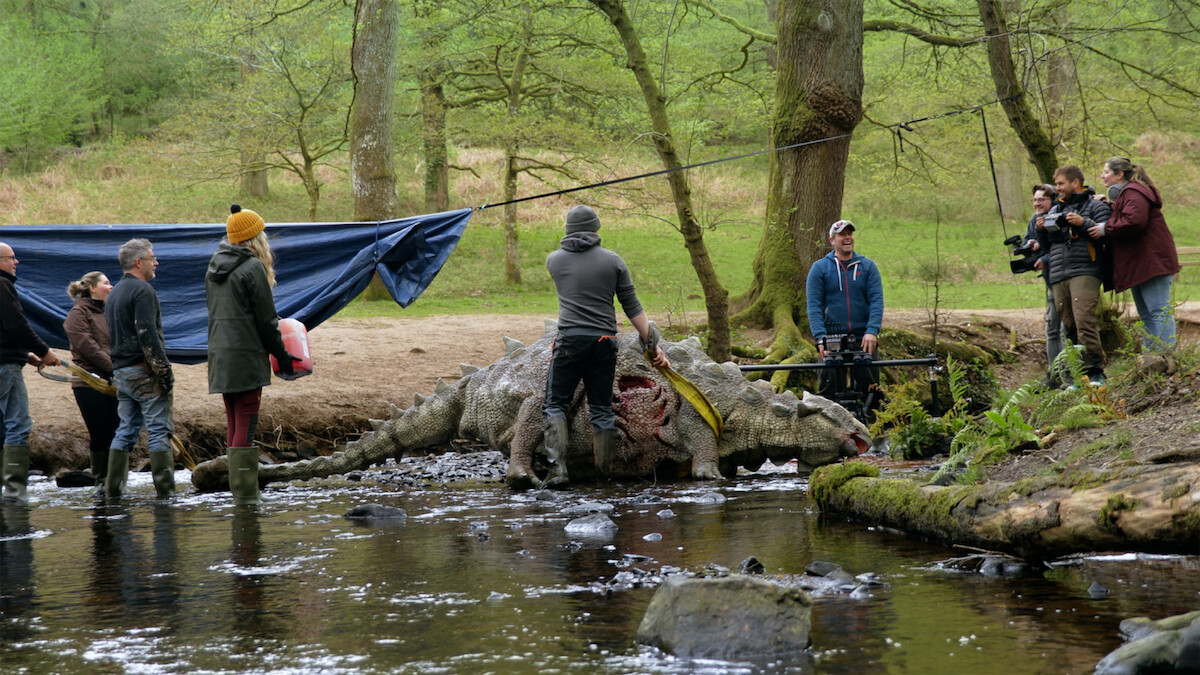
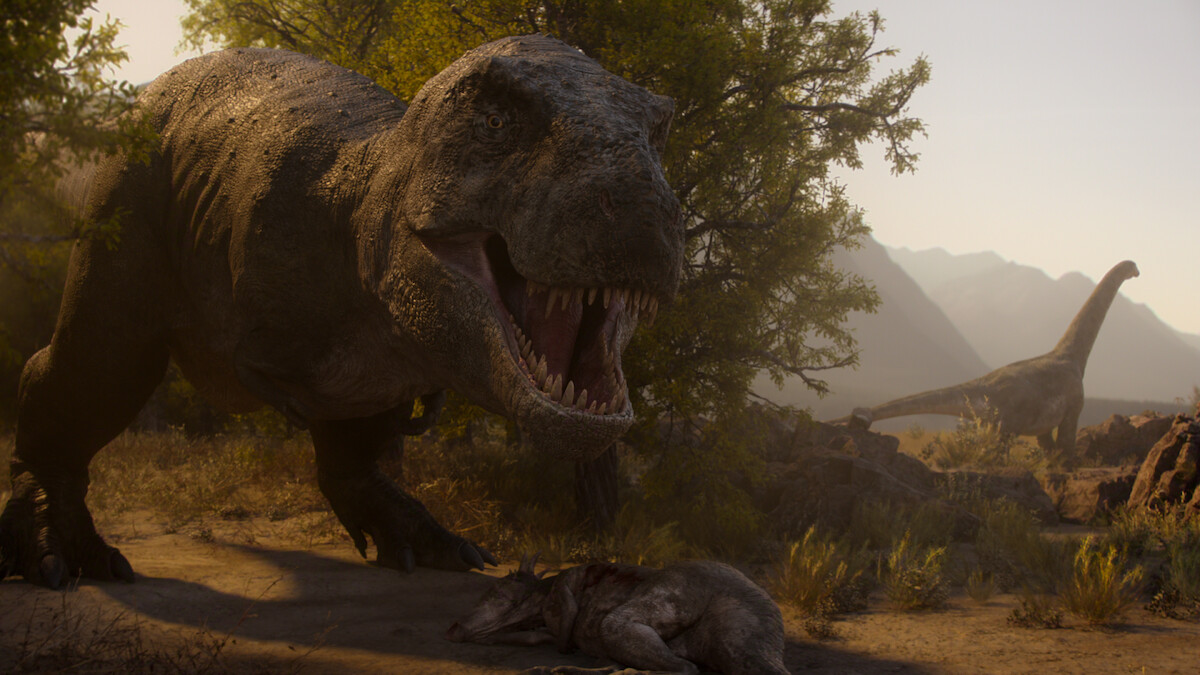
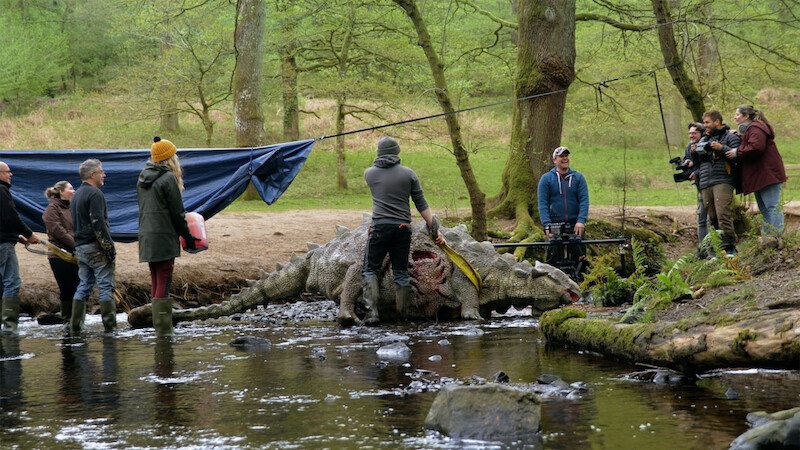
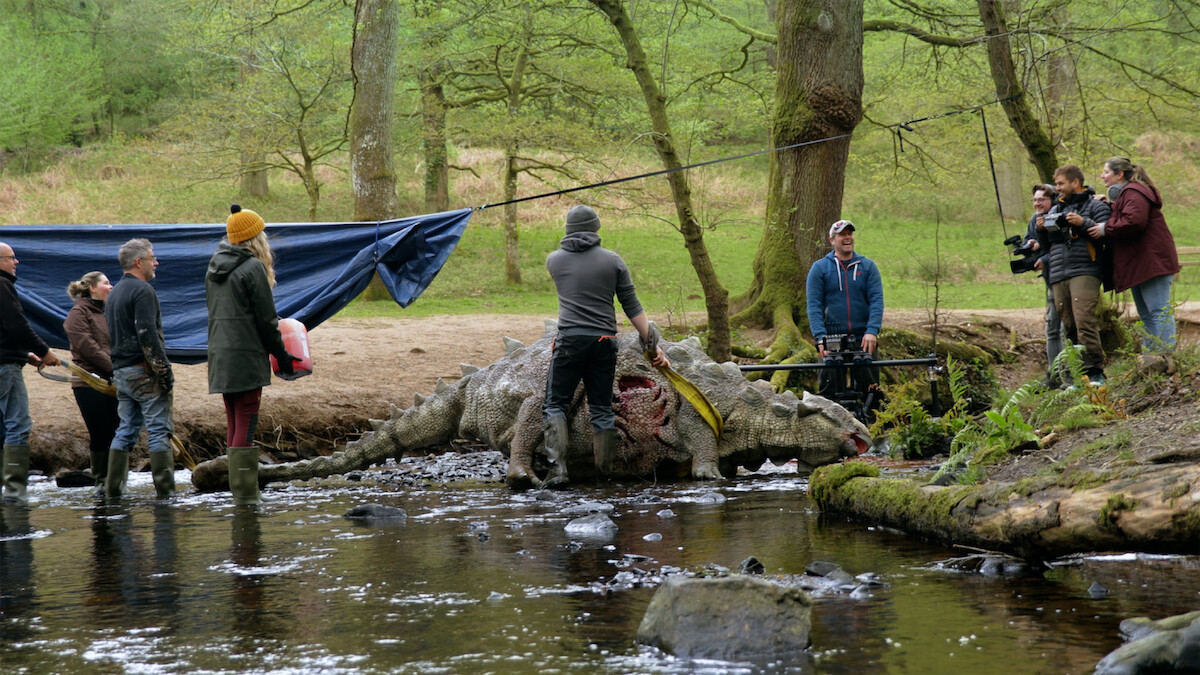
One of the most upvoted questions challenged a specific scene: Why would a mother T. rex go through the trouble of dragging an entire Ankylosaurus corpse back to her nest instead of eating on-site and bringing back a piece to her babies, like modern birds do?
Tapster’s response revealed the three-pronged approach the team used throughout the series:
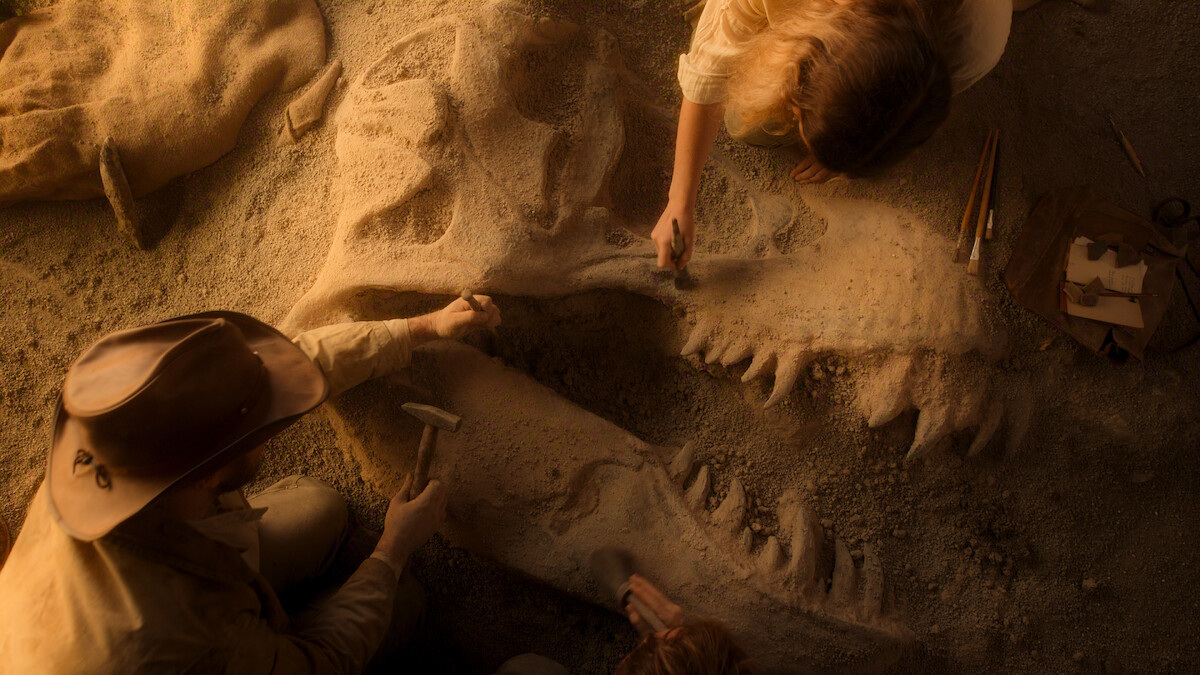
“Sometimes behavior does fossilize,” he explained, citing examples like a Hesperornis skeleton found inside a mosasaur, or Allosaurus bones bearing Stegosaurus tail-spike wounds. “There’s also trace fossil evidence — scratch markings made by theropods, most likely during courtship displays.”
The second line of evidence is phylogenetic bracketing — looking at the closest living relatives of dinosaurs (birds and crocodilians) to infer likely behaviors, while always “veering toward the mean” rather than highlighting outlier behaviors.
Finally, the team relied on decades of wildlife observation. “We’ve spent much of our adult lives observing wild animals,” Tapster said, “so we have a very strong intuition about what animals can and can’t do.”
For the T. rex feeding scene specifically, the team consulted multiple experts and found support in modern raptor behavior. “There are both birds and crocodilians that do ‘kill and take home,’ ” Tapster said. “One big drag can be more efficient than repeatedly leaving the nest to collect pieces. Once the carcass is there, the adult T. rex can regulate access and feed young over time.”
The team was particularly proud of showing “a softer side to T. rex,” a portrayal that earned acknowledgment from the paleontology community.
What happens when experts disagree?
Given paleontology’s inherent uncertainties, disagreement among researchers is inevitable. So how did the team navigate conflicting expert opinions?
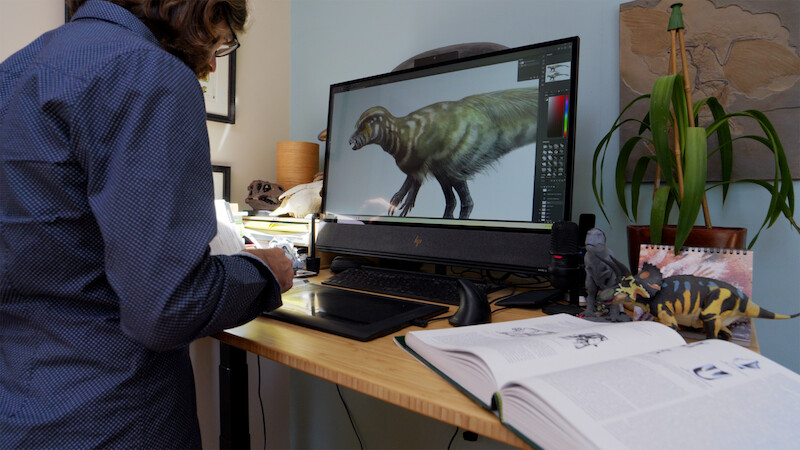
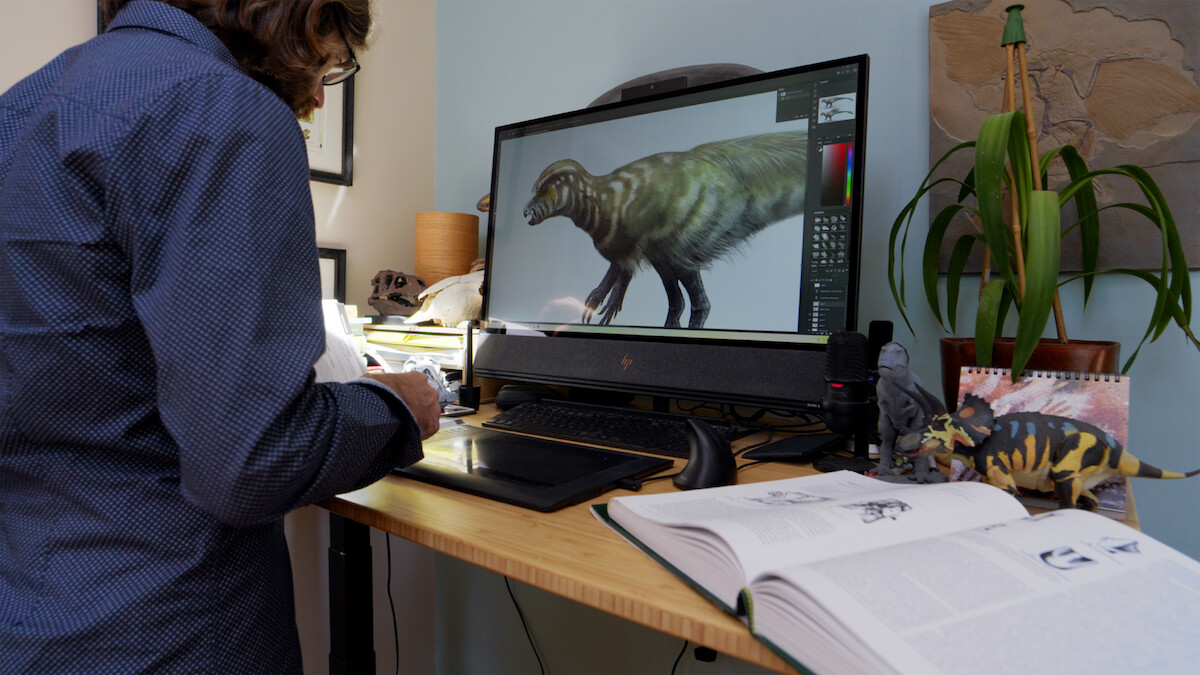
“Because of Tom’s guidance and the fact that most of the team are qualified scientists, we never veered into territory that was just ‘wrong,’ ” Tapster said. “But inevitably, we did veer into controversial areas. When that happened, we would refine and refine and refine until we landed on something where the consensus from our experts was well-supported.”
The guiding principle: “There’s no such thing as definitive in paleontology, but we always tried to veer toward the mean.”
How accurate are the visual details?
Redditors noticed some remarkably specific choices, and the answers revealed just how deep the research went.
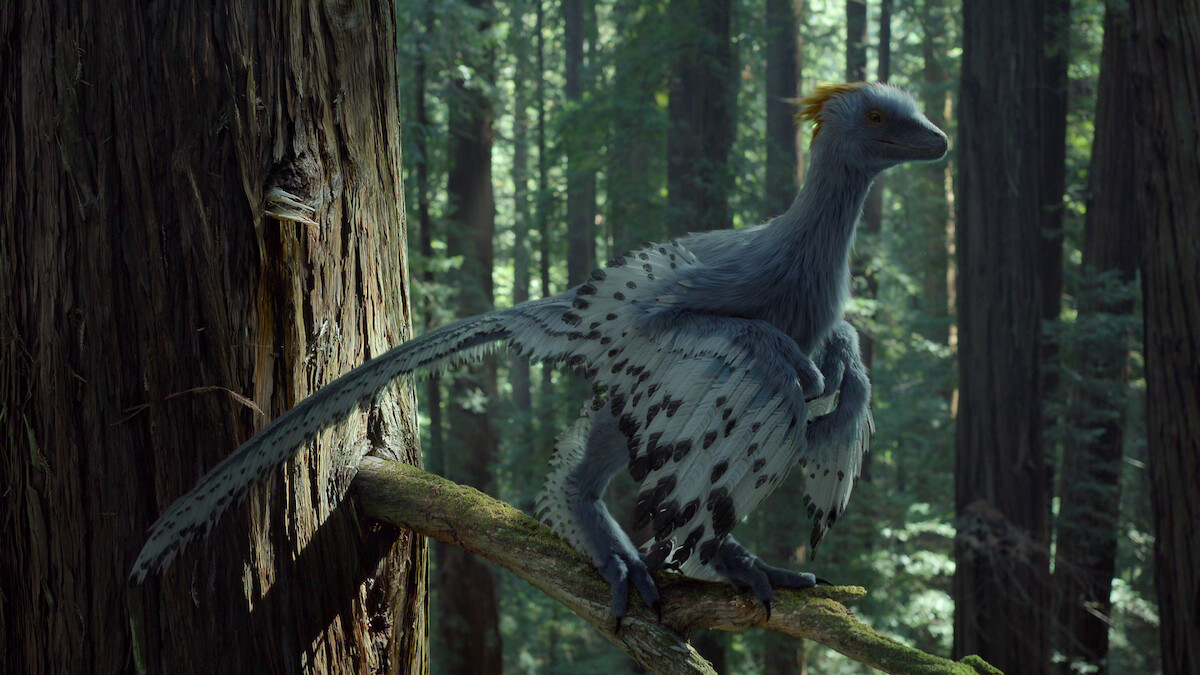
On Anchiornis’ blue coloring:
Dr. Fletcher explained that the feathered dinosaur is actually gray, “but the way light from the blue sky bounces off it makes it appear more blue.” The team consulted with paleontologist Jakob Vinther and others, using research from his 2015 review on paleo-color and the fluffier reconstruction from Saitta et al., 2018. “Details you’ll never see but are there!” Fletcher said.
On the singing Ankylosaur (Peloroplites):
One viewer asked if the vocalization sequence was inspired by the 2023 discovery of an Ankylosaur larynx. “It absolutely was, well noticed,” researcher Thomas Land confirmed. “Nodosaurs have less complex nasal passages and a more basal laryngeal structure than true Ankylosaurs, therefore Peloroplites were a little less bass-y and loud than Ankylosaurus — although with so many bony plates there would have been some epic resonance and reverb.”
On the moon’s appearance:
Eagle-eyed viewers may notice that in the first episode of The Dinosaurs, the moon is missing one of its most recognizable features, the massive Tycho crater — “the ‘smile’ in the ‘man in the moon,’ ” Fletcher said. The team consulted scientists at NASA’s Jet Propulsion Laboratory to determine which lunar craters existed during different time periods. Because the 85km-wide crater was caused by a collision around 108 million years ago, it’s missing from Episode 1’s Triassic scenes.
Why didn’t some well-known dinosaurs make the cut?
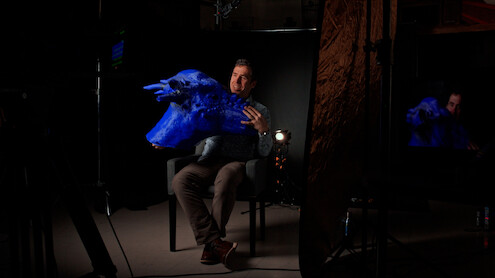
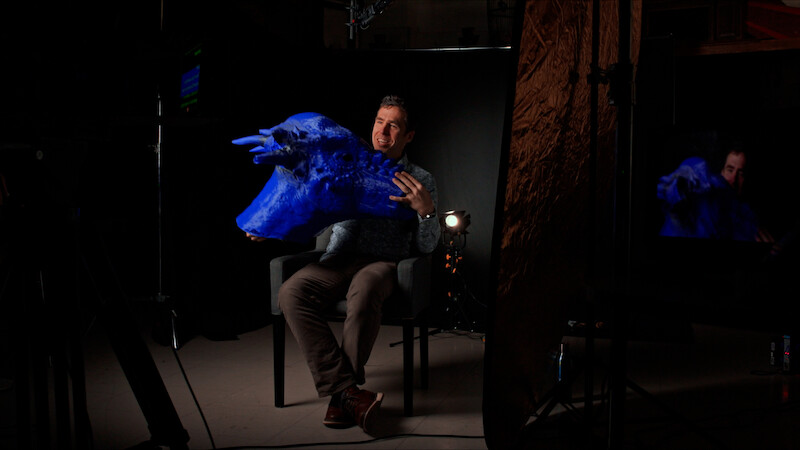
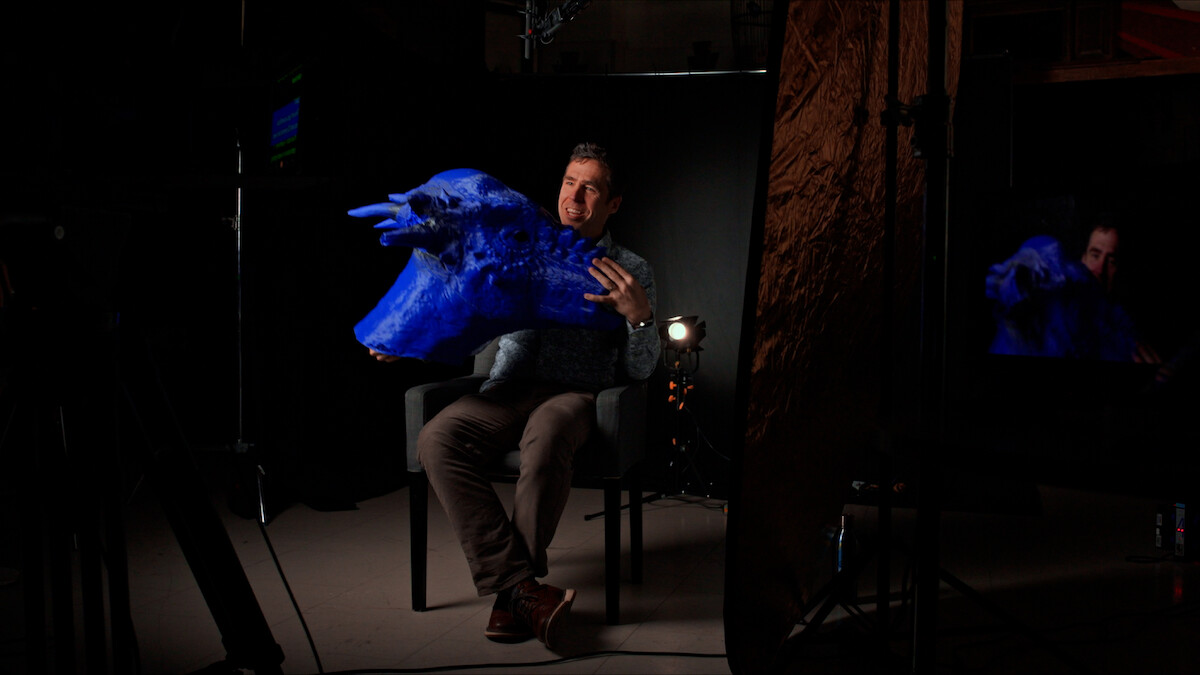
With more than 150 million years to cover in four episodes, tough choices were inevitable. Ceratopsians — the group of horned dinosaurs that includes Triceratops (and Tapster’s personal favorite, Styracosaurus) — didn't make it in, despite being “a fascinating group with a brilliant story,” he says.
Dromaeosaurs (raptors) were also largely absent, save for a brief appearance at the very end. When asked about this, Tapster clarified: “They weren’t cut. They were added. This was a reuse shot from Life on Our Planet Episode 5 that was perfect for that bird/dinosaur montage, but otherwise those raptors weren’t part of The Dinosaurs.”
“In the end, it came down to what best supported the bigger narrative we were building,” Tapster explained. The team consciously leaned into a “rise, reign, and fall” framework rather than an episodic approach. “If you’re a cool dinosaur that didn’t really push the story forward because you didn’t contribute much evolutionarily ... or you happened to live at a time when Earth wasn’t really doing anything either ... then you didn’t make the show!”
Still, Tapster expressed hope for future installments: “Would absolutely love to go again! There’s passion and excitement for it, and I’d love to do a different show where we can put in all the dinos we didn’t!”
The Dinosaurs is now streaming.