As the United States approaches its 250th anniversary, director Brian Knappenberger’s sweeping new docuseries The American Experiment asks a deceptively simple question: What exactly did the nation’s founders build — and can it endure?
Spanning five episodes, the series, released on June 24, brings together an extraordinary range of voices. Former vice presidents and cabinet officials, current and former members of Congress, a former Supreme Court justice, leading historians, Native American tribal chiefs, military experts, and thought leaders across the political spectrum trace the origins of American democracy and measure where it stands today. The final two chapters are the series’ most urgent, revealing raw, personal accounts from figures who have lived the stakes of the American experiment firsthand.
“It seemed like an incredible time to go back to the basics of who we are as a country,” Knappenberger tells Netflix. “As complicated, complex, and chaotic a time as we are in right now, pretty much anywhere you look, there is a route back to our founding. In thinking about who to talk to, we didn’t approach it as one Republican, one Democrat. It was more like: ‘If we were somehow able to hold another Constitutional Convention, who would be at that debate? Who would be the most engaged, the most invested, the people who care about these issues most profoundly?’”
Here are seven unexpected moments from the series, with reflections from Knappenberger.
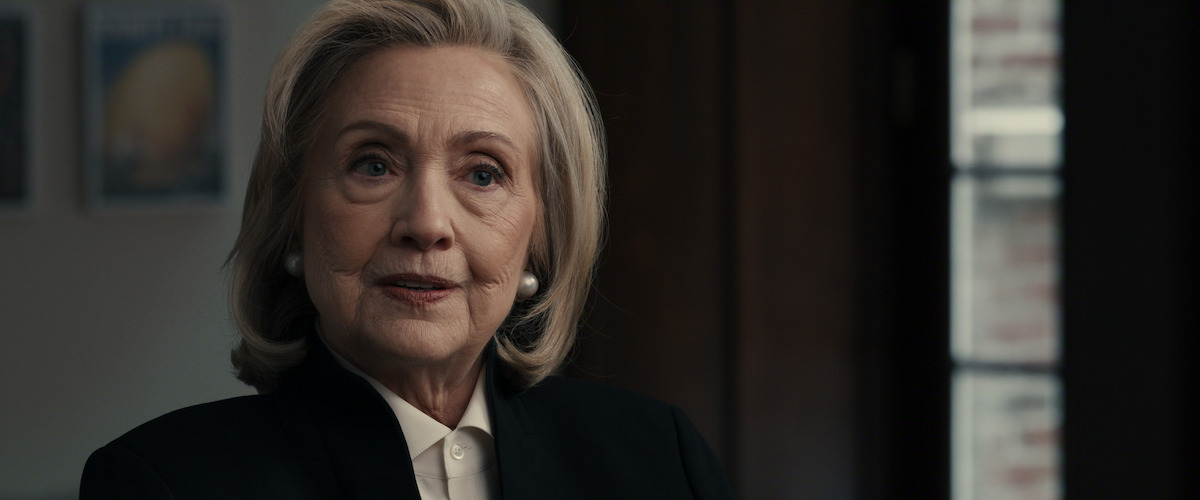
Hillary Clinton calls the Electoral College “an abomination.”
Episode 4, “We the People,” begins with Knappenberger putting it plainly to former Secretary of State Hillary Clinton: “You won the popular vote.”
“I did,” Clinton says. “Yes, I remember that every day.”
What follows is one of the series’ most candid exchanges. In the 2016 presidential election, nearly three million more people voted for Clinton than for her opponent, Donald Trump. “We’ve had other incidents, but mine was probably the clearest case because the margin was significant,” Clinton says. (There have been five elections in which the winning candidate did not receive a plurality of the popular vote: 1824, 1876, 1888, 2000, and 2016.)
“It’s a very bizarre feeling to know that nearly three million more people voted for you, and a relic of compromises from the Constitutional Convention [is] going to prevent you from becoming president,” she says.
Knappenberger says he was careful in how he broached the subject with Clinton. “I said, ‘Look, I’m not going to take you back to what is probably one of the most painful moments of your life,’” he recalls. “But you are one of the few people in history who has run for president and won the popular vote. You won by a significant margin. And this part of the Constitution — this thing that was created in the last few weeks of that hot summer in Philadelphia, which was an afterthought more than anything — made it so that you didn’t win the presidency.” Framing it that way led the conversation to an unexpected place, he says: “I think she talked about it in ways she probably hasn’t really talked about before.”
“I personally think the Electoral College is an abomination,” Clinton says in the docuseries. “For obvious reasons.”
“But she accepted the results,” Knappenberger says. “That’s our system too. You have signed up for a mechanism that allows people to have a say in their own government, but that doesn’t mean it’s always going to go your way.”
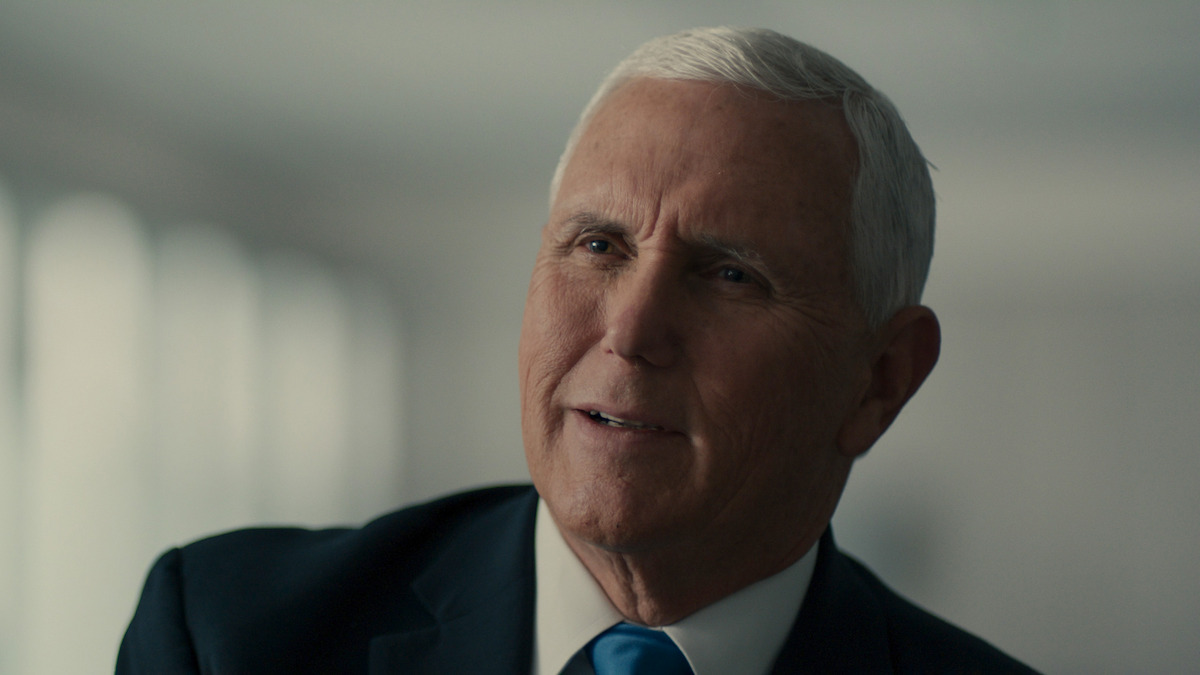
Mike Pence explains how much his faith in the Constitution cost him.
Episode 5, “Washington’s Warning,” opens with footage of Mike Pence taking his oath of office at his inauguration as Vice President in 2017.
“I put my left hand on Ronald Reagan’s bible, and I raised my right hand, and I took an oath to support and defend the Constitution,” Pence says. “It ended with a prayer. The Bible actually says, ‘He keeps his oath even when it hurts.’ I know something about that.”
Intercut with footage from the Jan. 6, 2021, protests and attack on the United States Capitol, Pence describes what it meant to certify the results of the election as an angry crowd called for his execution. “For me, on that fateful day, having made my position clear to the president many times, my only purpose was to keep my oath,” he says.
What surprised Knappenberger was the story Pence told to explain his decision. As a first-year congressman, Pence had walked across the street to watch then-Vice President Al Gore preside over the certification of the 2000 election — an election Gore had lost, narrowly and controversially. “[Pence] said he was deeply, deeply moved by what Al Gore did,” Knappenberger says. “Al Gore lost the election but held true to the constitutional order, ratified the vote, even though it was against him.” And when Knappenberger later spoke to Gore about the same moment, Gore confirmed that Pence had told him this in person.
“I always believed I did my duty that day to see to the peaceful transfer of power under the Constitution of the United States,” Pence says in the doc. “I told Vice President Gore that his example that day was deeply inspiring to me. It lacked the controversy and the violence that would ensue 20 years later, but it was the same principle. A man who had lost the election narrowly, and with controversy, still yielded to the constitutional order. For me, the story of the Constitution is a story of the American people keeping faith with what’s written there.”
Ted Cruz invokes his favorite line from The Godfather to tell a deeply personal story.
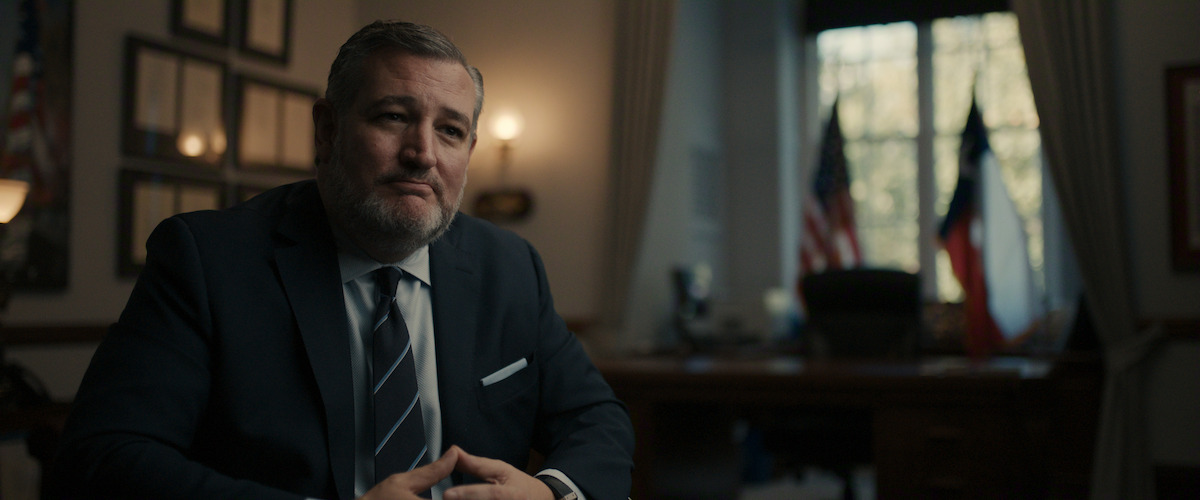
The series doesn’t limit its exploration of faith in America’s founding ideals to moments of crisis. Sen. Ted Cruz of Texas finds a more personal, but no less moving, entry point by invoking the first line of The Godfather: “I believe in America.” He means it literally.
“My dad was born in Cuba,” Cruz says in Episode 5. “Was imprisoned and tortured in Cuba. And he fled Cuba in 1957. He came to Texas. And he was an 18-year-old kid. And he got a job washing dishes. He made 50 cents an hour. My father ended up going to the University of Texas, eventually becoming a small business owner. When I was sworn into office in January of 2013, I stood on the floor of the Senate. My hand was on my father’s Bible. And in the gallery was my father looking down. And he had tears running down his face. And he said that day, ‘Only in America.’”
Rand Paul sounds an alarm about one of the founders’ most glaring blind spots.
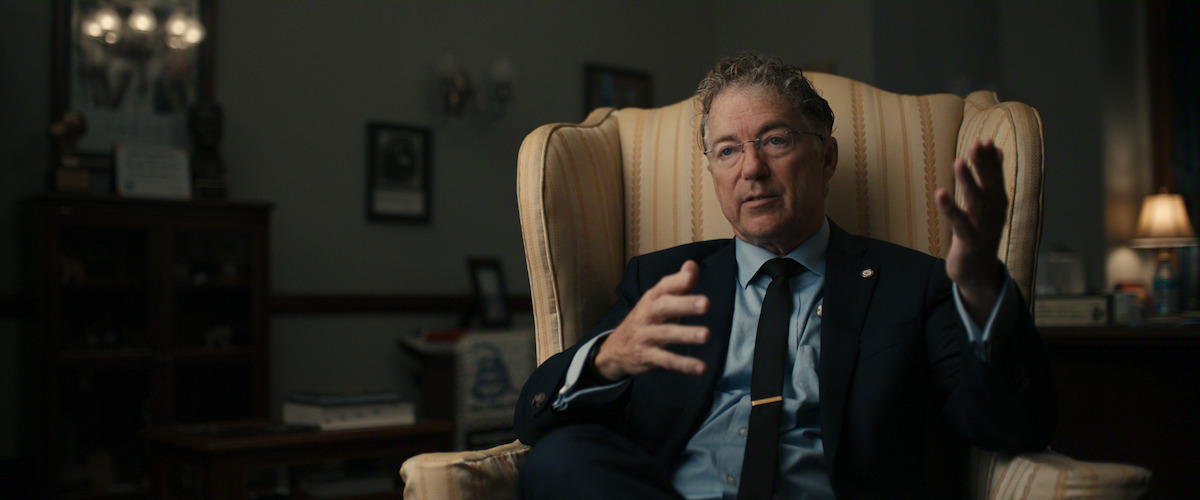
“[James] Madison had talked about the way the separation of powers would work is that we would pit ambition against ambition,” Sen. Rand Paul of Kentucky says in Episode 5 of the series. “I think they never assumed a Congress without ambition.”
Knappenberger sees it as one of the documentary’s most sobering and timely takeaways. “The biggest threat to our Constitution is the unwillingness of Congress to stand up to the president,” he says. “The founders did not imagine a Congress that wouldn’t jealously guard [its] power — that would even vote along party lines instead of standing up for themselves, or hand over their power willingly, as we’ve done with war powers. It’s not surprising that one individual might grab for more power. It is surprising that the legislative branch would give up power.”
A group of “Ordinary Extraordinary” Americans give voice to the founders’ words.
Not all of the series’ most resonant moments come from its impressive array of famous political voices. Much of the series is told through letters, diaries, formal documents, and fragments of historical figures’ writing — and Knappenberger made a deliberate choice about who would read them aloud. Rather than casting celebrities or scholars, he chose 33 everyday Americans: people with remarkable accomplishments who aren’t necessarily household names.
“They were all emotional that they were being asked to do this, all really enthusiastic, and they connected with the material in a really wonderful way,” Knappenberger says.
The cast reflects the breadth of American life: a Pulitzer Prize–winning historian, a former NASA astronaut, a firefighter and EMT who was among the first responders to encounter COVID-19 patients in the United States, a former prison inmate turned bestselling author, the youngest woman mayor in American history, a TikTok educator who became the first youth speaker at the United Nations’ International Day of Remembrance of the Victims of Slavery and the Transatlantic Slave Trade, and the 2025 National Teacher of the Year, among many others.
One voice stood out in particular. Labor icon Dolores Huerta — co-founder of the United Farm Workers, Presidential Medal of Freedom recipient, and the first Latina inducted into the National Women’s Hall of Fame — was among the 33, reading from the First Amendment. “Every once in a while you hear something and you just think, ‘Oh, that is really moving to have her read that,’” Knappenberger says. “When you talk about the right to assemble and the right to speak up — to hear Dolores Huerta talking about that means something.”
On the anniversary of our existence as a country, this is a pivotal moment to choose: Who are we? Are we for some of us, or are we for all of us? I’m not going to lean back. I’m not going to quit. I’m not going to stop. Democracy is worth it. It’s worth it.
Sen. Lisa Blunt Rochester
Martin Sheen brings George Washington to life.
Separate from the “Ordinary Extraordinary” cast is a voice many viewers will recognize instantly, whose gravitas feels tailor-made for the role of the first president of the United States. Martin Sheen, best known to many as President Josiah Bartlet on The West Wing, was cast to read the words of George Washington, the series’ central figure.
“We were throwing around names and that just seemed to stand out,” Knappenberger says. “He had played the president before. He also has a history of activism and has always been fighting for causes he believes in.” What struck Knappenberger most, though, was Sheen’s preparation. “He wanted to know everything about it. He was talking history for six or seven hours — he really wanted to discuss the context behind each line we were having him read.”
Sen. Lisa Blunt Rochester closes the series with a call to action.
The series’ final voice belongs to Sen. Lisa Blunt Rochester of Delaware. Knappenberger says her story moved him deeply. “She told me about going back and looking at some of the graves of her ancestors who were enslaved, walking the Edmund Pettus Bridge during a protest, and also being in the Capitol on Jan. 6th,” he says. “She said she felt the earth shake during those moments in the same way. Things were happening. The country was being tested.”
Her closing words in Episode 5 help form the series’ thesis and core challenge to the viewer:
“This experiment is just not finished. I believe in this country. I believe in the ideals. It is when things feel really dark that you need it the most. We are at a point where we have to choose: Who do we want to be? On the anniversary of our existence as a country, this is a pivotal moment to choose: Who are we? Are we for some of us, or are we for all of us? I’m not going to lean back. I’m not going to quit. I’m not going to stop. Democracy is worth it. It’s worth it.”
Knappenberger shares Blunt Rochester’s faith and call for urgency. “We’re in an extreme test. The American experiment has been tested quite a lot in 250 years and it’s done pretty well. But we are in one of those moments now. There’s no question about it.”