Up Close
Rowan Atkinson Has Some Thoughts About His Immigrant Fan Base
The ‘Man vs. Bee’ star knows the power of visual comedy crosses language barriers.
Connie Wang
June 24, 2022
Among immigrant households that love their TV, Mr. Bean is a beloved and uniting figure. Played by British comedian Rowan Atkinson, the eternally bumbling and socially awkward Mr. Bean was one of the most recognizable comic acts of the ’90s, despite the fact that he barely spoke a word throughout his eponymous series’ 15 episodes. Instead, Atkinson relied on physical comedy to portray the forever beleaguered Mr. Bean as he tried to make sense of inscrutable Western customs and etiquette. For many immigrant families who found themselves far from home and often similarly at odds in their new environments, this combination of accessibility and absurdity was a comfort.
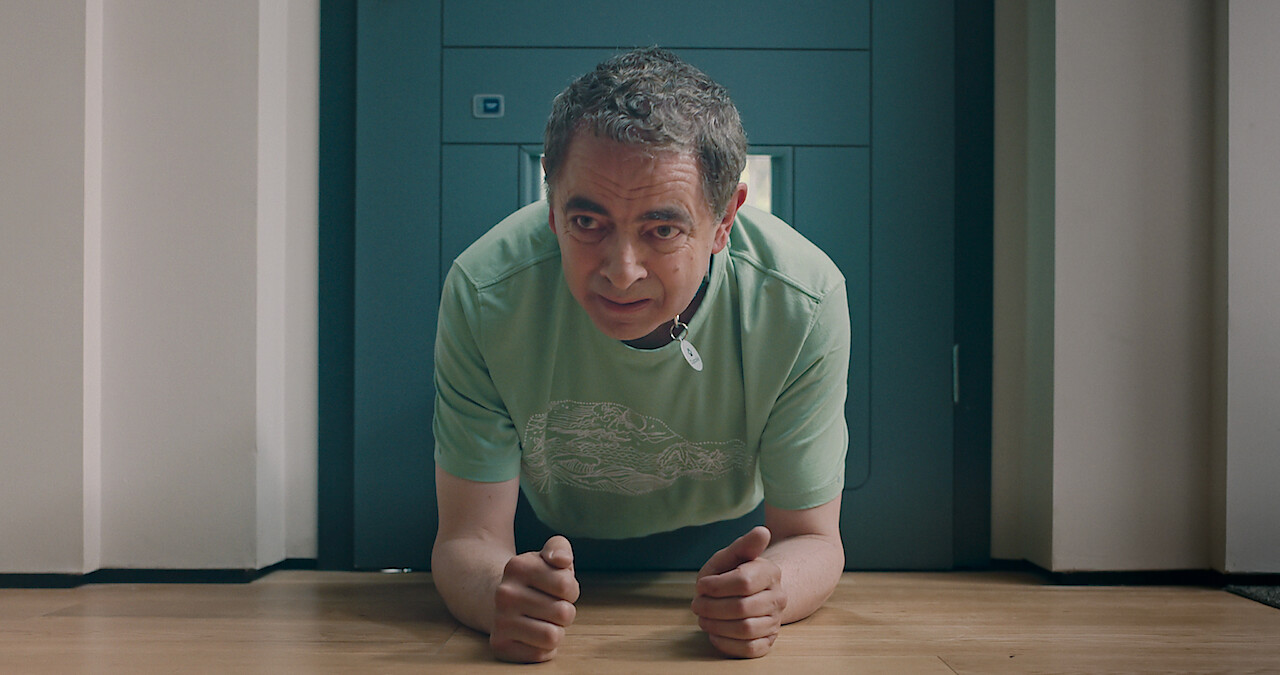
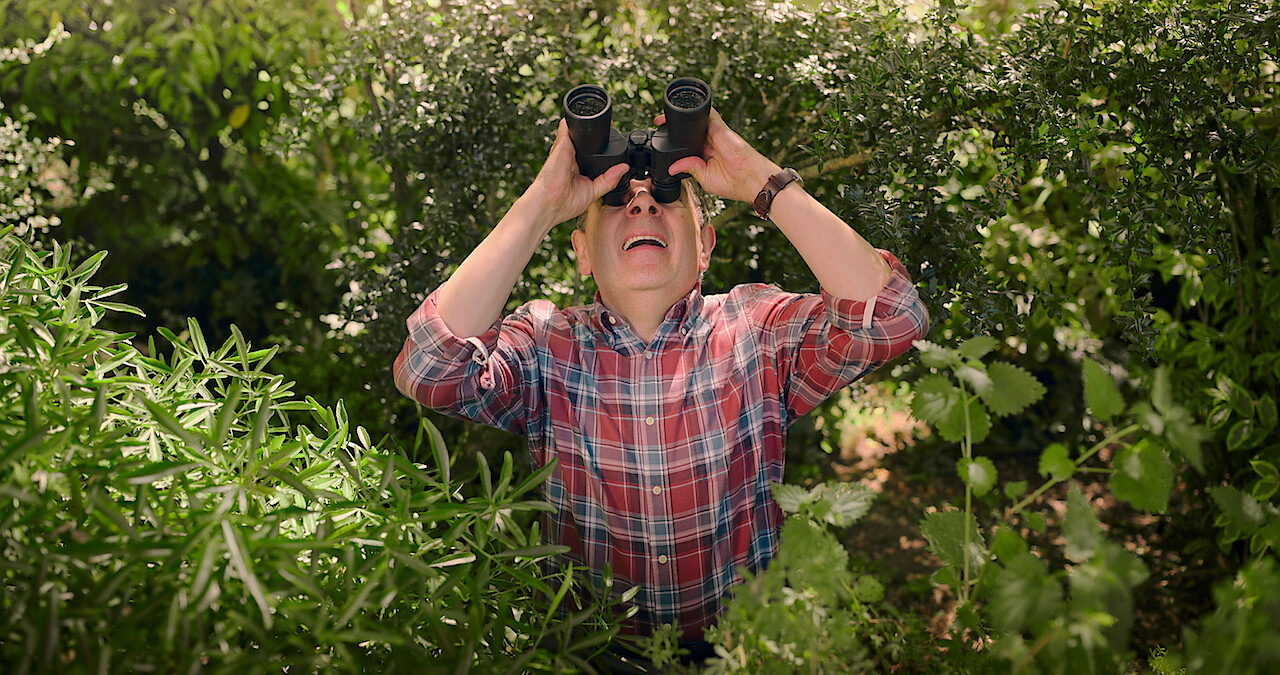
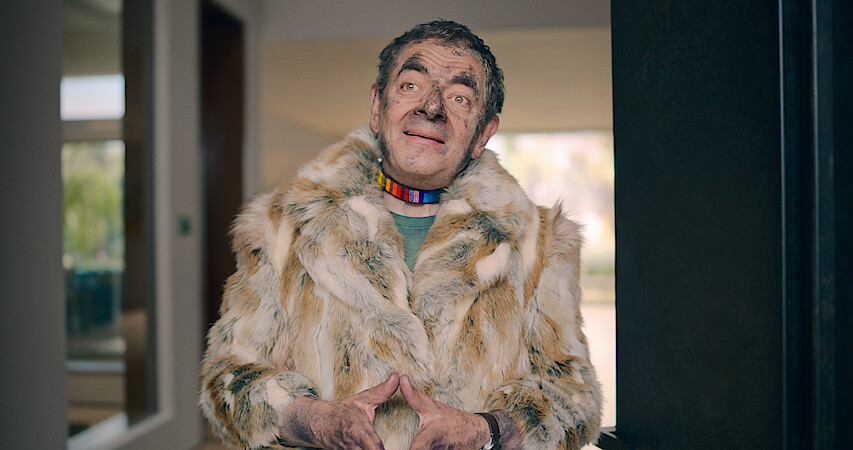
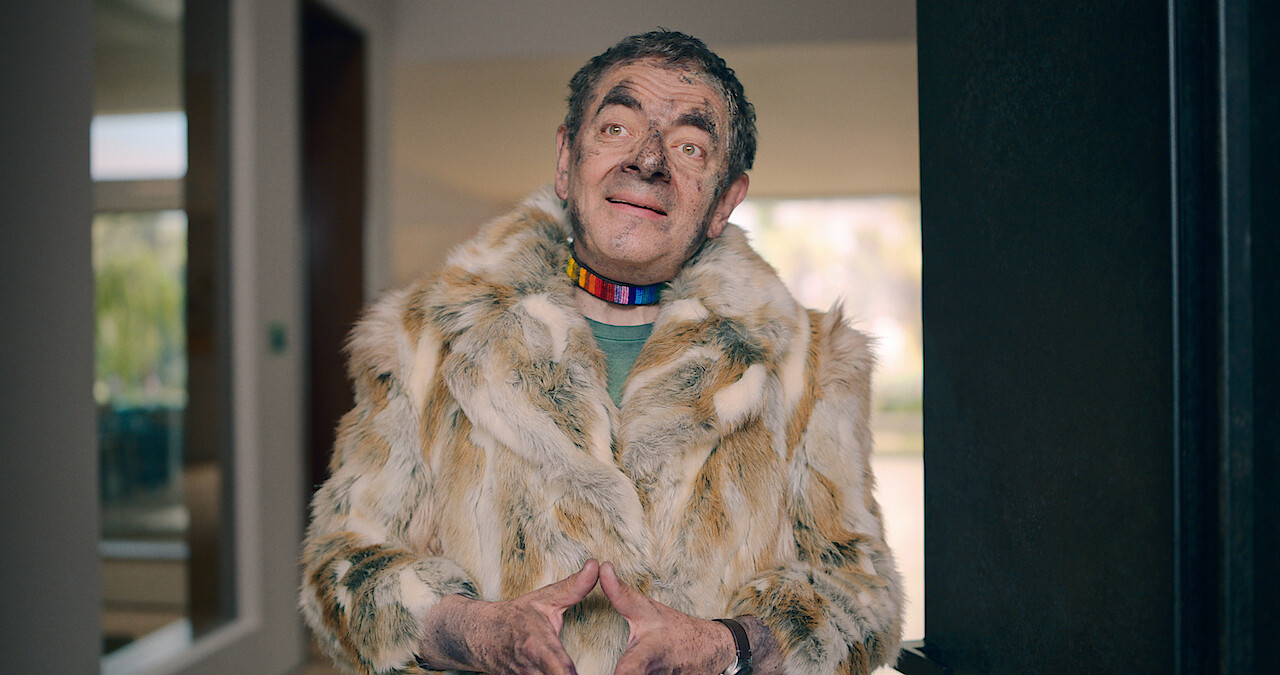
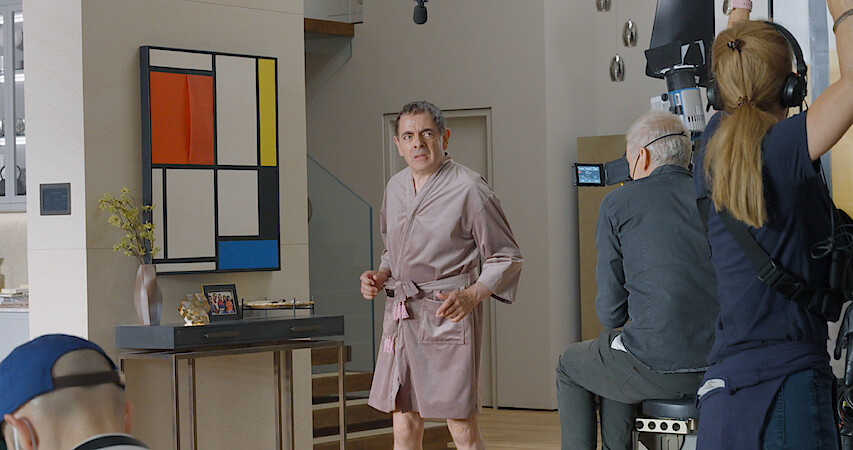
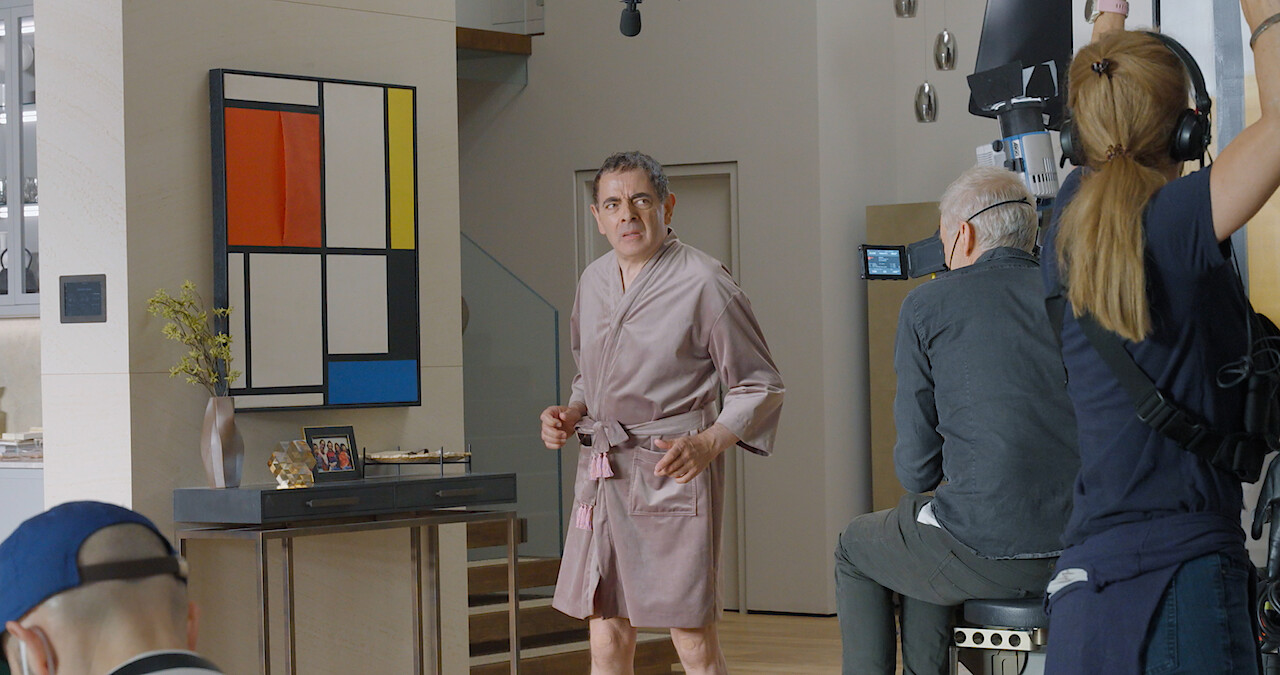
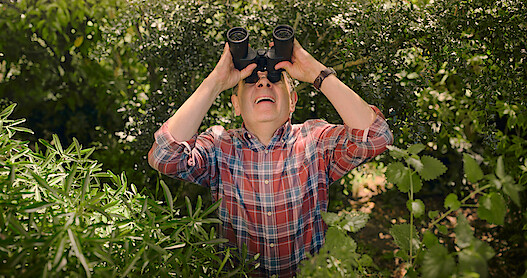
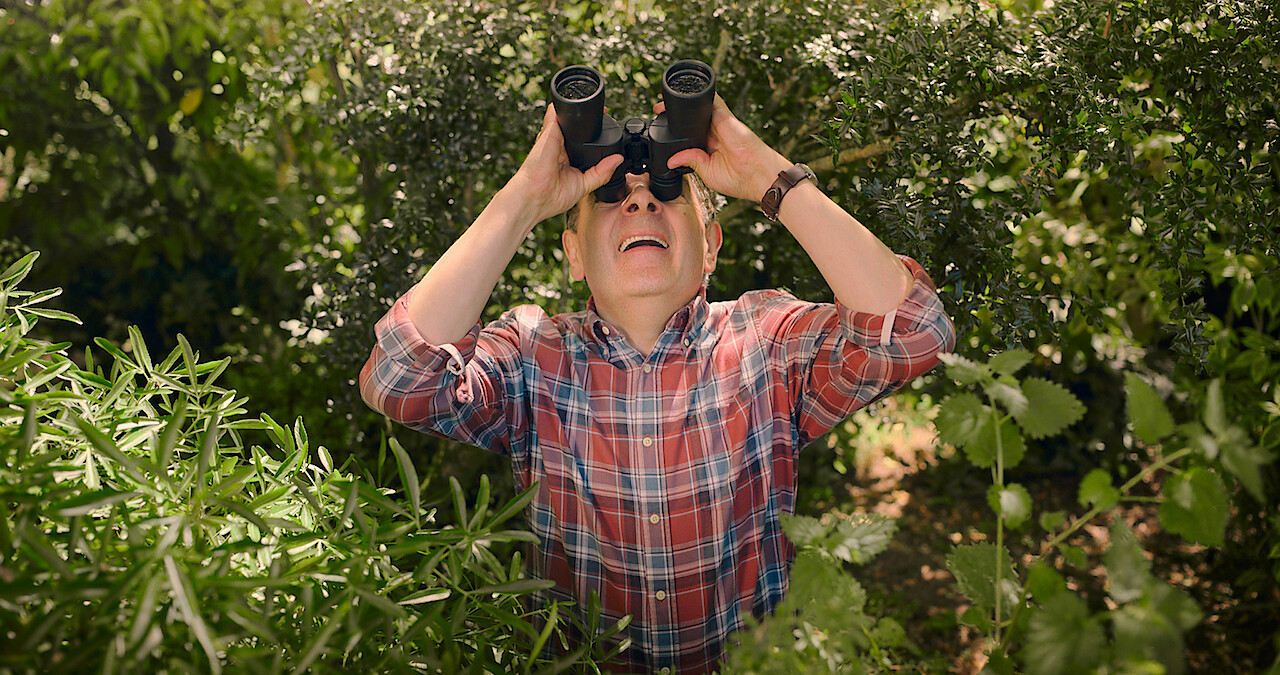
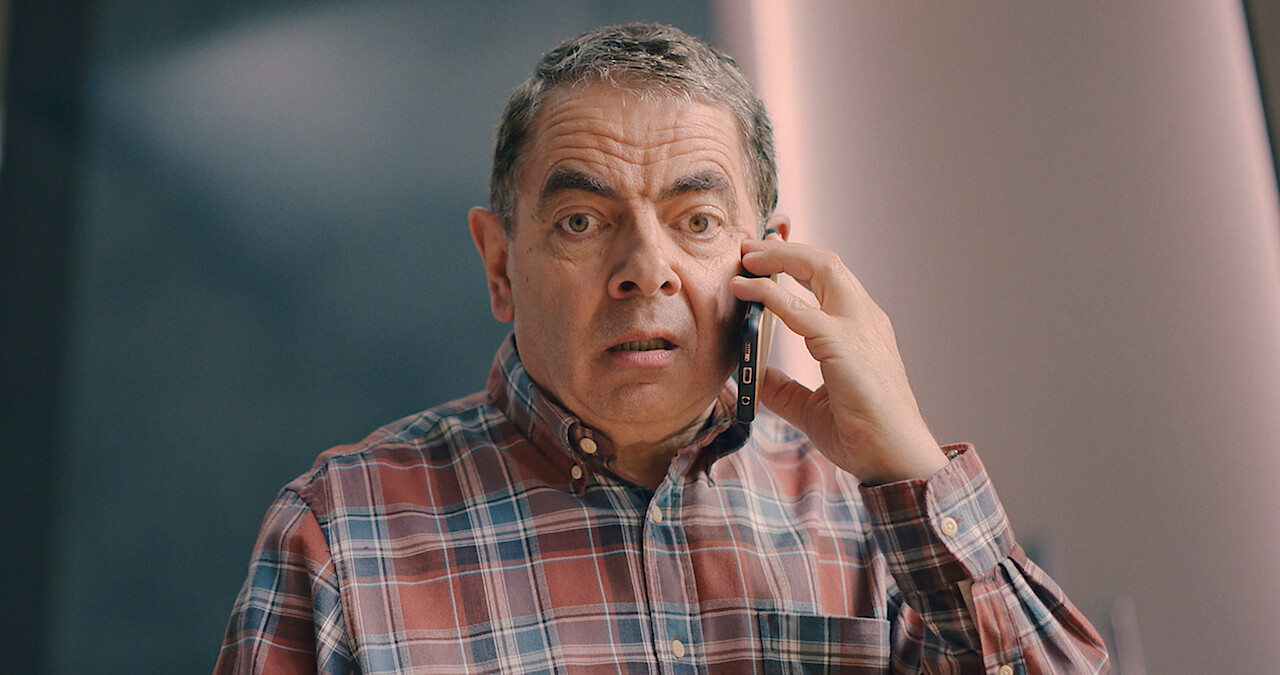
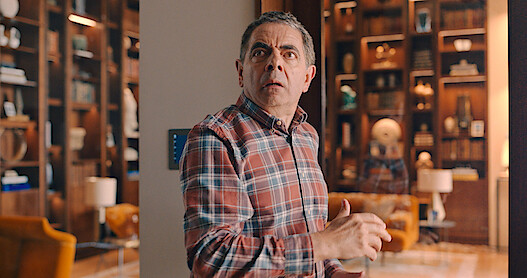
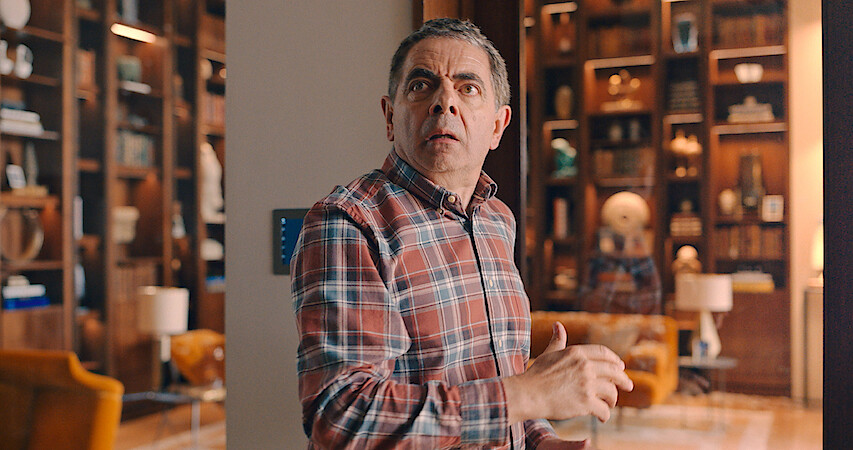
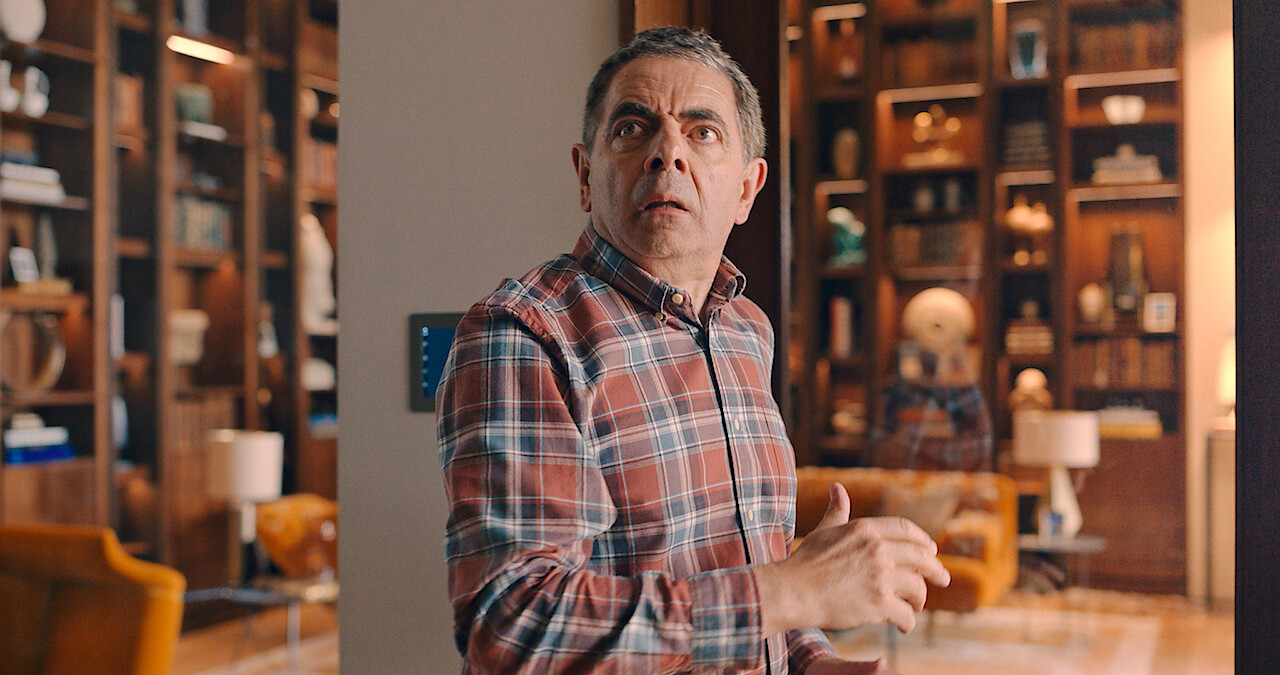
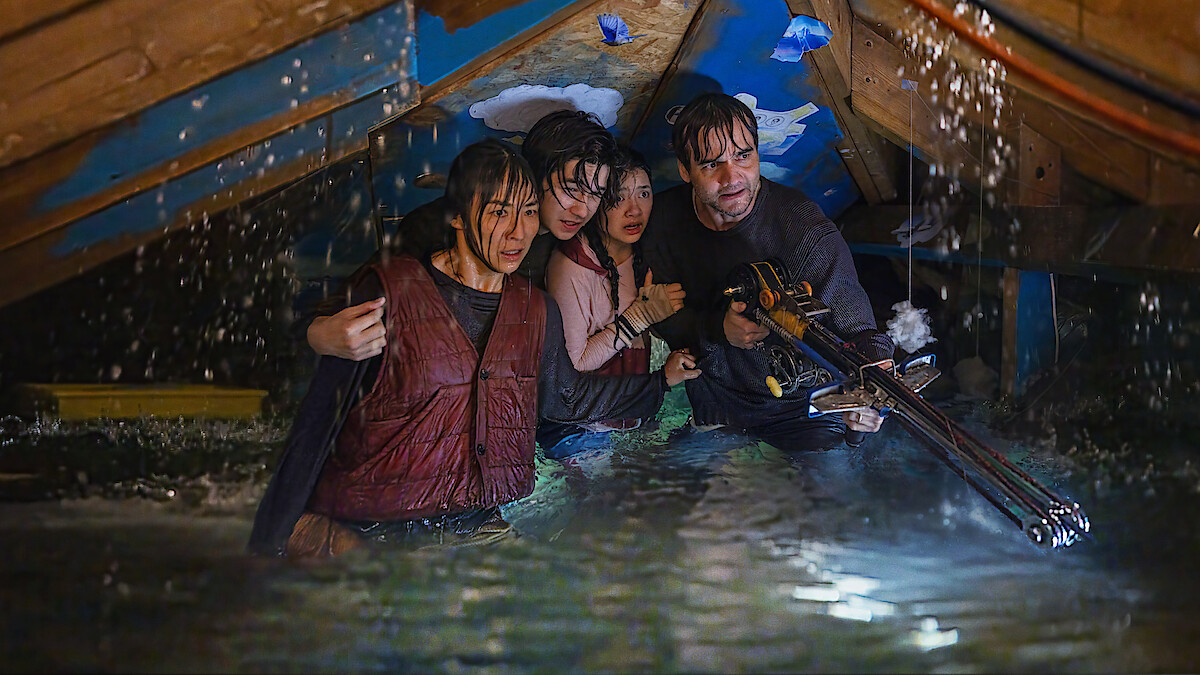
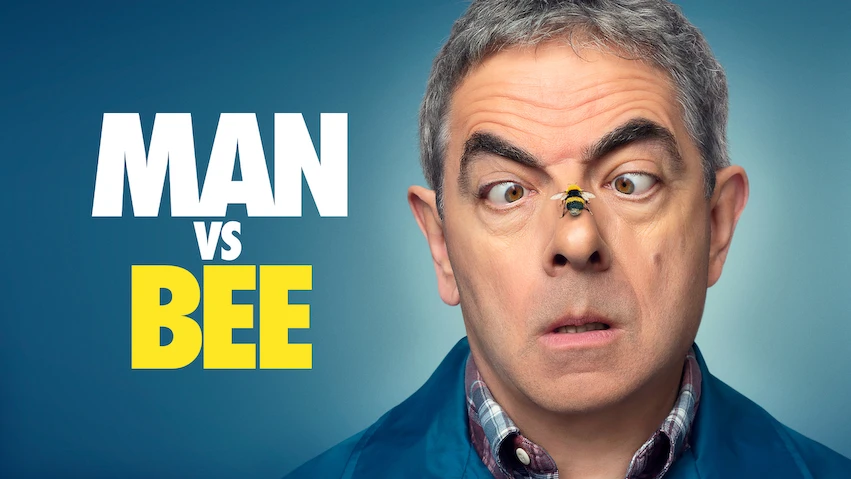
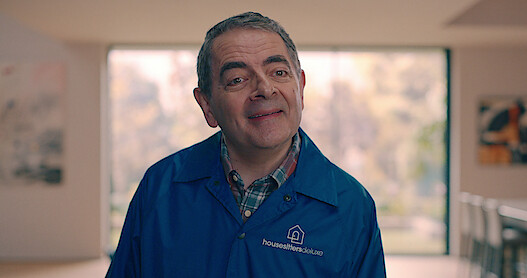
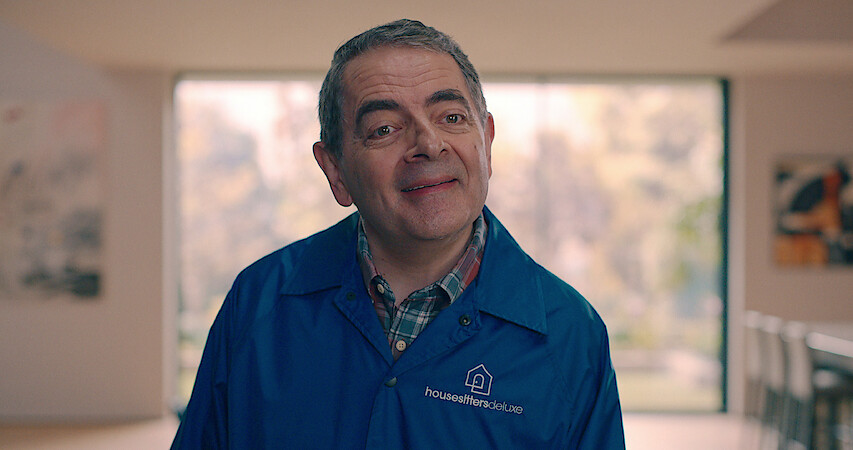
Atkinson revisits this formula in Man vs. Bee, a near-silent comedy series in which he plays Trevor, a down-on-his-luck, well-meaning but neurotic house sitter of a multimillion-dollar home equipped with all the newest (and most confusing) tech. He quickly learns he’s in over his head. Tudum spoke with Atkinson about his specific brand of visual comedy, who it’s for and why he finds it so useful.

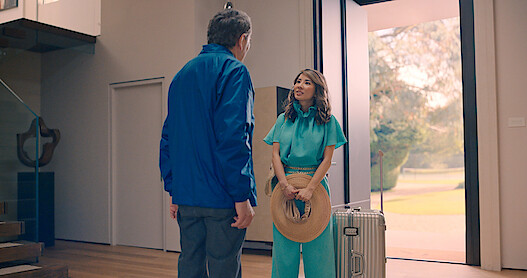
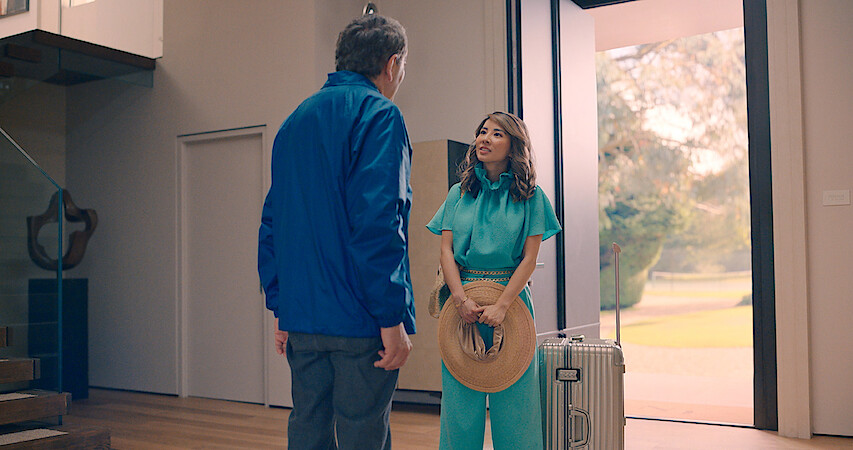
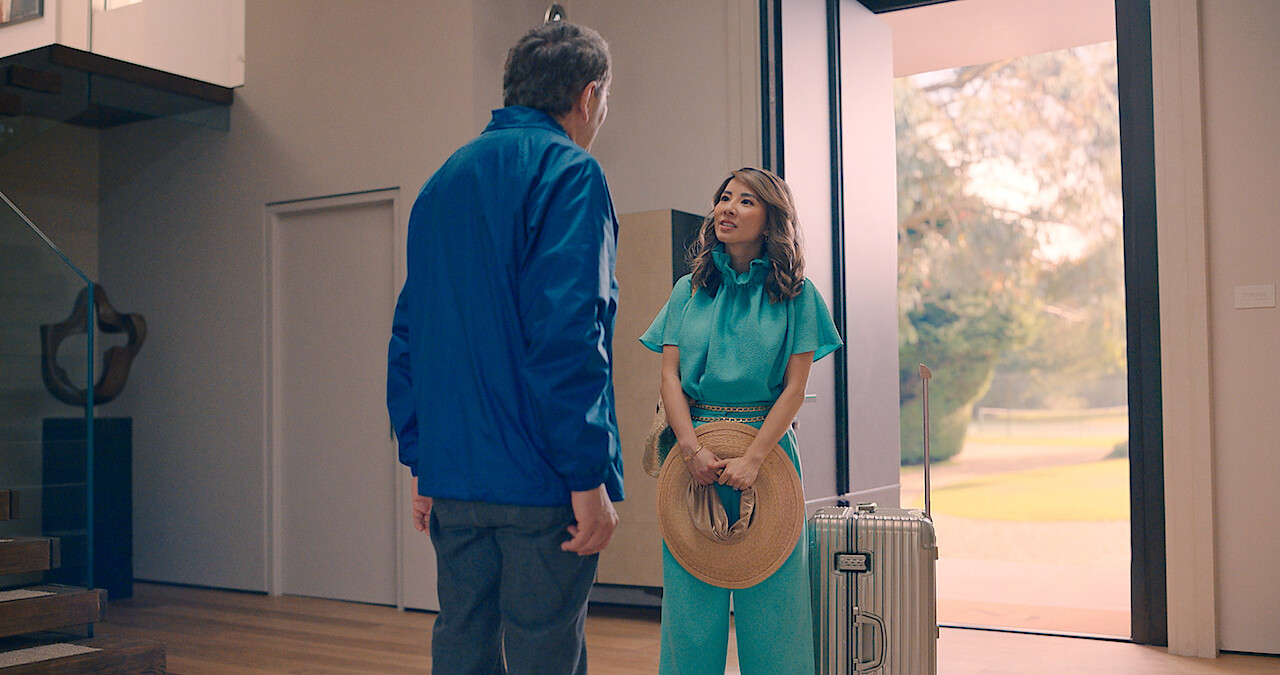
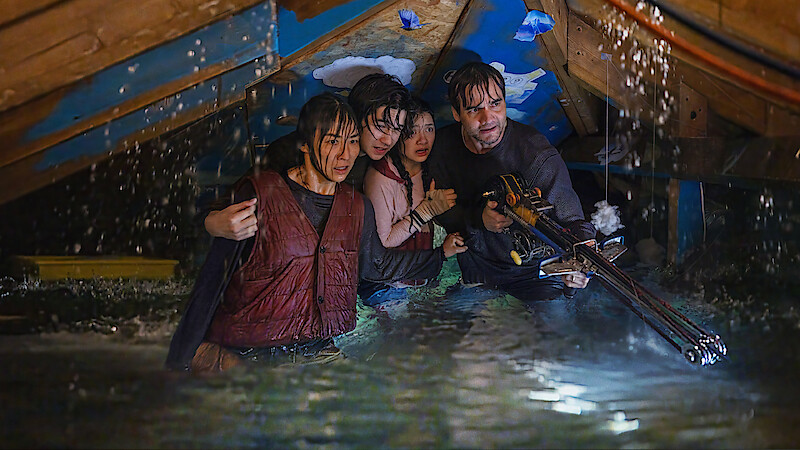
Jing Lusi (Nina) checks in on her fancy home while on vacation.
Within immigrant circles, your comedy comes up quite frequently as something that’s held near and dear by a lot of people for whom English is a second language. Funnily enough, I heard something similar from Jing Lusi, who plays the wife in Man vs. Bee. [She] came to Britain with her Chinese family [who spoke] no English whatsoever, but something they connected with was Mr. Bean. It’s very nice to think that it might have actually had some social value over and above the simple act of entertaining people.
You have a taste for playing characters whose capabilities oftentimes fall short of their ambitions, including Trevor. Is this something that’s conscious for you as you’re picking characters to play? There’s no doubt about that. They tend to be a sort of singular, slightly isolated characters. Trevor is a little bit less isolated than a lot of other characters [I’ve played], and you see that he’s had a life [and family] for whom he obviously feels a lot. Besides his obsessiveness, which is his stumbling block — his weak point — I think he’s well intending and good-natured, but he’s got fault lines.
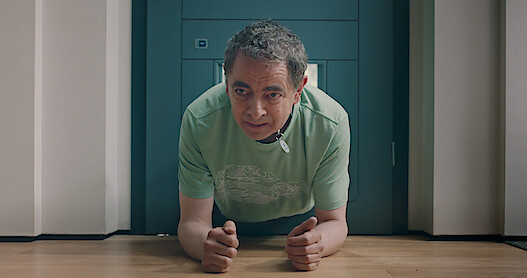
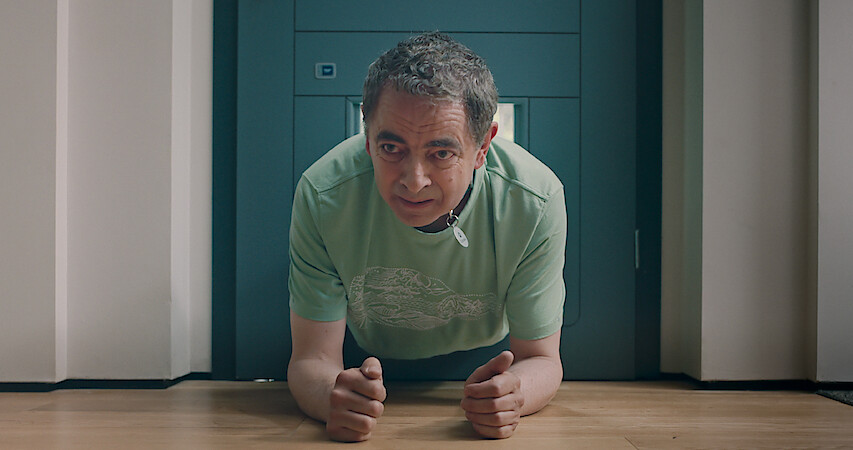
I always bring something subconsciously to any character I play and write, because obviously I’m writing on the basis of my own experience and what I find funny or difficult. We’ve all come across situations where you’re trying to work out: “How does this toilet flush? Is it that you press the button or you just wave your hand? Or do you just walk out the door and it flushes when you leave?” It’s interesting actually that in terms of the immigrant story, that’s what Trevor is, isn’t he? An immigrant coming into a world in which he knows very little and having to acclimatize and adapt and adjust to enable him to live the life he wants to live.
Is it about lockdown? Is it about immigration? Is it about man’s inhumanity for animals? The themes are, of course, whatever you want to take away from it. I can’t say we set out with any political or humanitarian or sociological agenda. We just always thought it was quite funny to watch a house sitter who was stuck in a house which he’s clearly underqualified to look after.
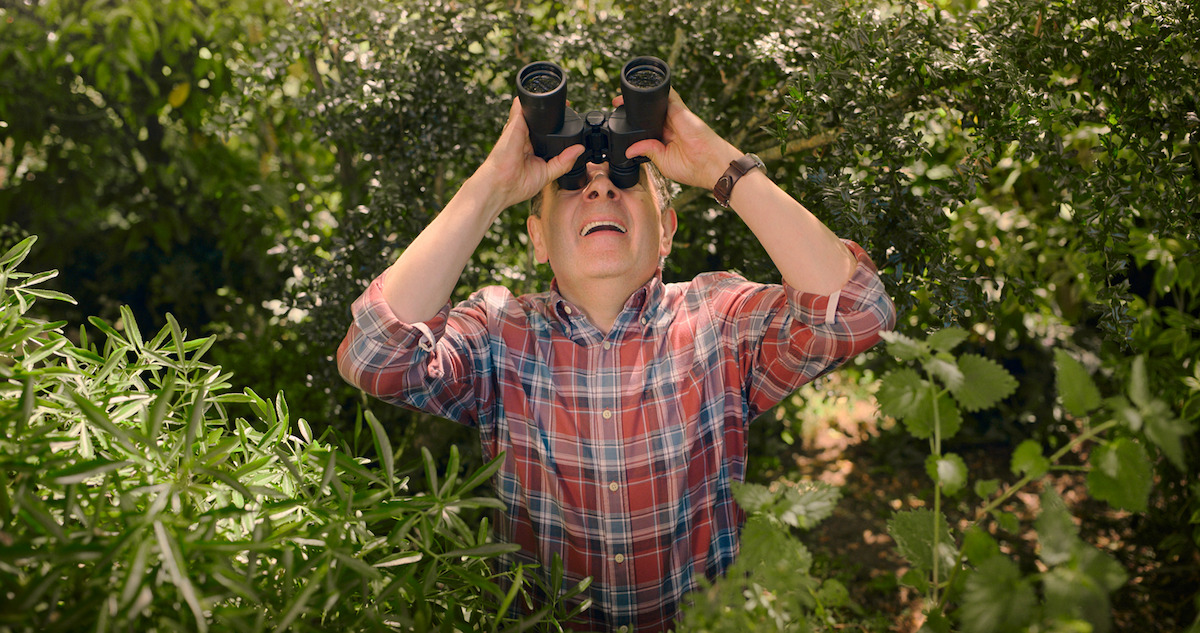
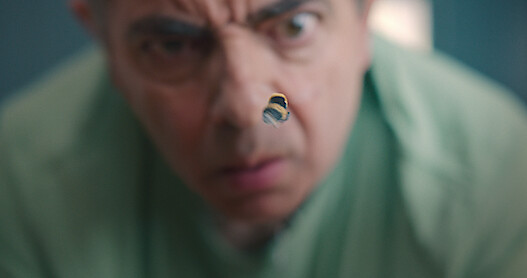
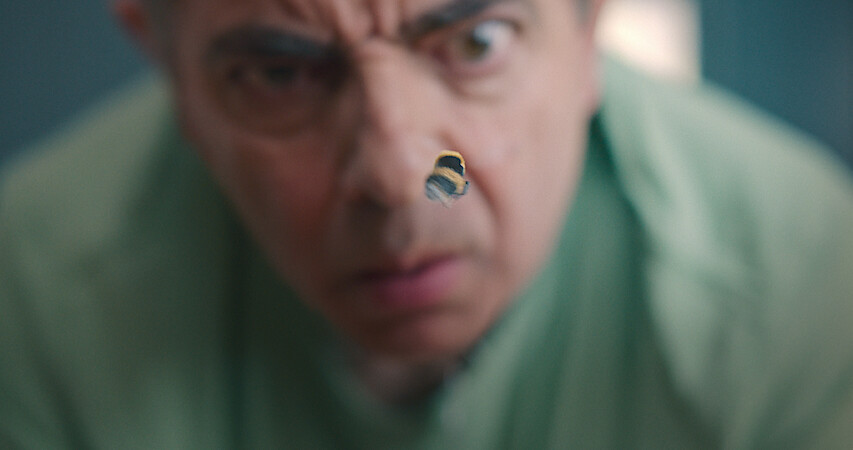
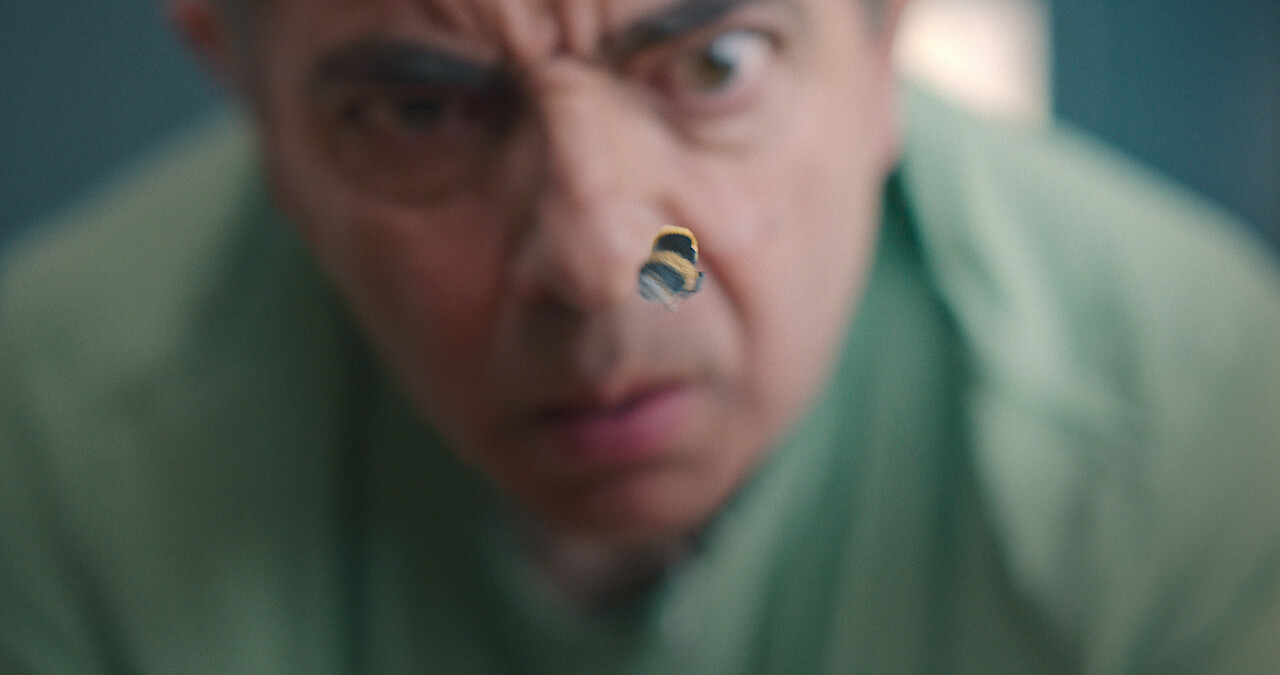
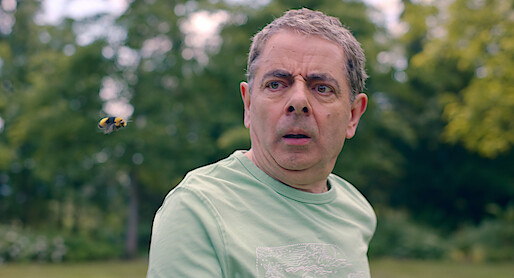
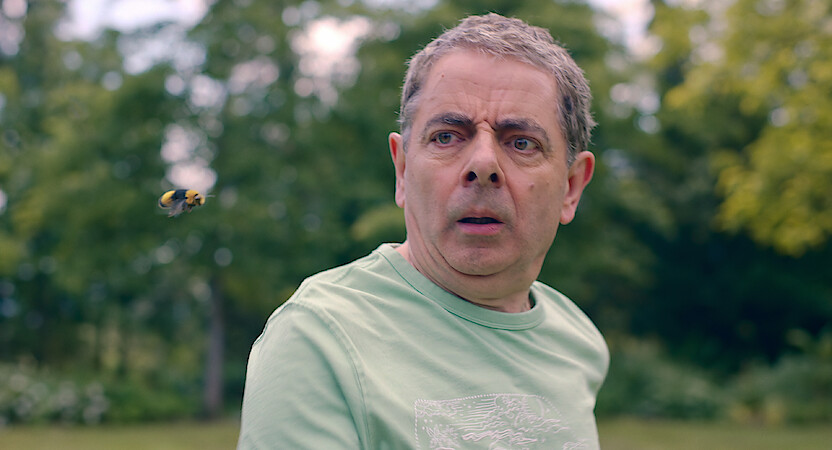
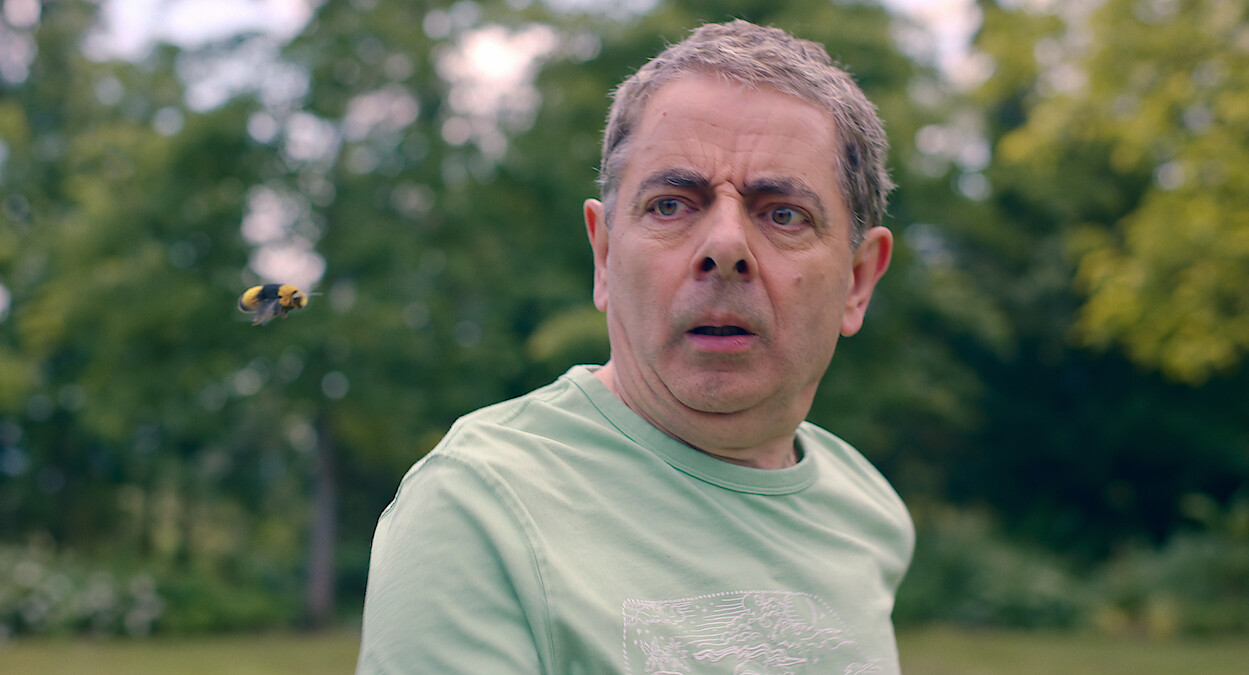
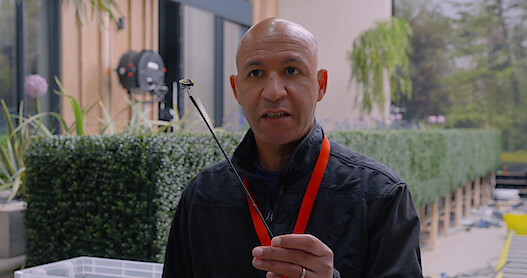
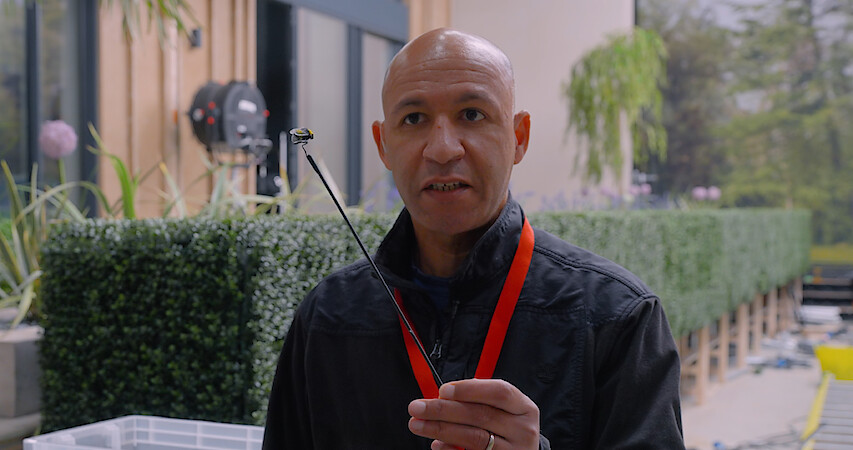
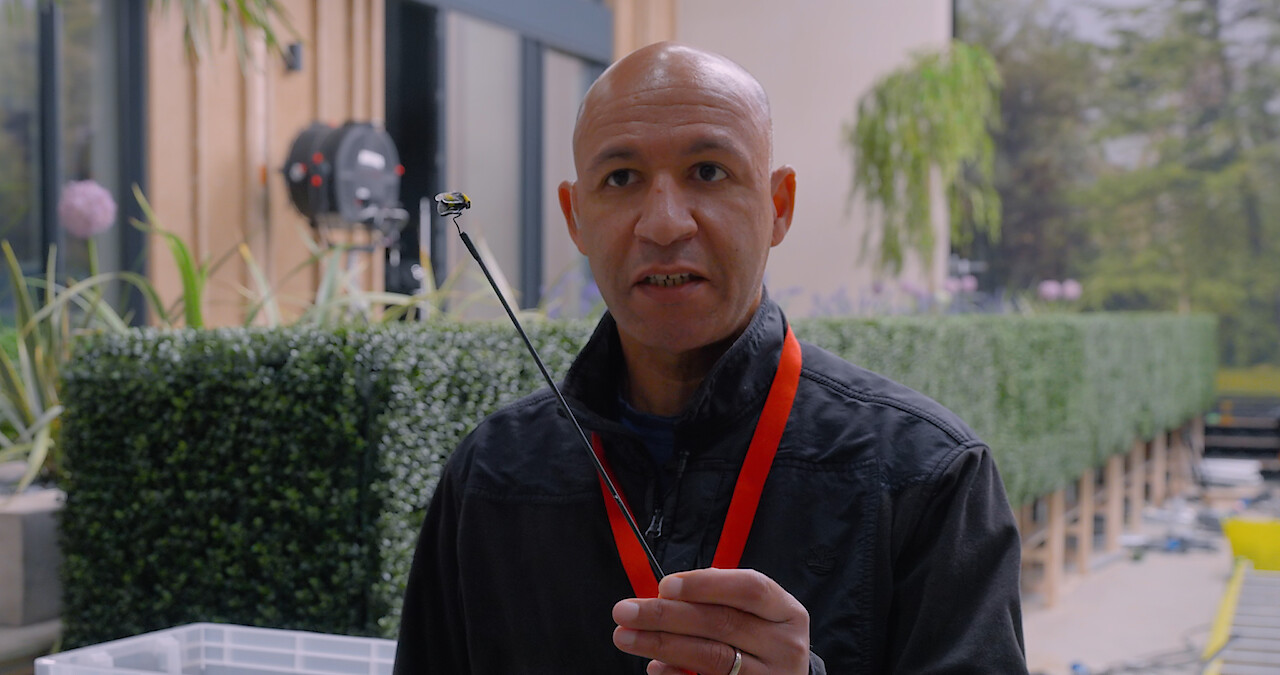
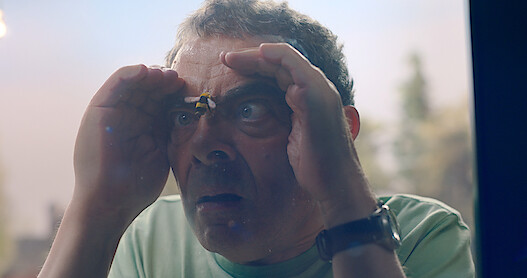
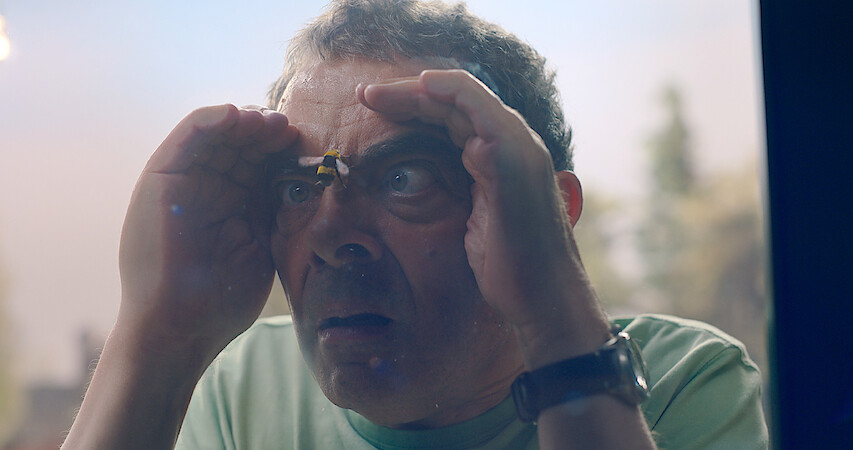
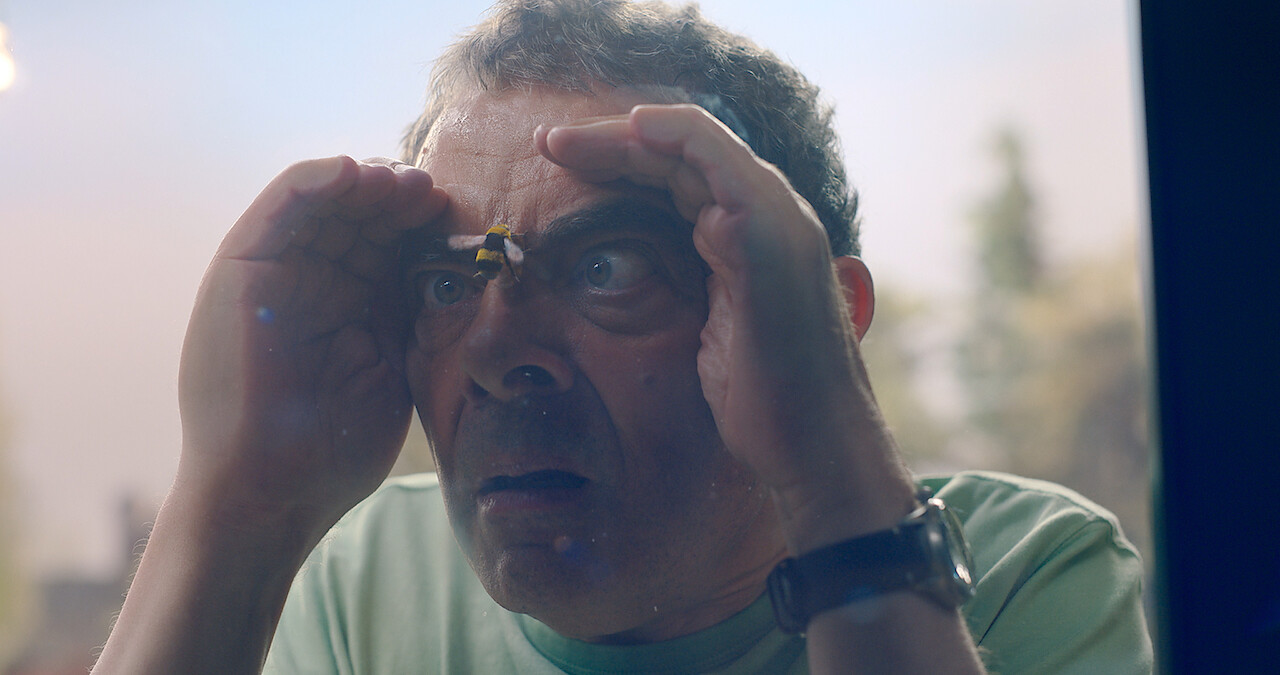
So many of the comic gags rely on reactions to a CGI bee. What was that like? Years ago in the early ’90s, I did a comedy sketch onstage that involved trying to have a picnic with a bee. So, to a certain extent, I’ve got a little bit of experience. [laughs] But yeah, it was difficult at times because [it was] a bee on the end of a rod. Even though we had a lovely puppeteer who could make the bee do anything, sometimes I wanted to have more freedom to look wherever I wanted and to imagine the bee is wherever I wanted it to be. And that is a very difficult thing to convey to another human being with just [swivels his eyeballs around].
Who do you imagine laughing on the other side of the screen? I’ve never had an audience in mind, but I suppose I happen to appeal to what you might call a family audience. I’ve never set out to entertain families, but that’s what nearly everything I’ve done has done, which has been very gratifying because there’s an awful lot of comedy aimed at, you know, people between 15 and 30.
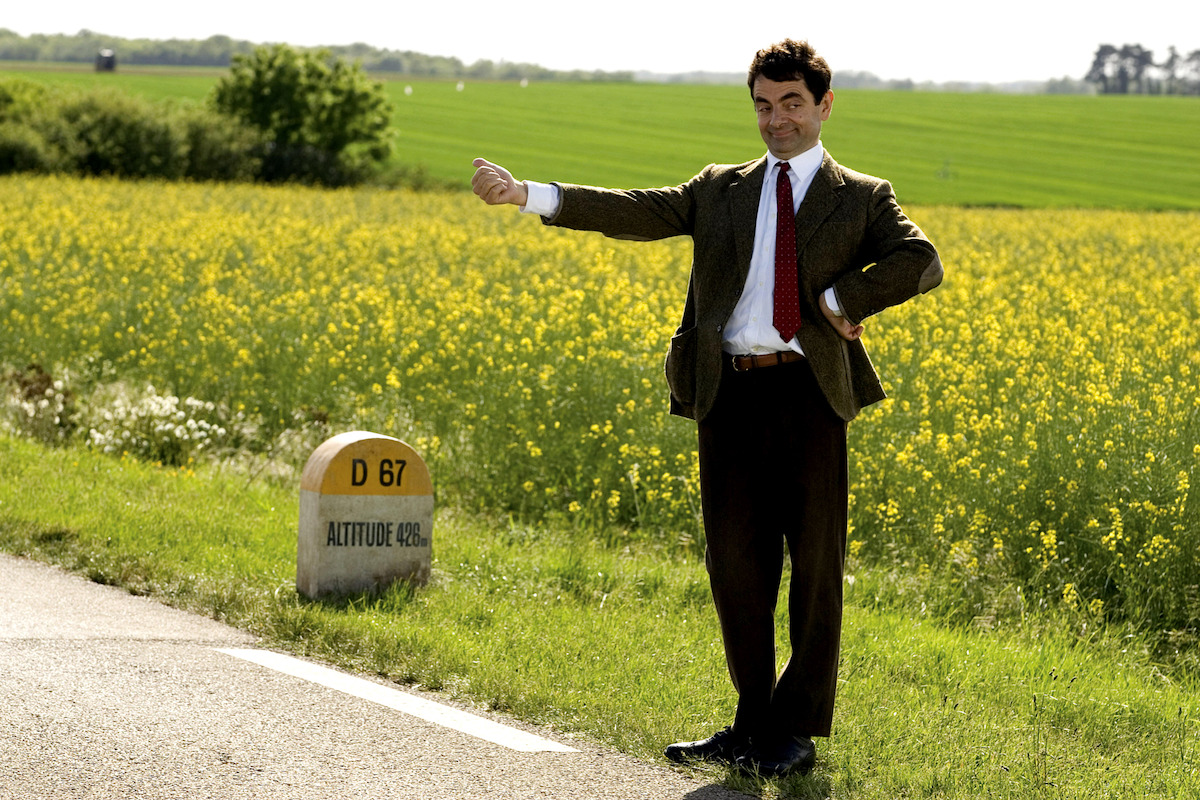
Rowan Atkinson as Mr. Bean.
Can you tell me more about the power of visual comedy? [In 1985,] I visited Venice and I remember [being struck by the diversity of] what music was for sale, whether it was classical musicians or, you know, at the time, Duran Duran. How interesting that musical artists can presume an international audience whereas comedy artists generally can’t. You know, comedy is generally quite a parochial thing. And I thought, “What if there was a character that I play in which no words were spoken?” And that was Mr. Bean. He was this.
I [follow] my own instinct; it seems to have resulted in entertainment that does have this very broad appeal. Obviously, if it’s visual and nonverbal, then it clearly helps to cross language barriers. But I don’t think you can be guaranteed international acceptability simply because you remove language. There must be something said about the human spirit.
The kind of comedy that I do most of the time is sort of non-topical and nonpolitical; it’s just very silly, ordinary stuff. But I have always felt that comedy needs complete freedom, and as far as I’m concerned, if a joke has an appreciative audience, no matter how small, then it’s worthy and it deserves to be protected. But, of course, all jokes have their context.
Not all jokes work in every situation. Not all jokes work for everybody. But I think there’s a strange assumption that they should. Also, I realize that comedy and tragedy are very close bedfellows! I appreciate that a joke always has a victim; the best satirical or political or topical jokes are always going to hurt someone, which is why context is really important. But I think we are in a [cultural] place where we could do with some simple comedy.