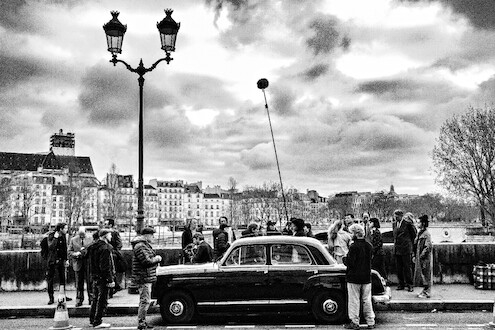
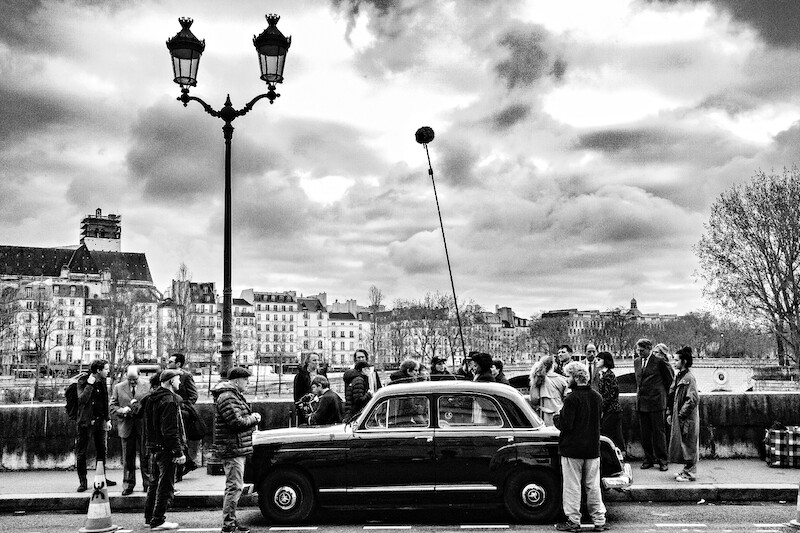
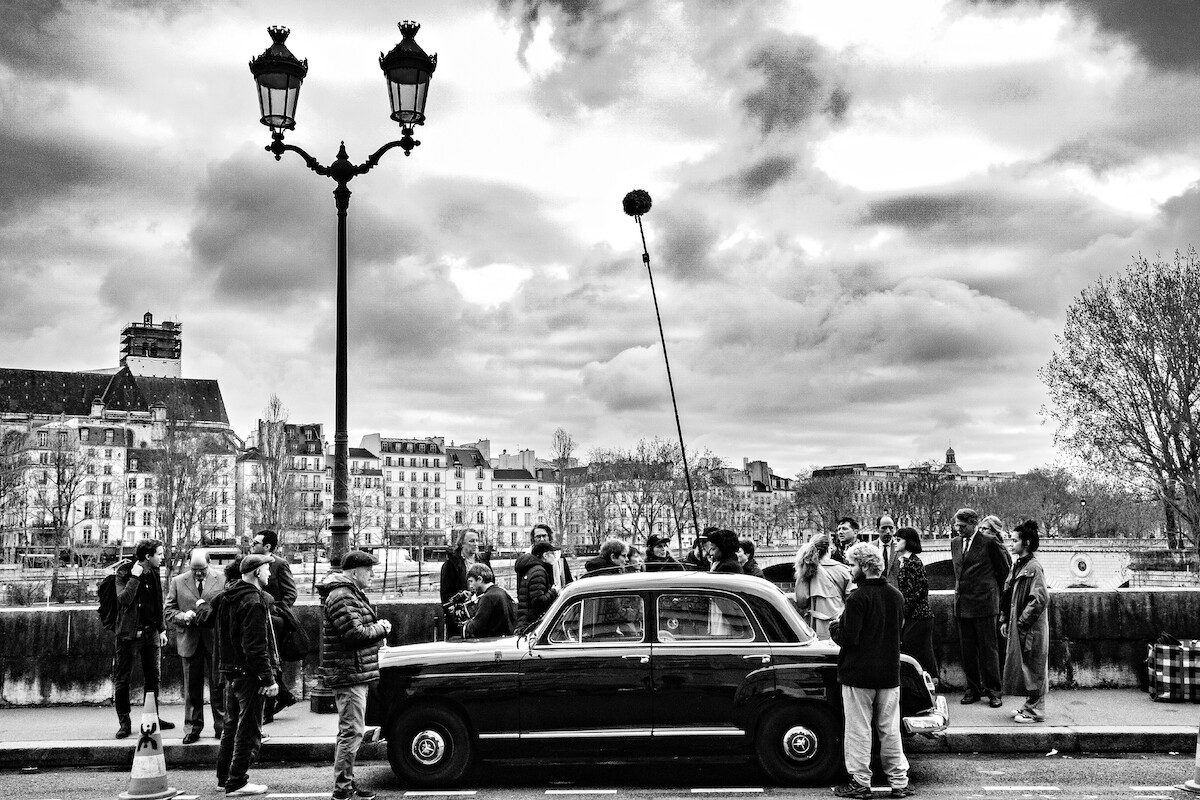
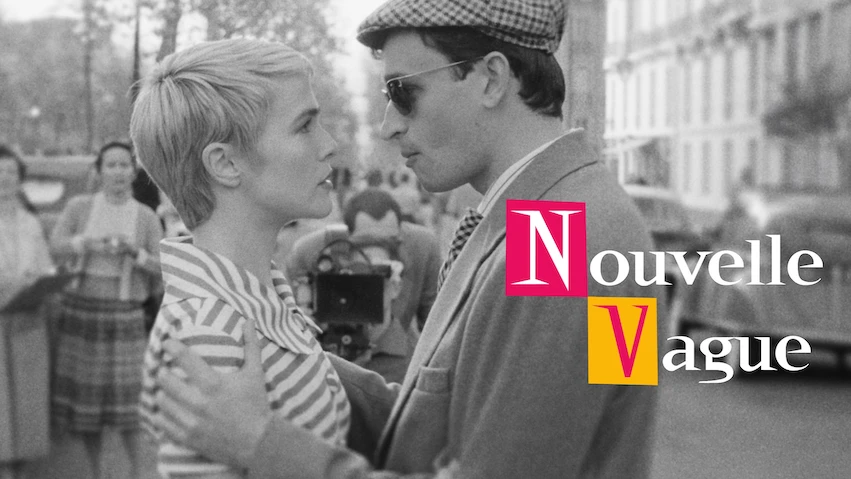
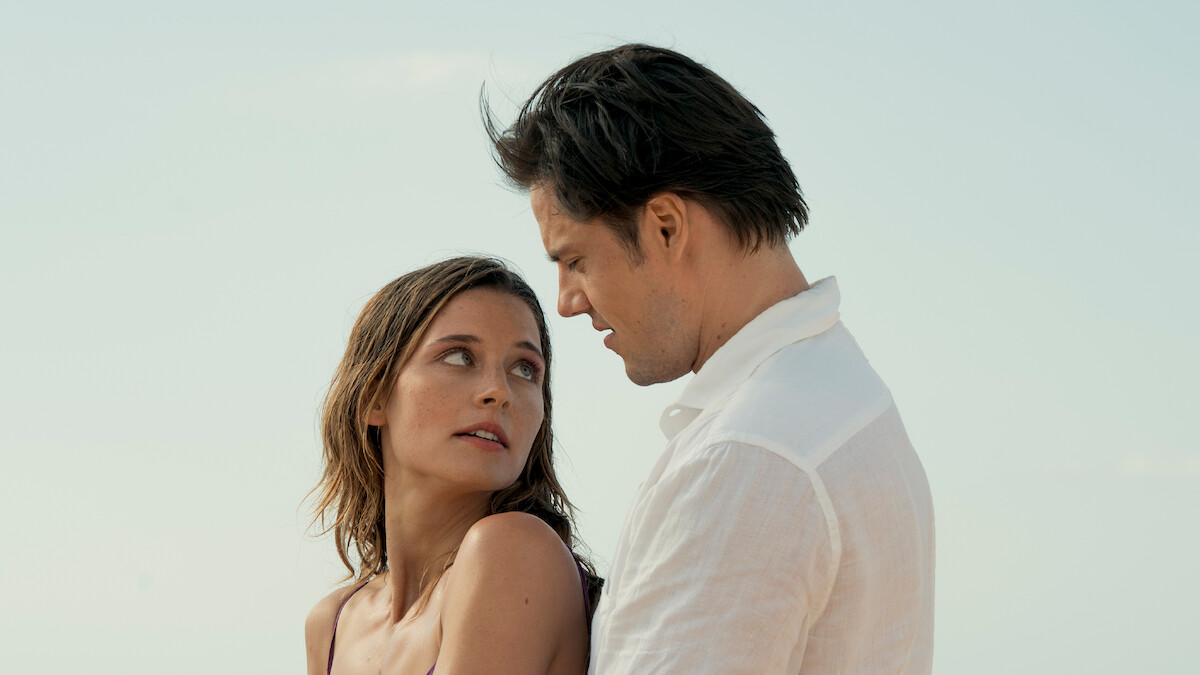
For a film about the birth of French New Wave cinema, Paris is the first, last, and only location to consider. Nouvelle Vague, Richard Linklater’s dramatized account of the filming of Jean-Luc Godard’s Breathless, and an homage to the era, creates an onscreen Paris as vivid and romantic as the one in the 1960 classic.
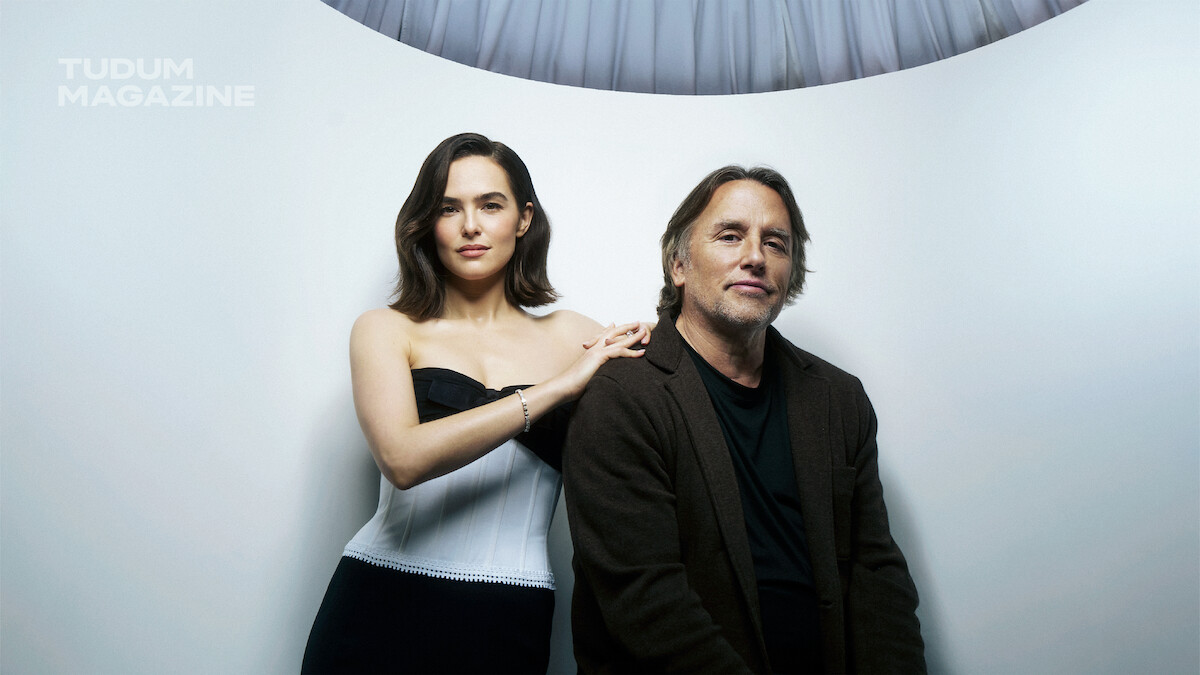
Linklater first explored the City of Light onscreen with his 2004 film Before Sunset. Twenty years later, he came back, this time with a crew of French craftspeople and actors to bring his vision to life. “I was in such good hands this time around,” says the director. “Back in 2003, I was definitely an American in Paris, an outsider, but still so happy to be making a movie in a city I love, and on the streets where some of my favorite filmmakers walked and worked. This time around, because of the utterly French nature of the movie itself, and the fact that my producers are such insiders in the local industry, it was pretty frictionless from my point of view.”
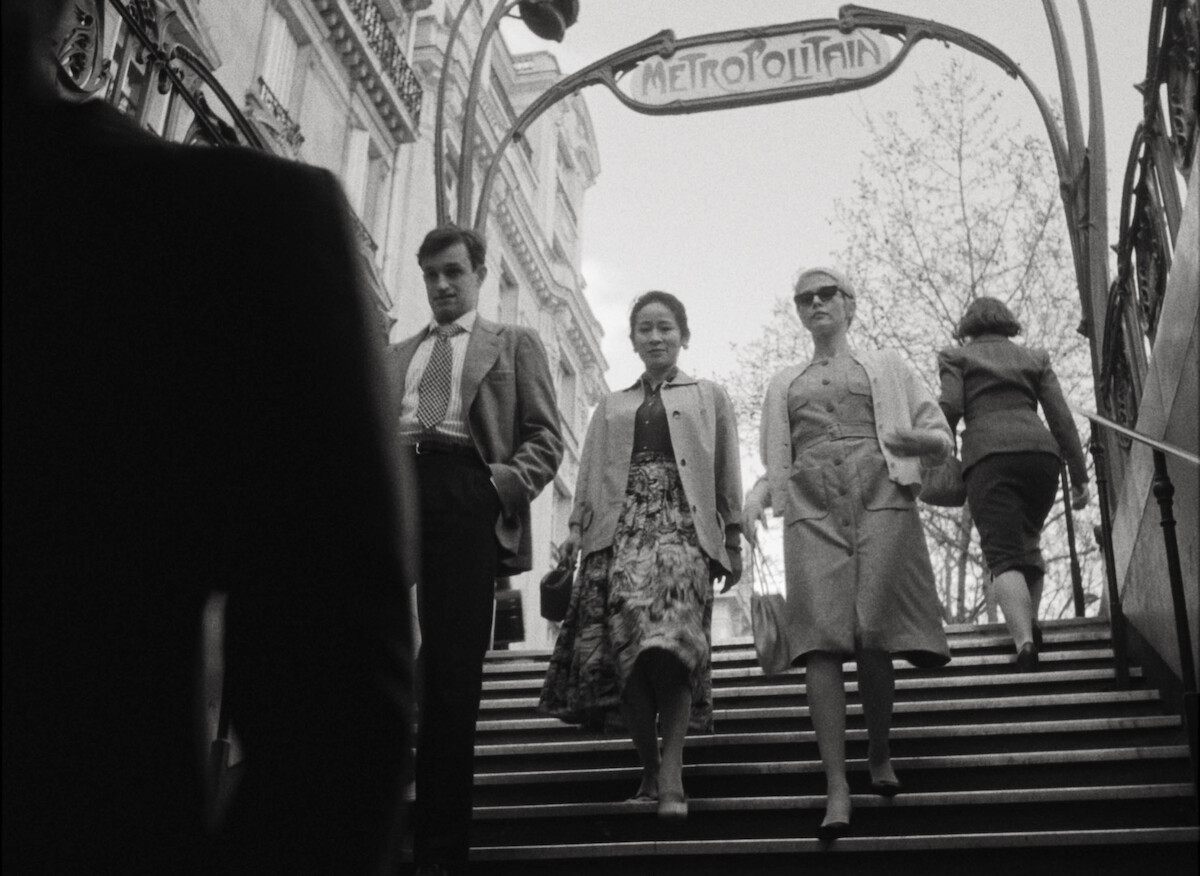
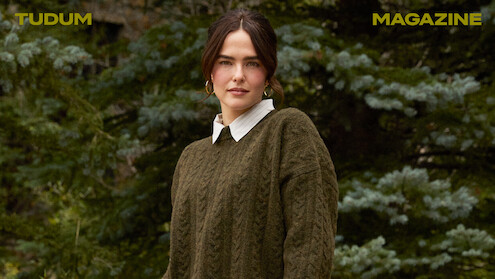
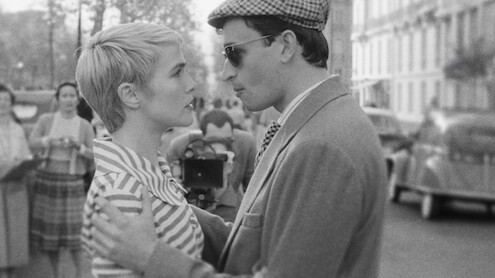
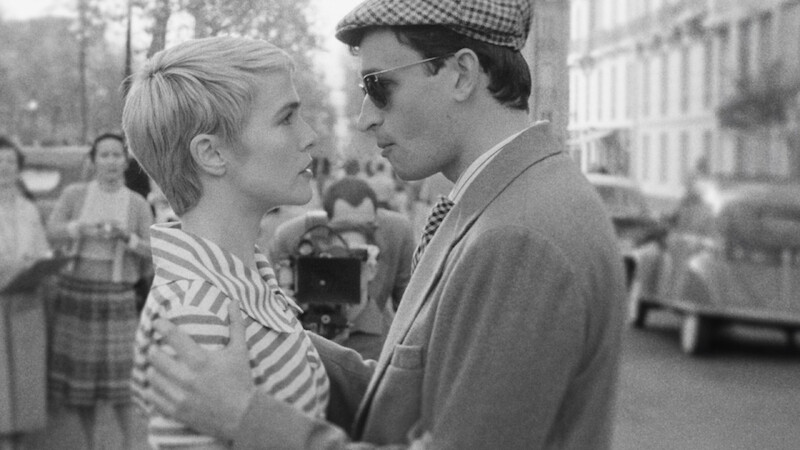
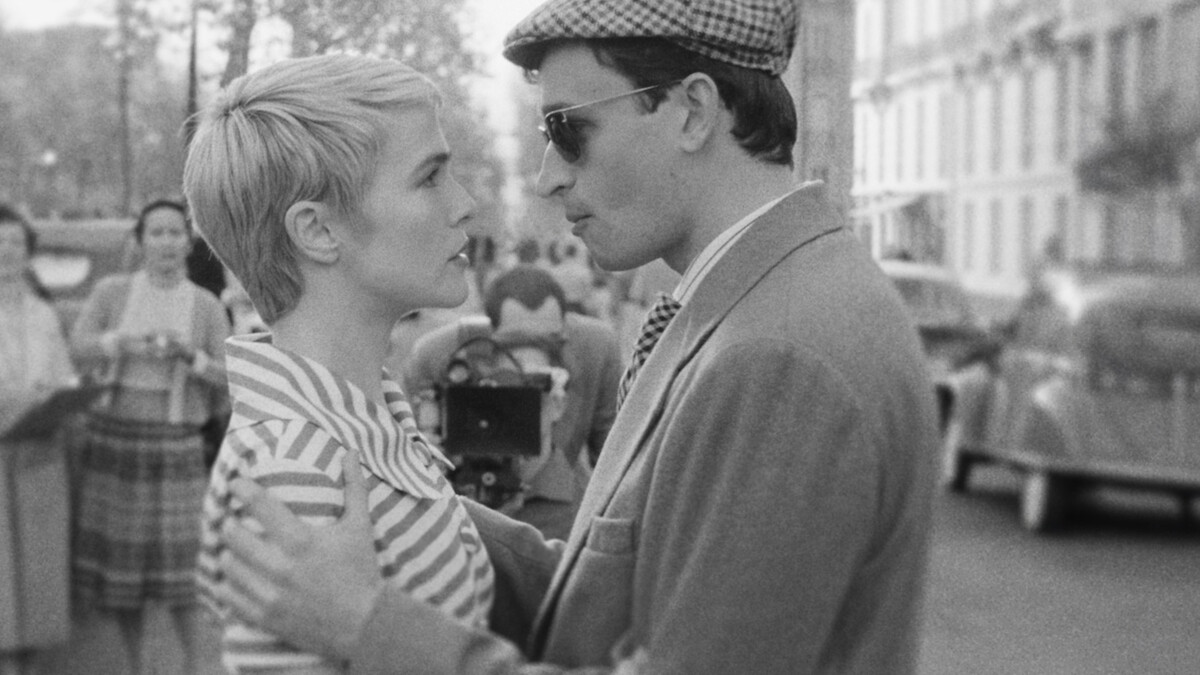
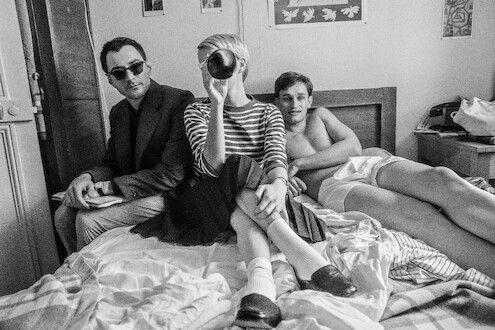
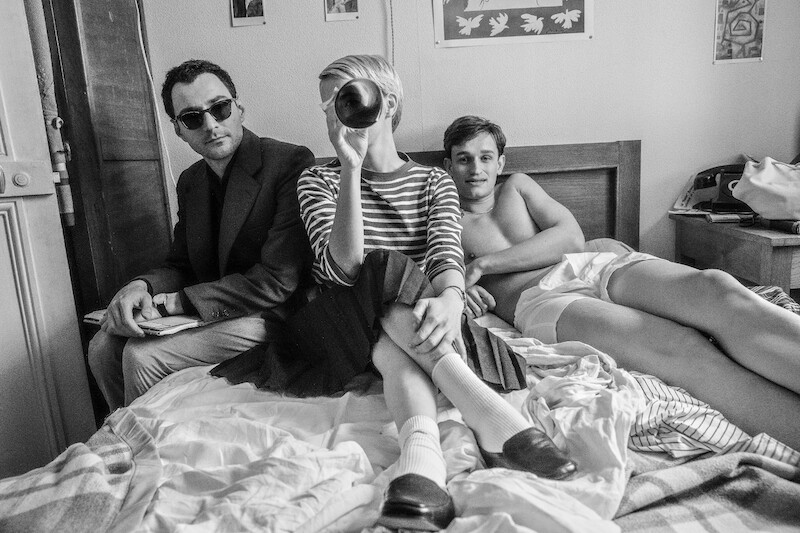
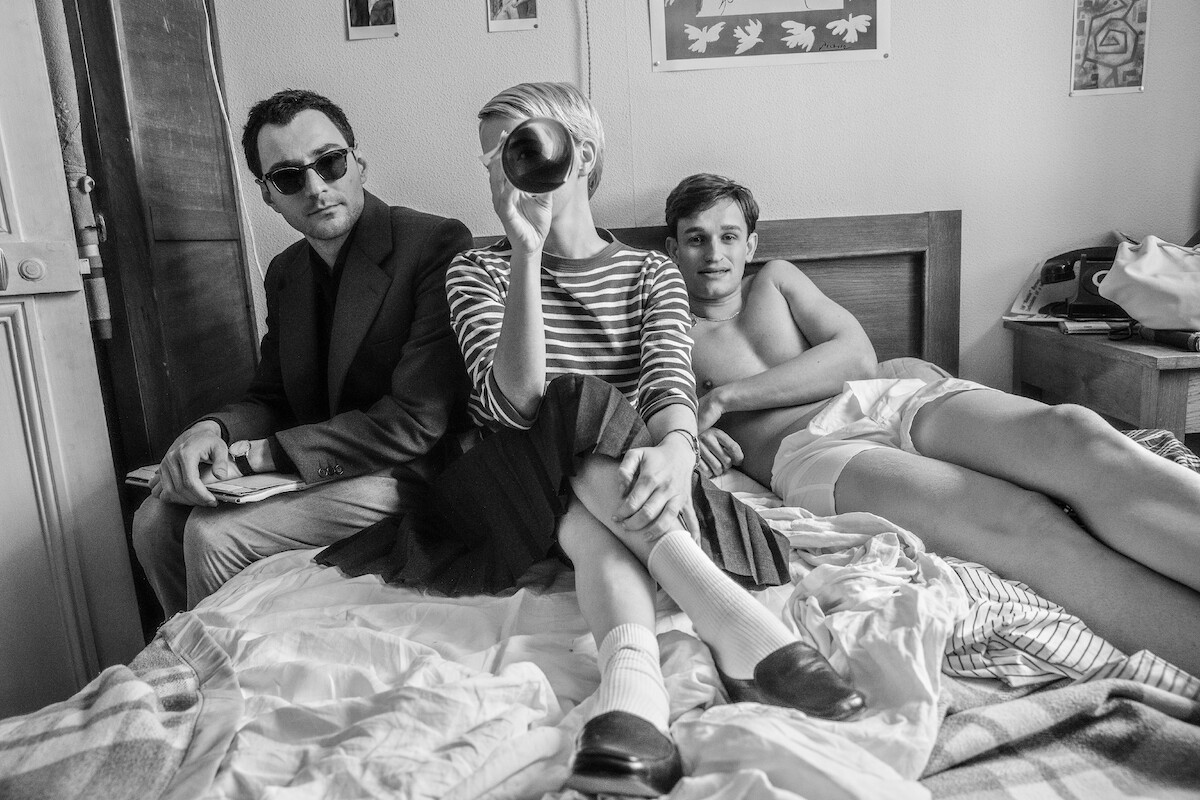
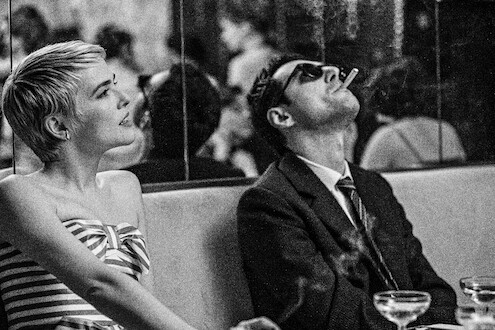
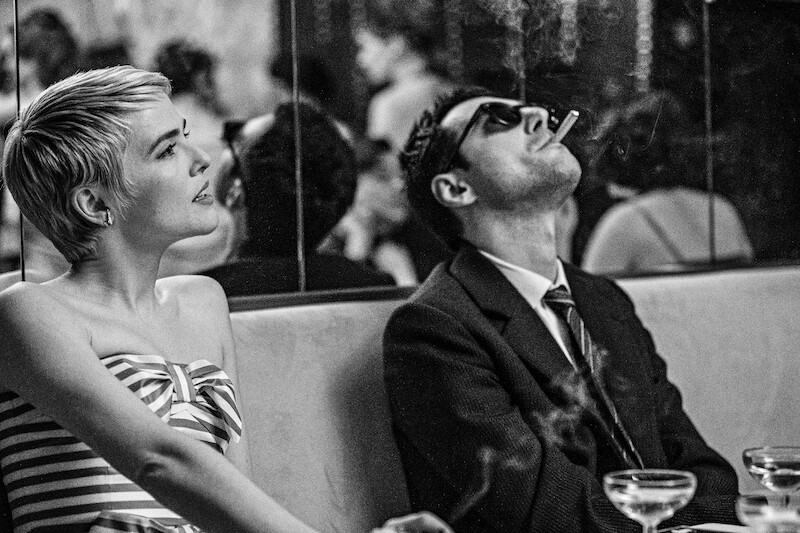
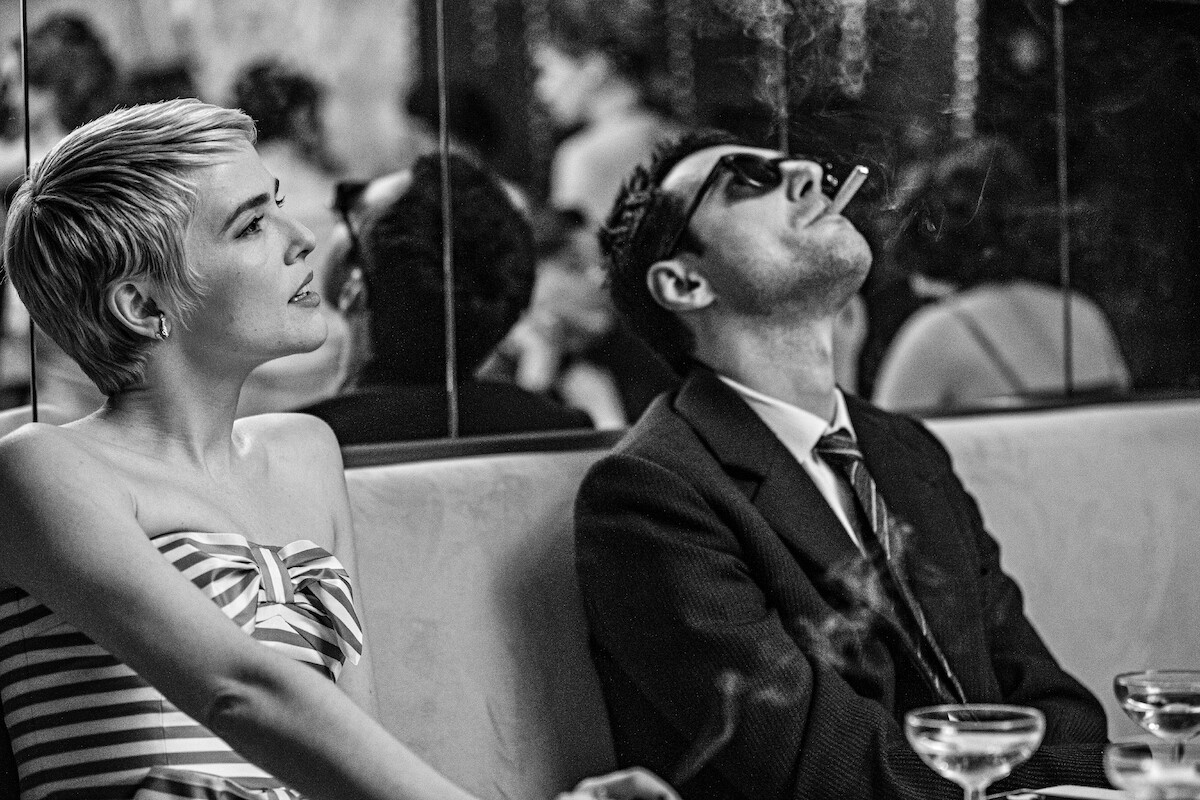
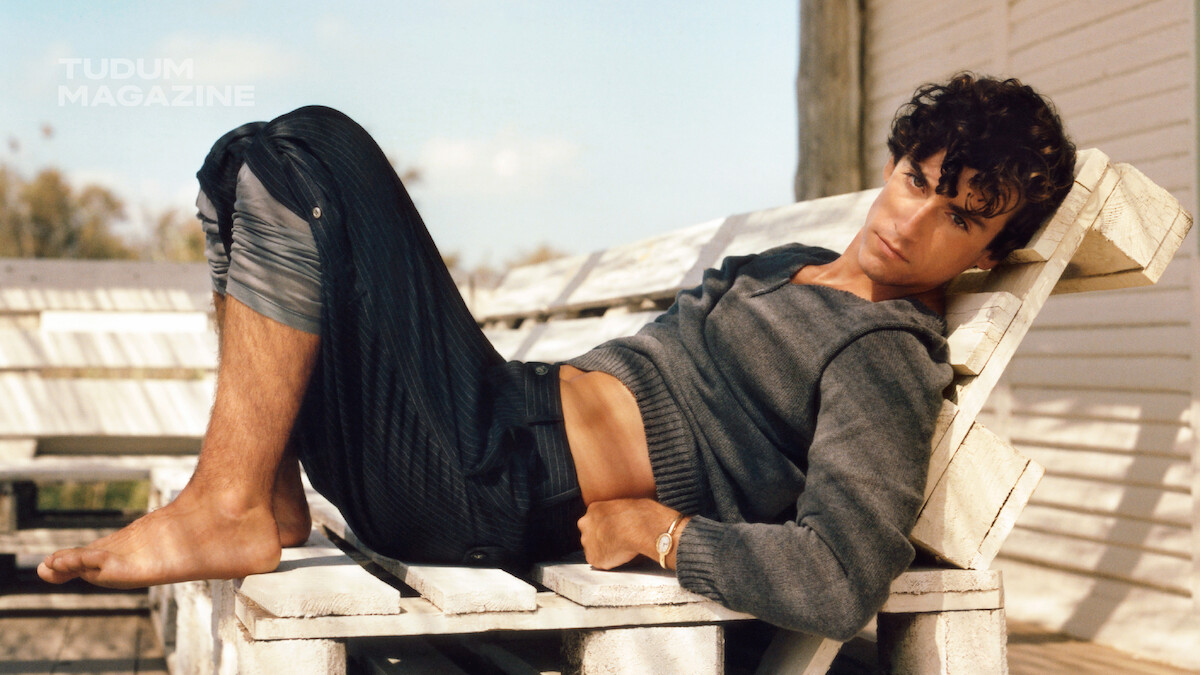
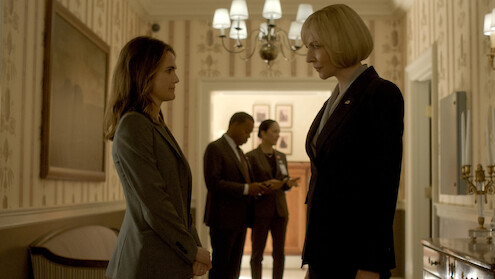
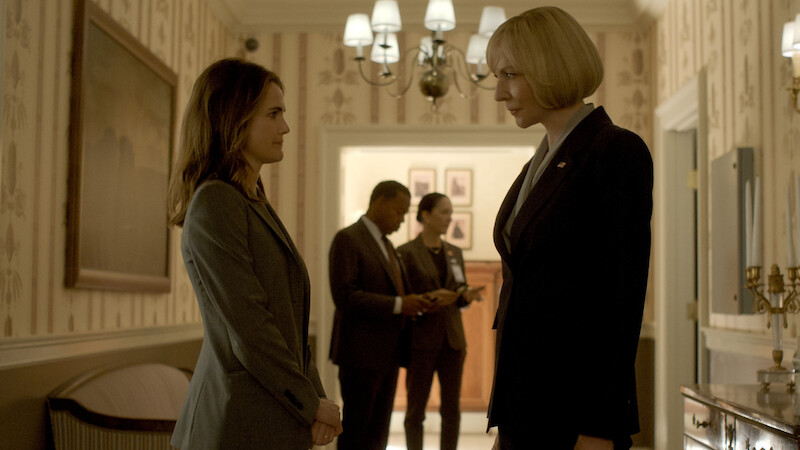
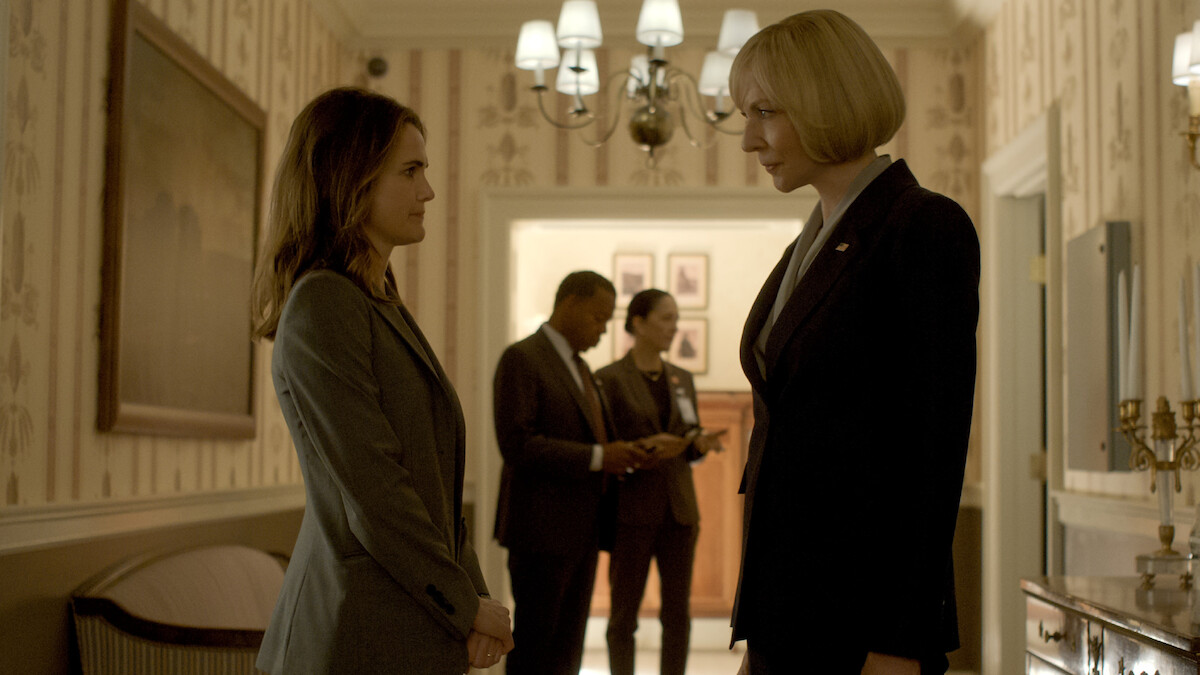
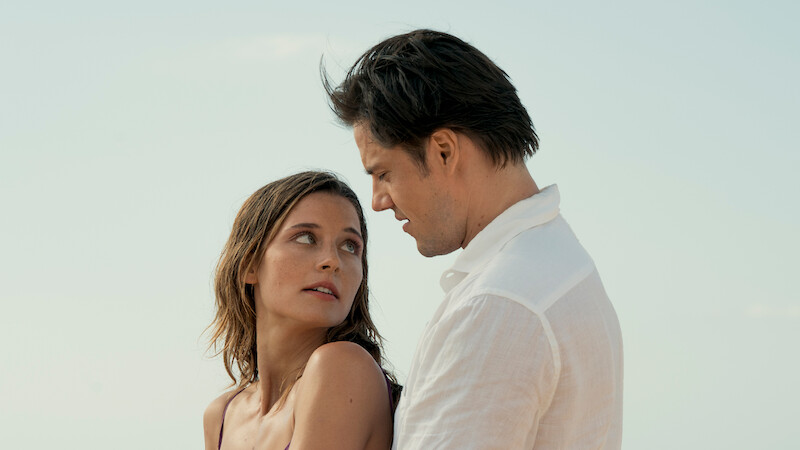
Jean-Paul Belmondo (Aubry Dullin), Phuong Maittret (Jade Phan-Gia), and Jean Seberg (Zoey Deutch)
Another of Linklater’s insiders was French cinematographer David Chambille, who took on the challenge of photographing a film about the making of a film that created some of the most potent visuals of an era. Luckily, Godard left behind source material that helped along the way. “Even if Godard worked with a very small crew, he still hired a still photographer to document the shoot. Raymond Cauchetier captured numerous photos on set, and that was for us a treasure,” says Chambille. “We had incredible visual references of what Paris looked like, especially the locations where Breathless was filmed. We tried to find the same streets, the same corners, the same cafés … and thanks to the tremendous work of the art department, the wardrobe department, and CGI, we were able to re-create Paris as it was in 1959.”
Ultimately, only a local Parisian could ever take on the role of Godard, one of 20th-century France’s greatest cultural figures, and Linklater found his lead in Guillaume Marbeck. “Paris is the city I grew up in — I know it like the back of my hand,” says the actor. His experience on Nouvelle Vague allowed him to spend time in his home city in a completely new way. “Every morning, I had to go to a place tied to deep memories that would vividly come to mind, sometimes making me cry. An old friend’s place, a broken heart, a first date, an old school, a great party, a train you missed, a past that is gone. And at the same time, we were re-creating 1959. It was like a time-traveling experience. Every morning, a portal opened in Paris, and I followed it. Even though I knew this city so well, it was amazing to discover not as routine, not as a Parisian and not as a tourist, but as a time traveler.”
Five Locations from Breathless to Visit in Paris
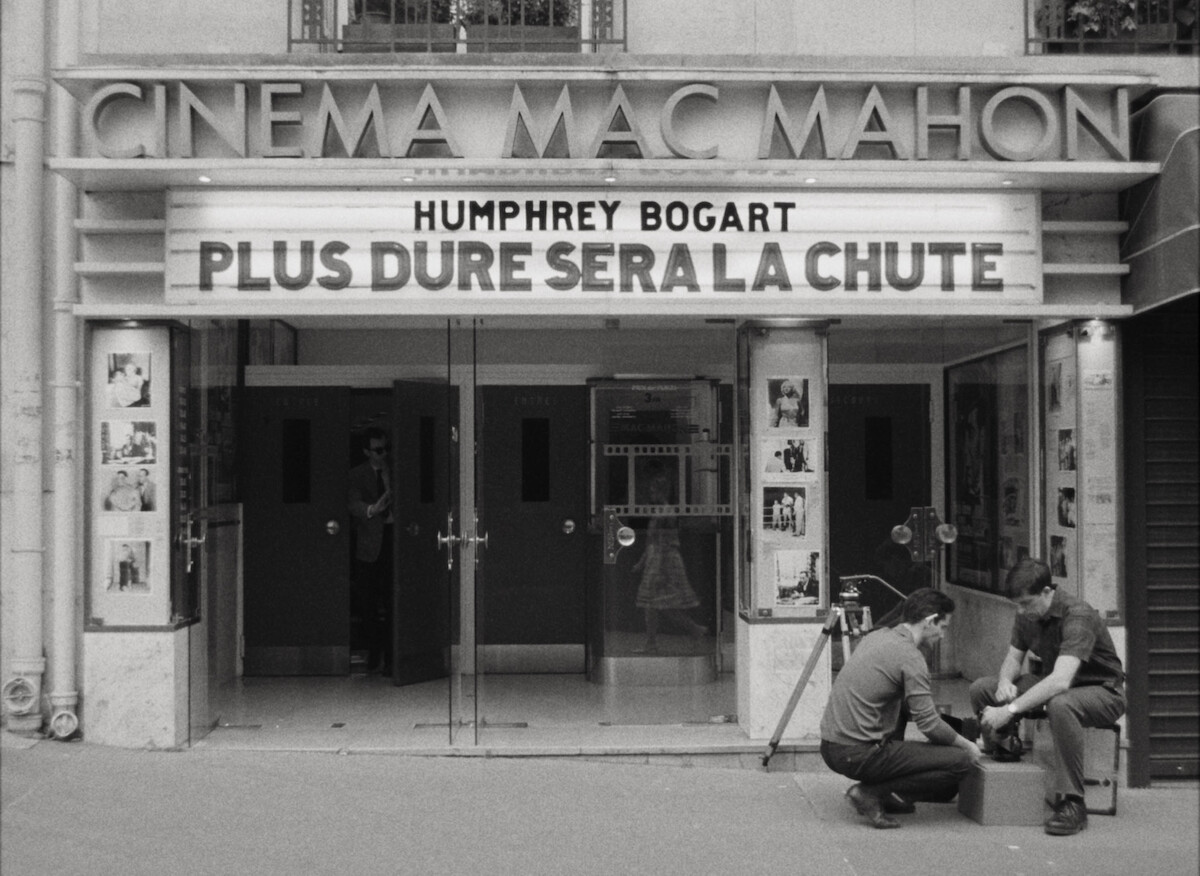
Cinéma Mac-Mahon
The classic Parisian cinema just off L’Étoile is now a great spot to catch a classic film or see retrospectives of legendary filmmakers.
Le Select
One of the brasseries seen in the background of a shot, and a hotspot for writers like F. Scott Fitzgerald and Ernest Hemingway in the 1920s.
George V Métro station
This particular entrance to the Paris underground train network was a location in Godard’s classic, just along the Champs-Élysées.
La Rotonde
Another brasserie featured in Breathless, which was also a popular spot for Pablo Picasso, Modigliani, and Peggy Guggenheim.
Les Rives de Notre-Dame
Godard used the Hôtel de Suède, which now operates as a hotel under a new name, as a prime filming location for interiors.
This feature originally appeared in Issue 21 of Tudum Magazine.