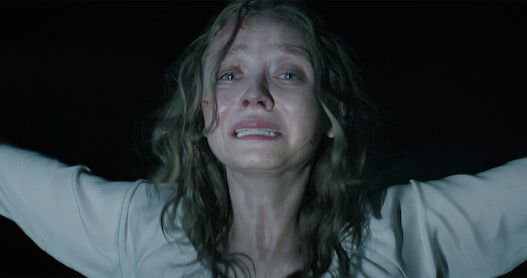
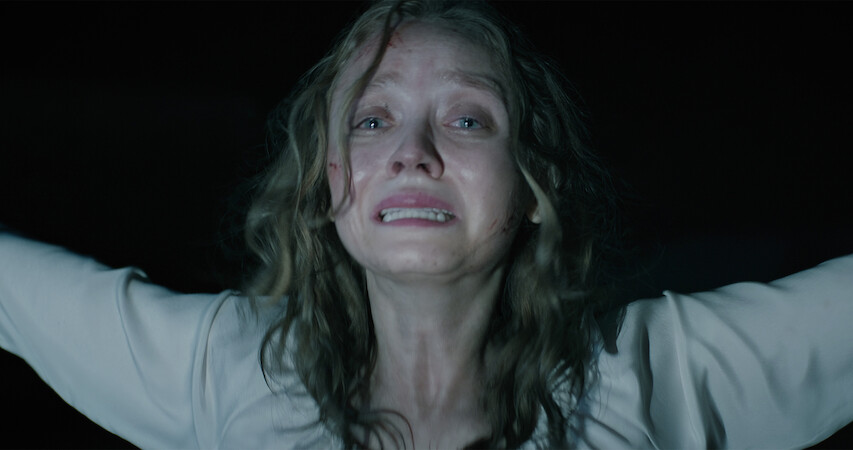
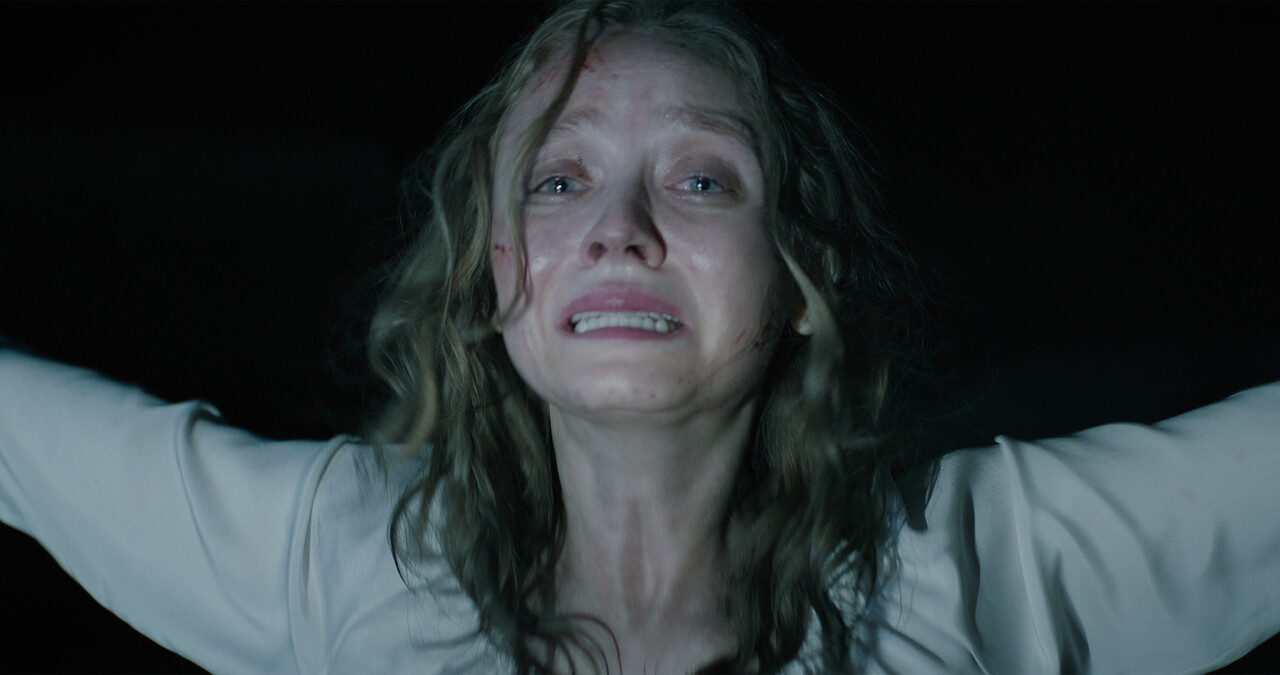
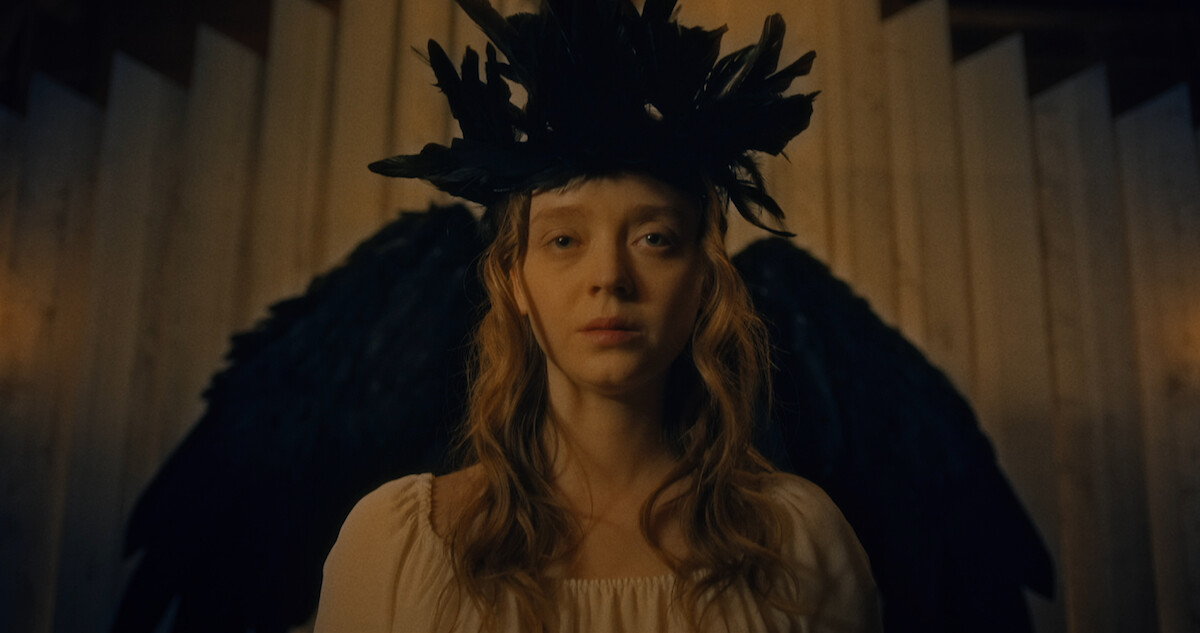
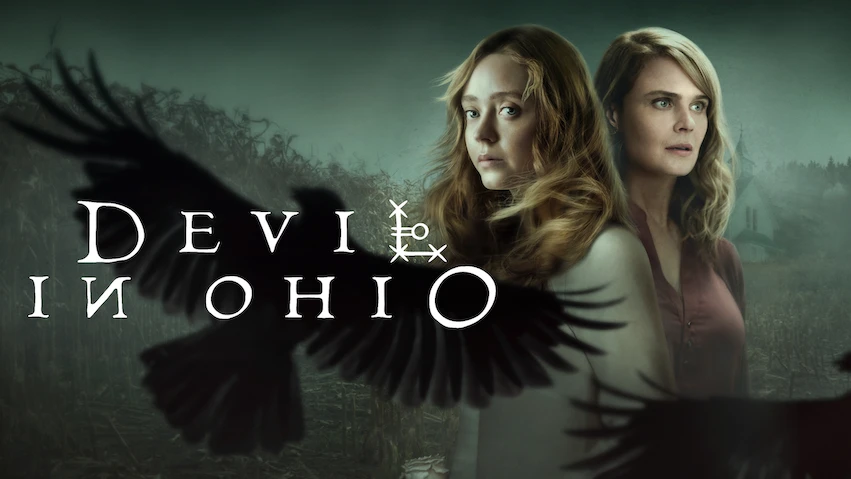
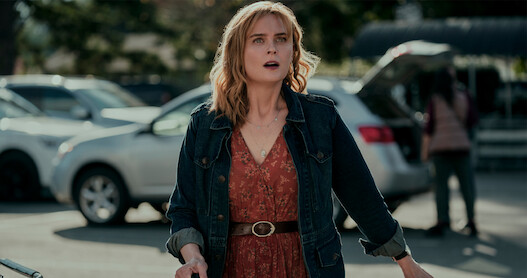
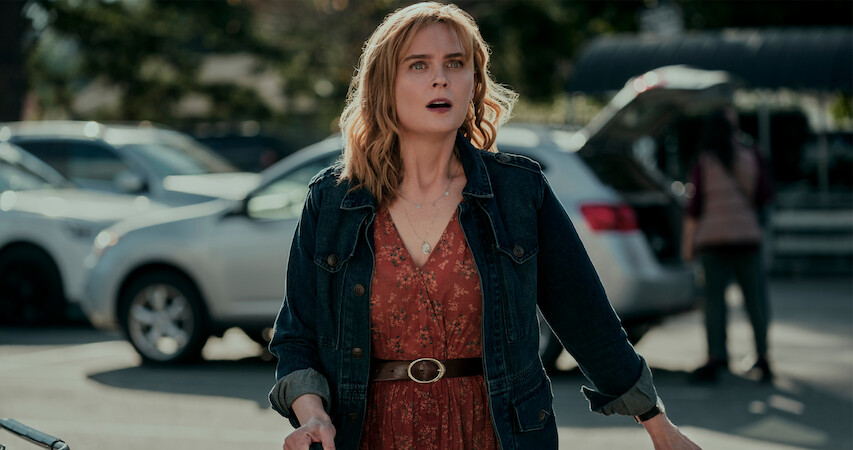
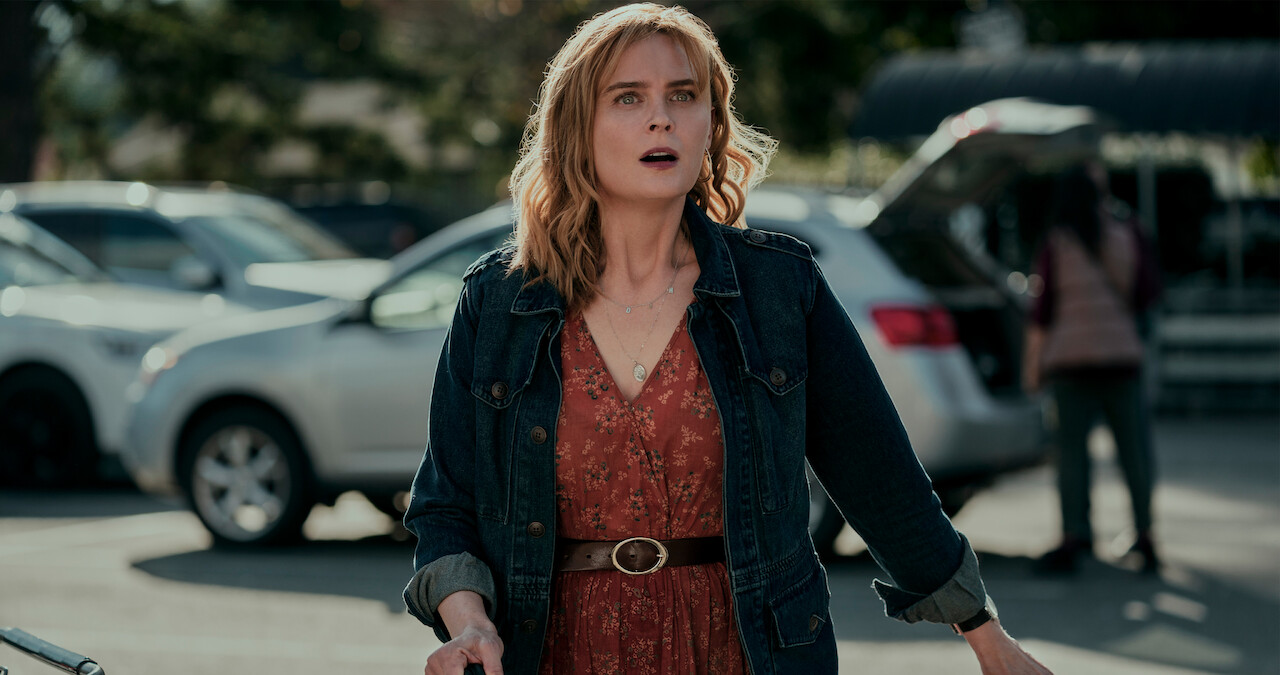
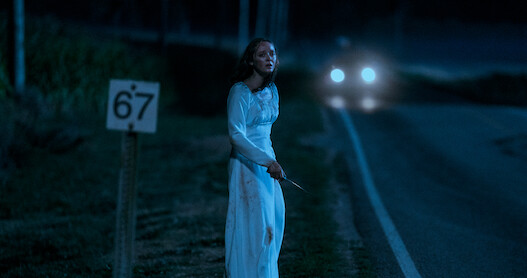
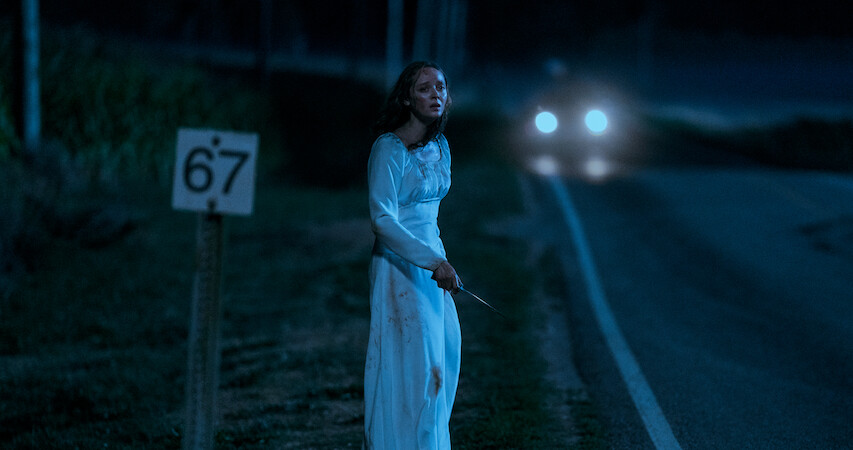
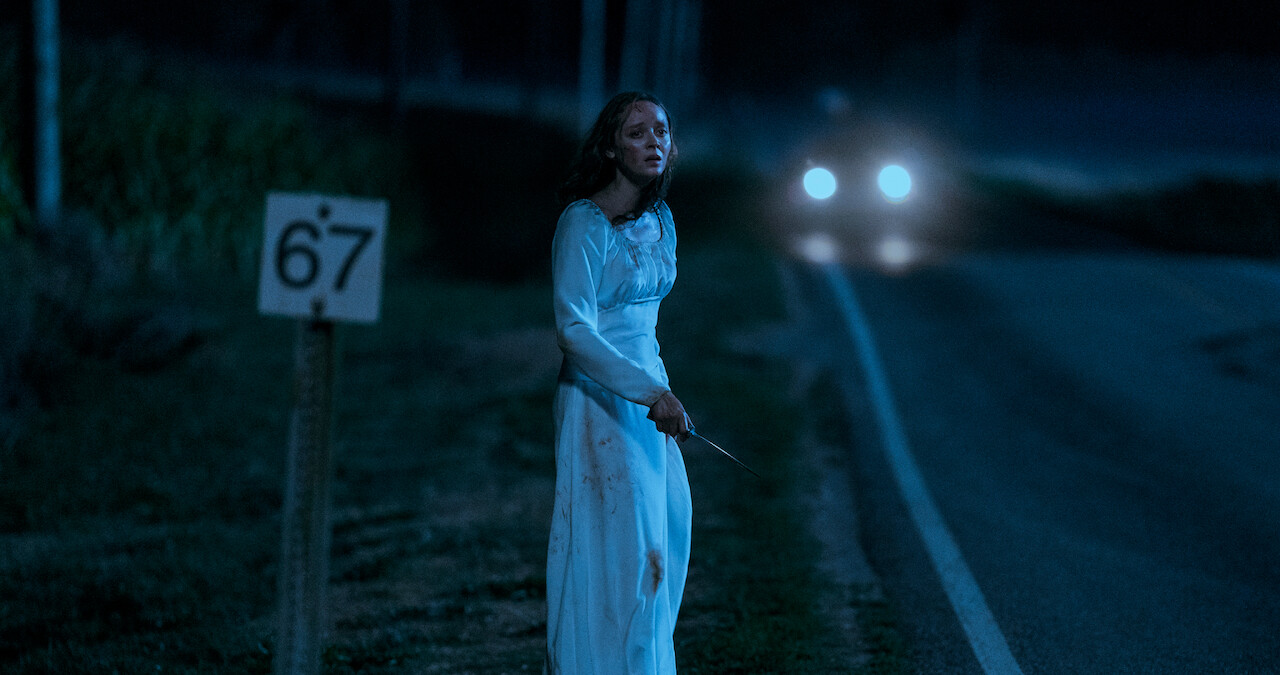
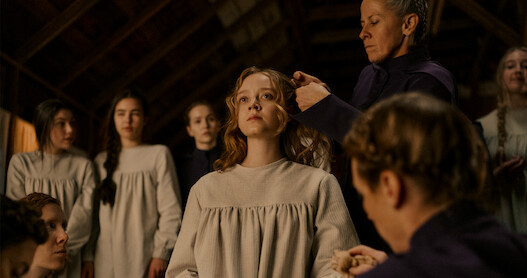
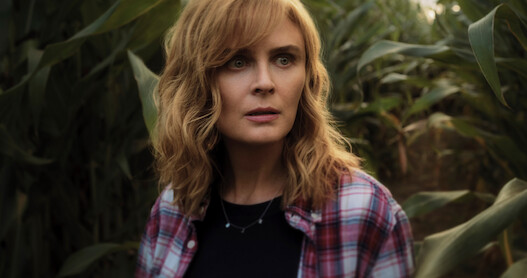
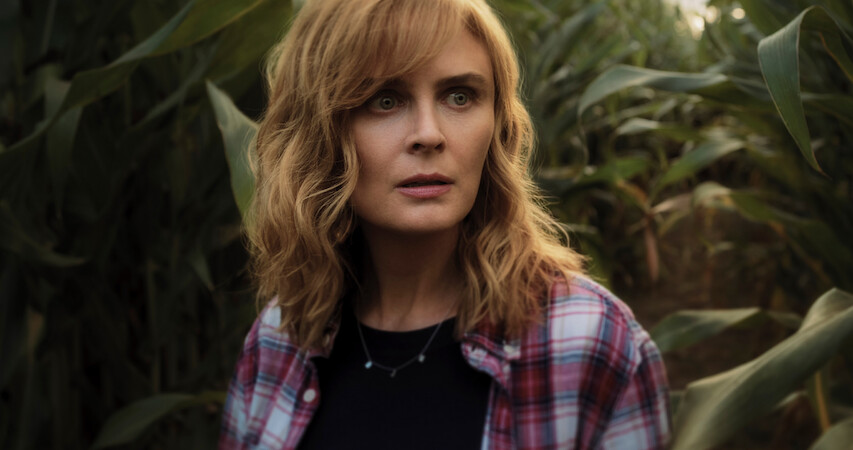
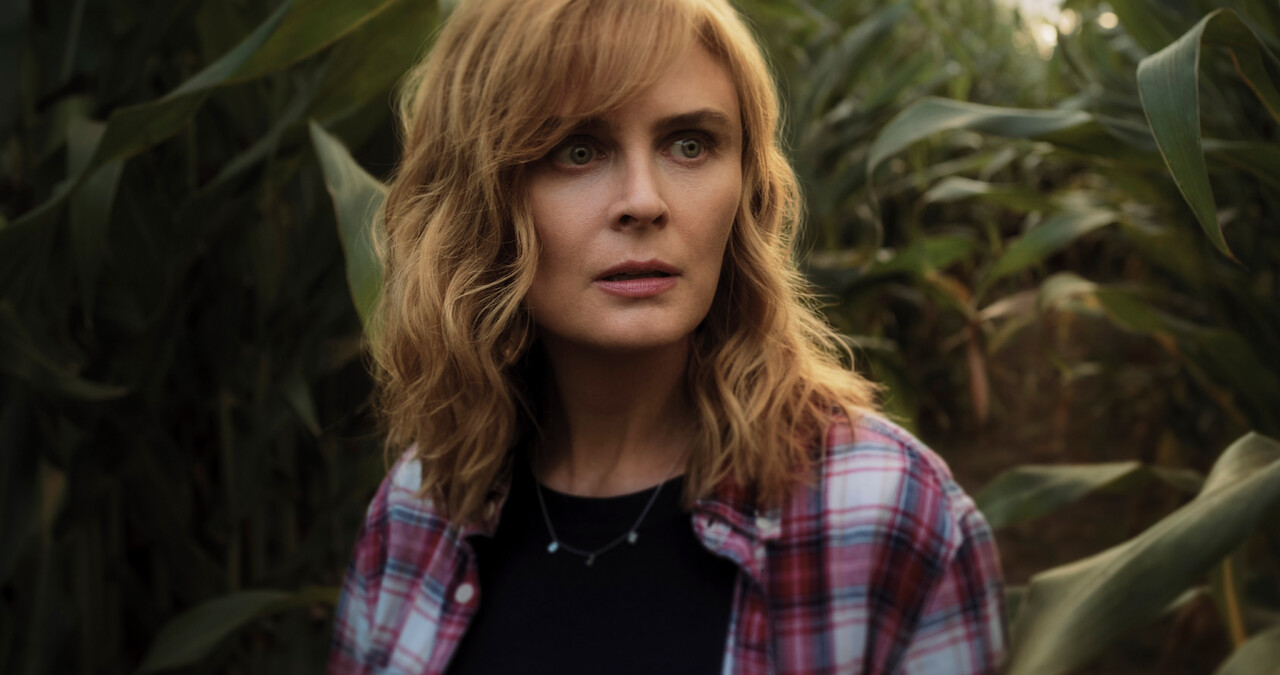
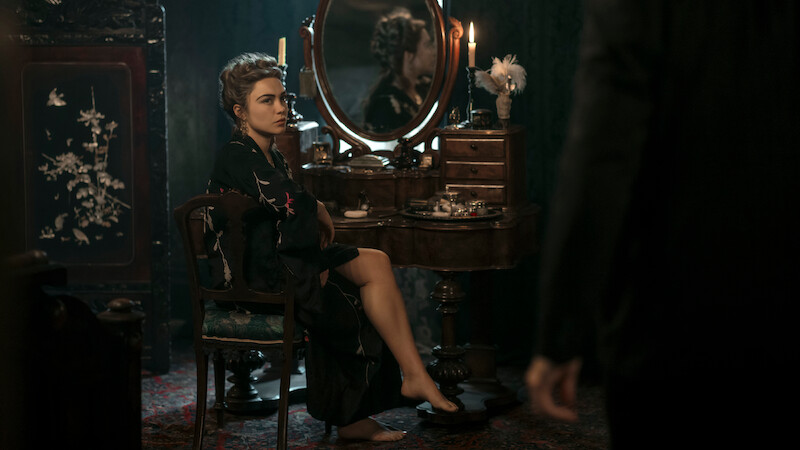
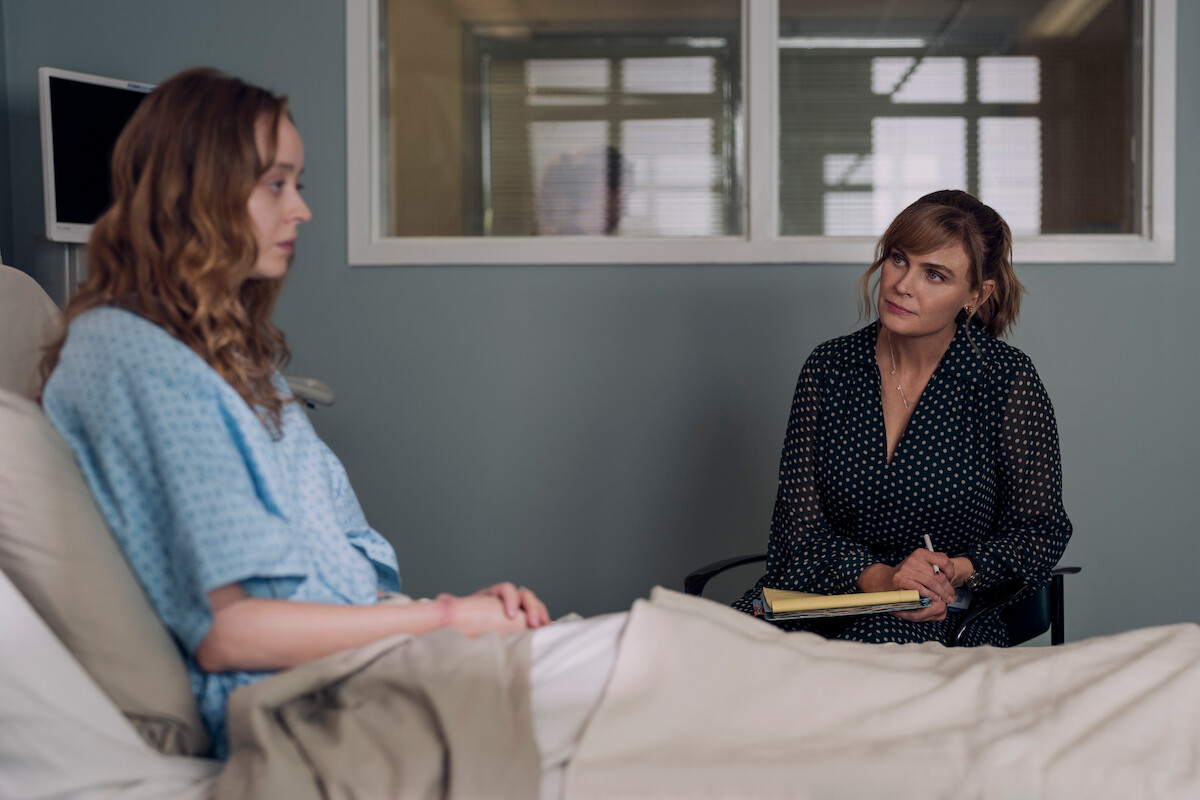
The first explicit mention of the devil in Devil In Ohio comes in the final moments of the premiere episode. Psychiatrist Suzanne Mathis (Emily Deschanel) has brought her mysterious runaway patient Mae Dodd (Madeleine Arthur) home for the night until a foster family can be found to shelter her. As the Mathis family sits down to dinner, Mae — who up until then has been relatively silent, if a little strange — asks if she can say “the blessing.” Suzanne agrees, eager to make her feel at ease. But the words of Mae’s prayer aren’t exactly standard: “Bless us O Morningstar and these gifts which we are about to receive from thy bounty, through the ruler of demons, our lord. Amen.”
Suddenly, everything clicks into place. Mae isn’t just a young woman who has fled her home; she’s a member of a cult. And the bloody reverse pentagram carved into her back that landed her in the hospital? Far from a cruel prank, it’s part of a sacred ritual meant to worship at the altar of Lucifer Morningstar, aka The Devil himself. As the series progresses, we learn more about the Dodds and their insidious history in Amon County, leading to a fiery finale that exposes the dark nature of the cult they lead.
But is it real?
The answer is yes — and no. Though the series, based on the 2017 bestselling book of the same name by Daria Polatin, is loosely inspired by a true story, the cult portrayed is completely fictional. “We made it all up,” Polatin, who also served as showrunner for Devil in Ohio, tells Tudum. She and her writers’ room spent months building up the cult’s lore, going as far as to write their own bible — the Book of Covenants — even including hymns and prayers to make it as specific as possible.
Ricardo Hubbs/Netflix
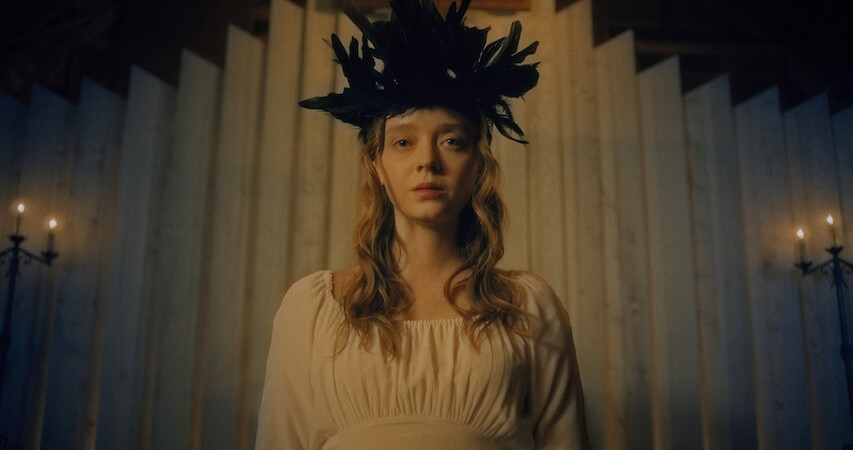
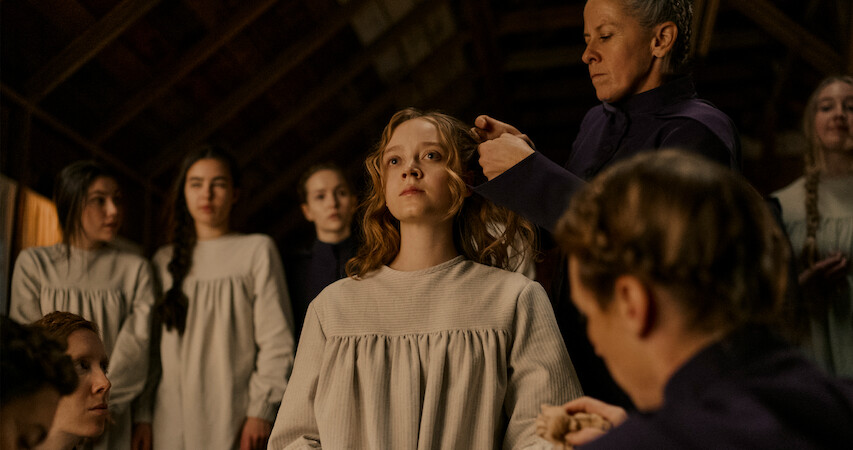
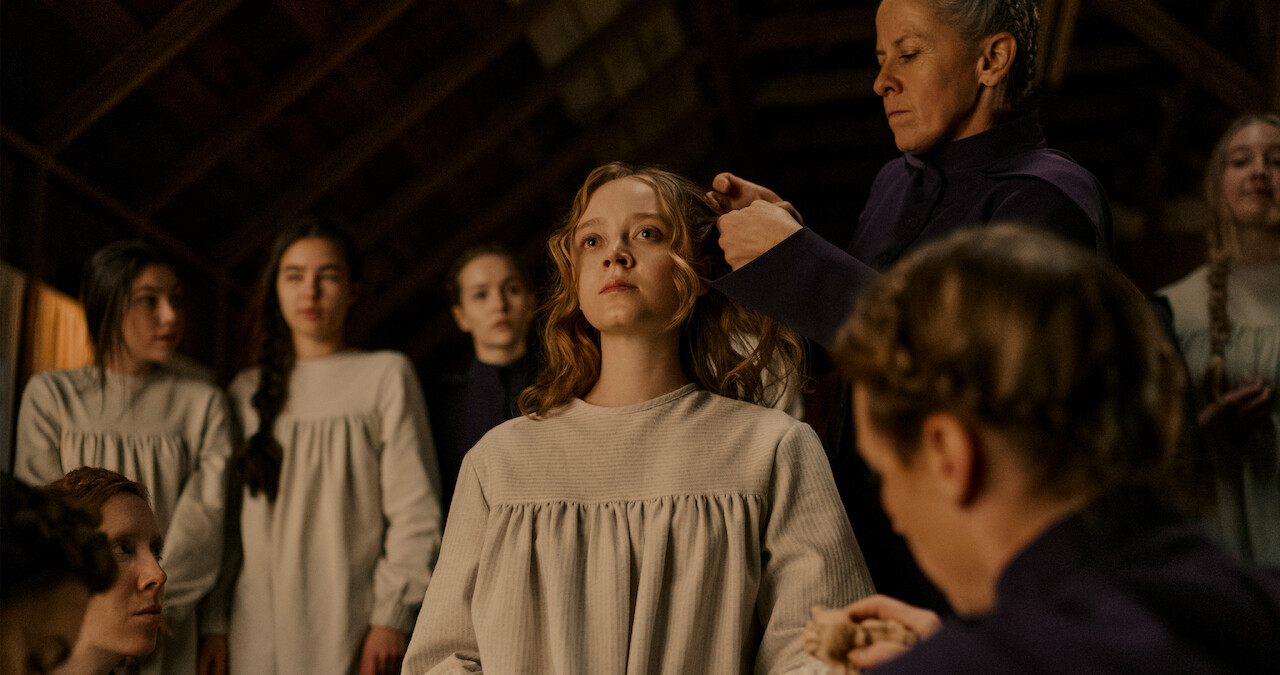
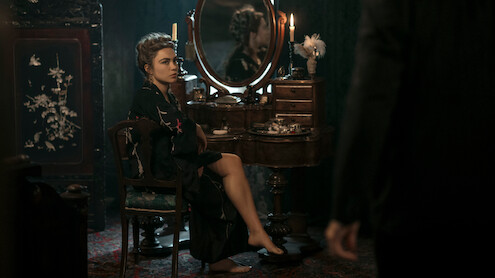
“There are a lot of cult shows,” Polatin says. “I really took this as an exciting task to create something that is unique and bespoke, but also feels real.” To do that, she and her team interviewed former members of different cults and pulled themes and rituals from all sorts of religions and ideologies. Then they created a blueprint for the cult that could be shared with everyone on set. “We wrote documents about the cult that we shared with our heads of departments and creative teams so everyone was on the same page,” she says. “Our composer came up with this stunning hymn he wrote [after] we gave him the language of our cult — the Morningstar, the dawning. The costumes are inspired by our backstories: They came from Ireland, they were farmers, they lived in West Virginia, their crops failed, [forcing them to move to Ohio].”
On that note, don’t bother searching for Amon County, Ohio either. The cult’s location is also fictional, although Polatin did try to keep things as Ohio-specific as possible. “I wrote all the copy for the radio announcers — they’re talking about Ohio teams. Ohio is a great American bellwether state — it's very relatable and because of that, it also feels universal.”
Even Mae’s scar, the upside-down pentagram messily carved into her back, has a backstory of its own. Makeup artist Calla Syna Dreyer worked with Polatin to design it, going as far as to add in an imperfection at the top where the knife would have slipped as Mae jumped up in terror. “We added that little stripe up the back to [communicate] the idea that they were just finishing carving it and she gets up,” Polatin says. Still, there’s a reason it appears only sparingly in the series. “It’s a wound and we didn’t want to exploit it,” Polatin adds. “It’s emotional when you see that on somebody. It was really important for us to get it right, for it to be realistic [but also] be respectful of body horror.”
As Polatin points out, Devil in Ohio is far from the first show to take a deep dive into the world of cults. Why do we keep returning to these themes over and over again? What makes them compelling for storytellers? “I think it goes back to an evolutionary instinct to be a part of a tribe,” Polatin says. “Historically, that’s what helped people survive in the wild. You needed to be a part of a group to fend off weather and predators, to find food. It’s really baked into who we are in our psychologies. And it’s not just about physical connection. It’s about a sense of belonging and wanting to feel that [sense of] community. That’s very easily exploited.”