Given that Earth is 4.5 billion years old (and that human beings have been inhabiting it for something like 200,000 years), it might be hard to believe there’s anything new to learn about the natural world. We’ve had thousands of years to observe and hypothesize, and just shy of a century of broadcast television to assist the perusal of our planet from our very own homes.
But just when you thought you’d seen it all, Our Planet II is here to offer a brand-new perspective — and some actual never-before-seen moments — to nature enthusiasts everywhere.
How was Our Planet II made?
Our Planet II tells the story of how animals move in the modern age, migrating toward food, water and shelter in a world increasingly occupied by human beings and industry. Working with groups of scientists who study species on the ground, filmmakers followed their migration patterns at different times of year using a combination of cameras and drones. For those stunning underwater scenes, Our Planet II cinematographers used something called a rebreather, a diving apparatus that allowed them to stay underwater for anywhere from four to six hours. And, while some might assume the Our Planet series is enhanced with CGI, filmmakers say that’s simply never even considered beyond the typical enhancements required to clean up a dusty lens or stabilize an image. In other words, what you see is what’s really happening out there on the big blue planet — and what’s happening is absolutely spectacular.
Of course, capturing brand-new moments and telling a story with a thousands-year-old legacy is no easy feat, but Our Planet II filmmakers and narrator David Attenborough were up for the challenge. Below, see some of the most impactful moments in the four-part series (some of them captured on film for the very first time ever), explained by the filmmakers themselves.
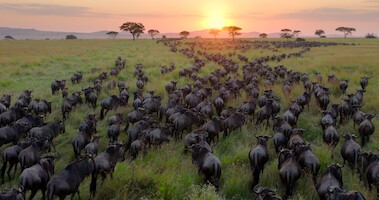
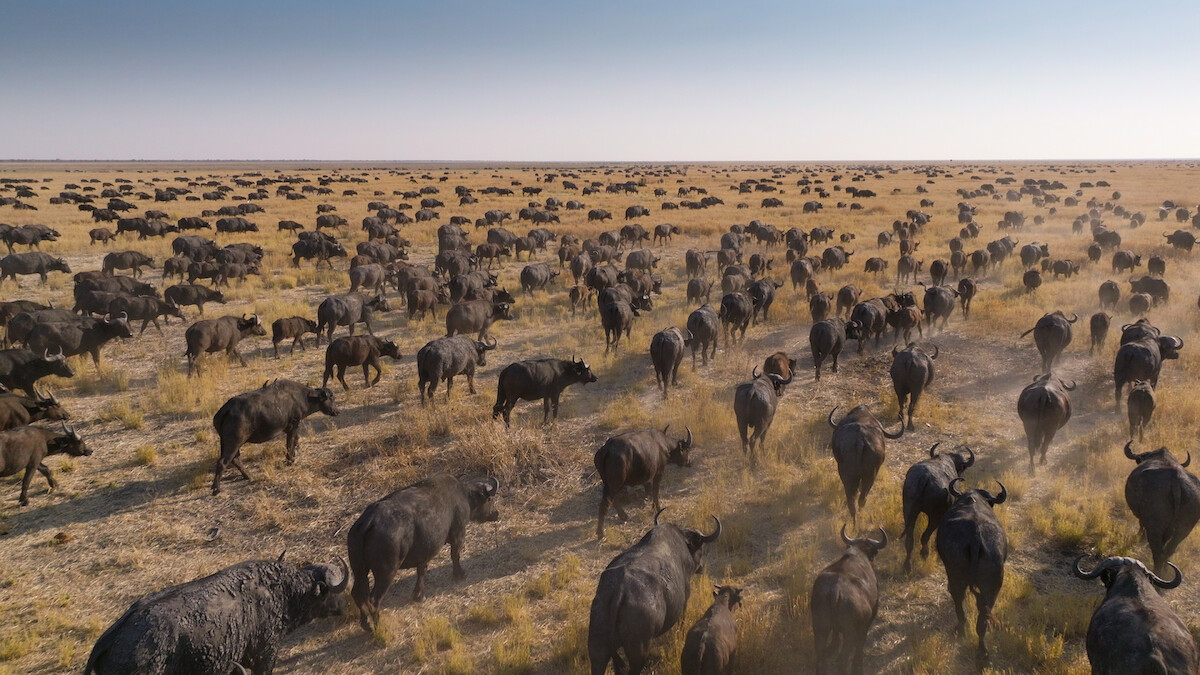
Wait, how many Cape buffalo are there in that first scene?
“This is basically the biggest buffalo herd ever recorded, filmed in Botswana. Normally, Cape buffalo tend to hang out in smaller groups — a couple hundred, max — so they’re not putting as much pressure on resources. In the wet season, you don’t usually find them more than 20 kilometers from a water source. But the last rains fall around April, and then everything starts to dry up. The buffalo scatter and gather around small water pans until there’s no more rain, and the last remaining water source in the area is in the Mababe Depression. There’s a marsh there that maintains water year round, so all of the scattered buffalo from this huge radius travel into the area and the herds converge, eventually forming what’s called a mega-herd. No one had ever seen a mega-herd as big as this — sometimes, they’ve seen herds up to 2,000, but this one we painstakingly hand-counted every single buffalo in the shots we took. There are upwards of 4,000 buffalo in these images.” — Emily Franke, assistant producer
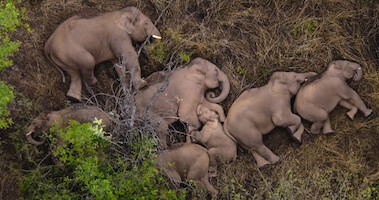
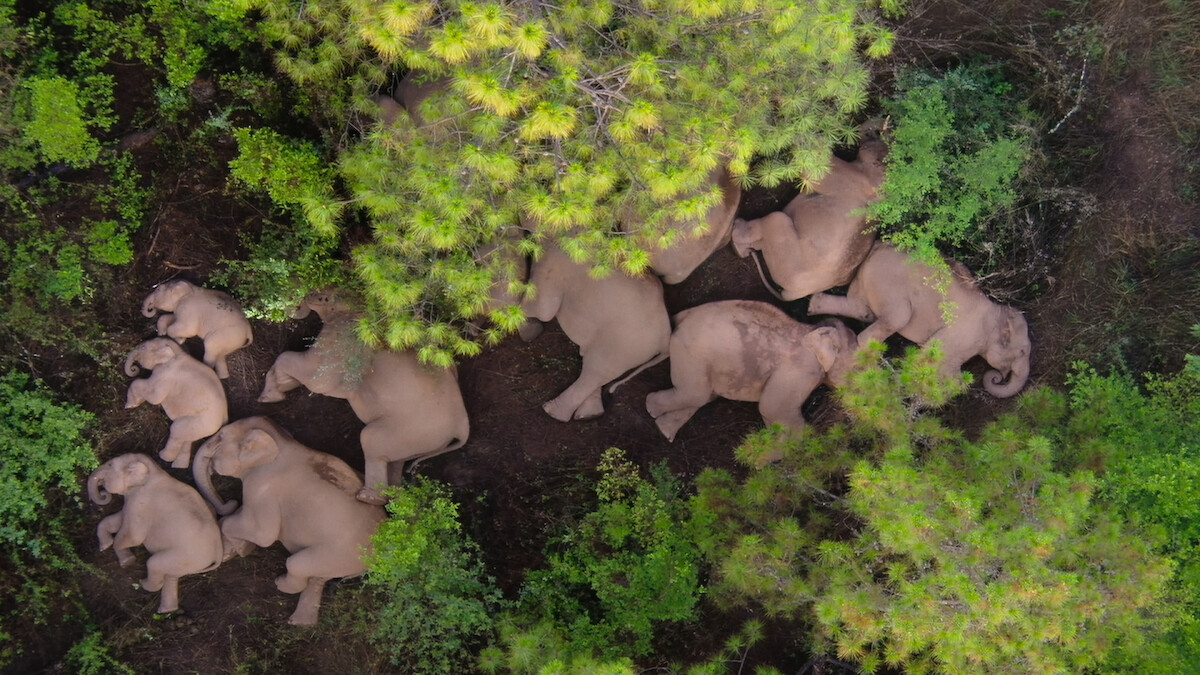
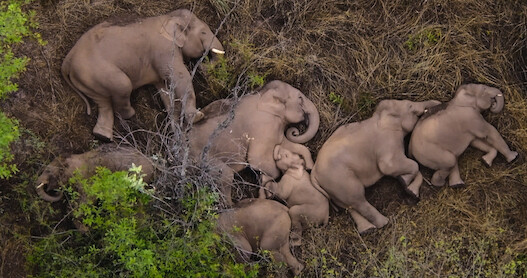
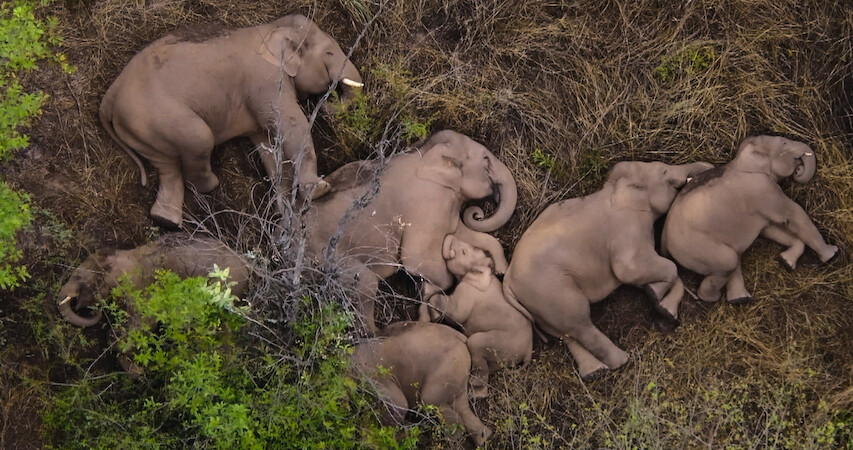
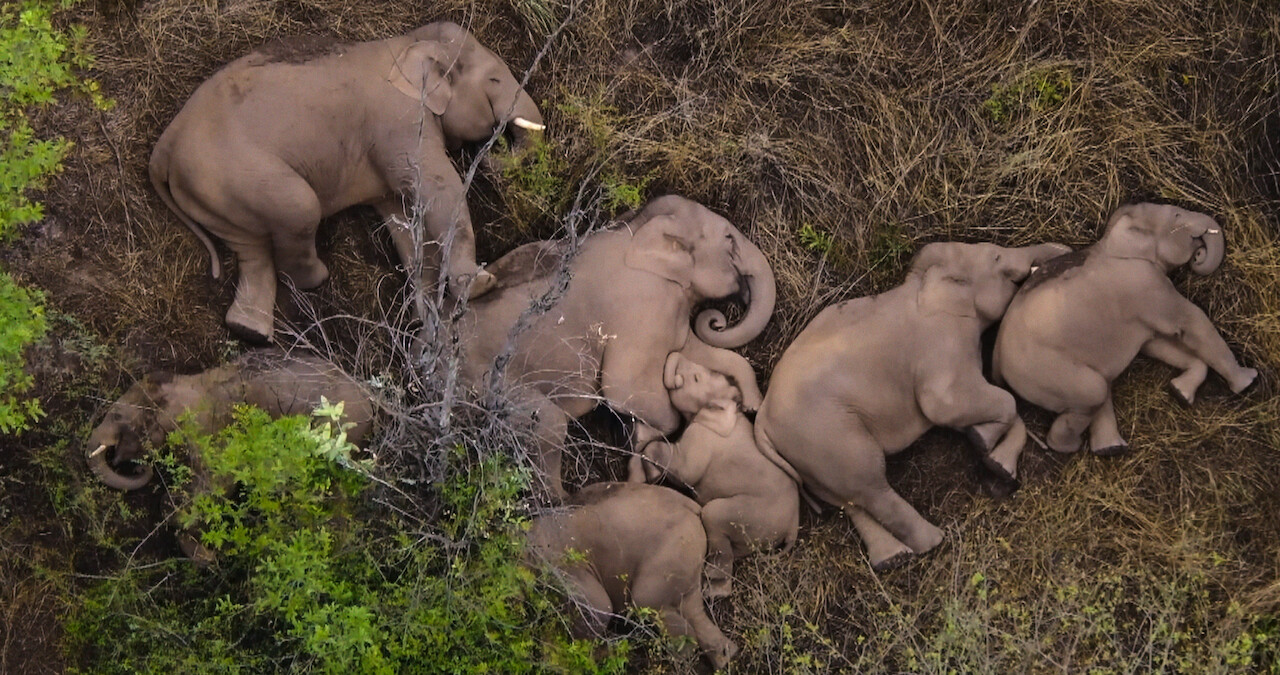
Why are those elephants napping in the world’s most adorable cuddle puddle?
“When elephants need a new home or they need new food, they move. They’re used to it — it’s their typical strategy. What’s unusual is a herd of elephants moving through a completely human-dominated landscape on a brand-new journey of this scale. Nothing like that has ever been seen before. In this part of southern China, there’s a population of wild Asian elephants existing in a really small forest, and they’re doing well. The population has been conserved effectively, and the numbers have grown to around 300 individuals — in other words, the forest is now at elephant carrying capacity. Inevitably, in any protected area, there’s an amount of encroaching and conflict in the face of the human population, restricting how far a protected area can grow. But this family of elephants had a pregnant matriarch, which meant the group was about to get bigger — there were more mouths to feed and even more of a need to get on the move and go marching.
“So, these elephants then set off and just went on this extraordinary journey, through agricultural land, through villages, through towns. They crossed multilane highways. They charged through a car dealership. They broke into homes, they raided crop land, they raided grain stores. It was a sort of proper Homeward Bound–style adventure, but in search of somewhere new to live. But they kept moving and because wherever they went, inevitably there was never the right habitat — the right habitat in such a densely populated country is going to be really rare. They traveled over 500 kilometers north, until they were basically getting into highly urbanized areas and entered a fully urbanized city.
“At that point, they turned around and started to head home. There was huge concern as to whether they’d actually make it back. The Chinese authorities helped them homeward by guiding them on the right roads and guiding them across the right bridges by tempting them with just hundreds of tons of natural food, of bananas, of grain. Eventually, they made it back and it had a happy ending — but while they were trailblazing, it wasn’t a happy adventure. For them to attempt to give birth on the move is unusual — elephants the world over just don’t do that. And those images of them sleeping? Elephants usually sleep standing up or leaning against a termite mound or tree. They only ever lie down like that if they’re completely exhausted, because it’s quite an effort for them to lie down like that and get back up again. I think the reason the images feel quite arresting when you look at them is that they’re highly unusual and they signify how exhausted the herd really was and how much of an effort it was.” — Toby Nowlan, director and producer
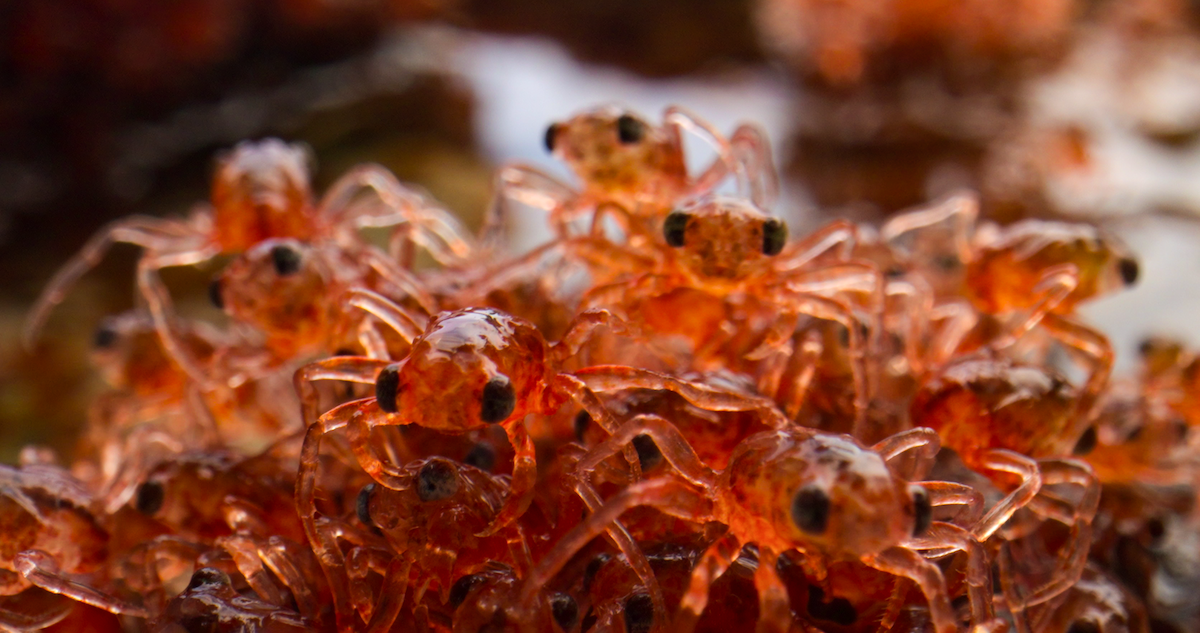
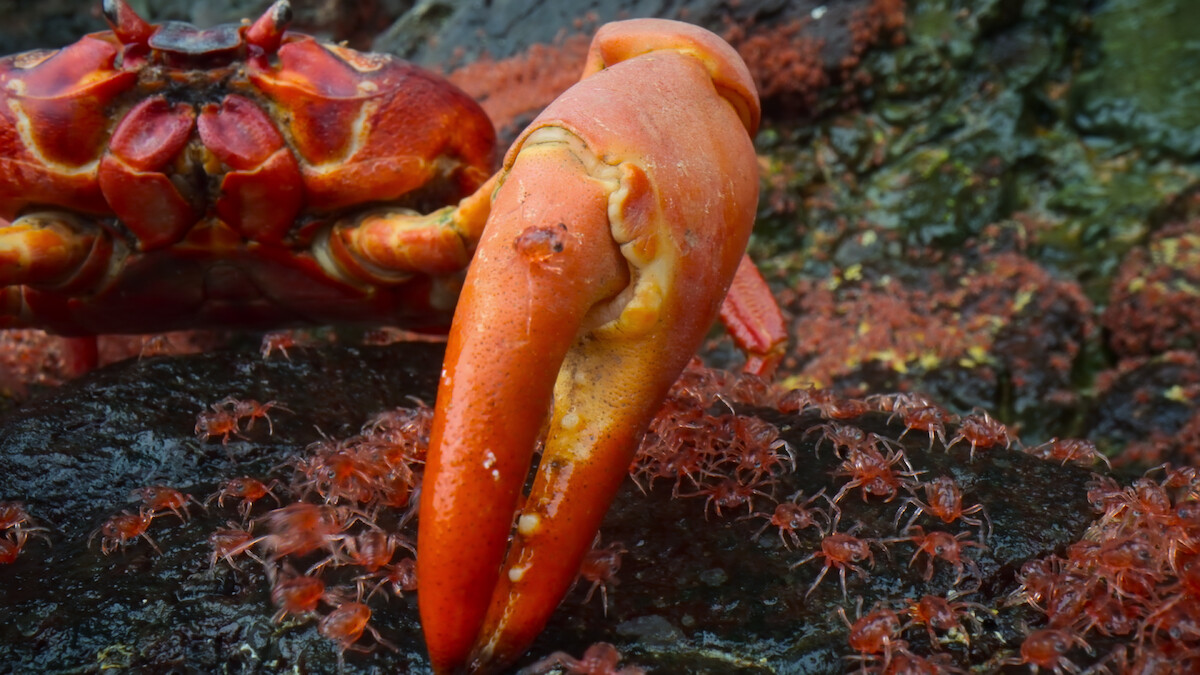
Is that adult Christmas Island red crab actually feasting on her offspring?
“It’s like popcorn. It has this weird crunch and crackle. It was behavior I was so keen for us to film — I’d seen it photographed once before, and so I knew it happened, but I didn’t really think we were going to be able to film it. And it was crazy, because you’ve just followed the mother crabs on this huge journey down to the coast to lay their eggs, and they go through so much to get to the coast to spawn. Their eggs hatch as soon as they hit the water — the little flagella and the little legs come out and these eggs can suddenly swim. Then they’re out at sea for a month, and most never make it back. In fact, most years, none of them make it back. But on Christmas Eve of our second year of filming, it happened. They arrived in billions. It could’ve even been trillions. We filmed them all arriving, and the water off the coast was completely thick with them. And then we finally film them getting ashore and there are a few adults, crunching their way through the babies.” — Toby Nowlan
Read more on David Attenborough’s delightfully clever narration of this scene here.
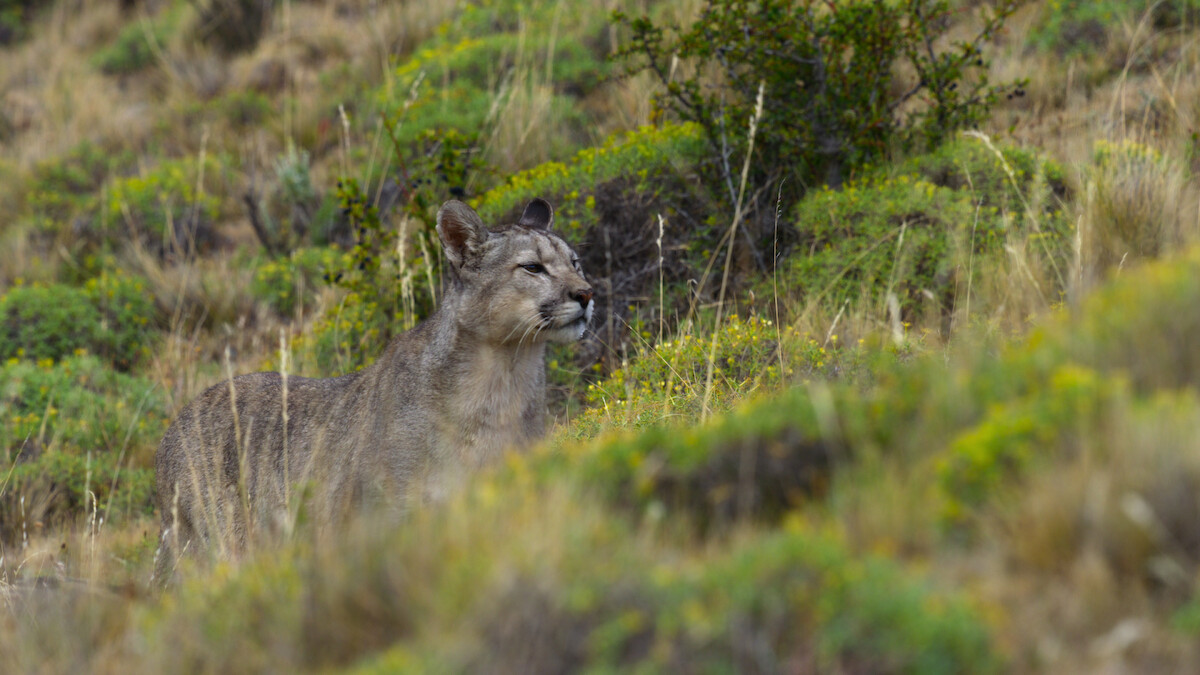
What makes the story about a young male puma the first of its kind?
“We spent about just shy of a month waiting for the puma mother to make a successful kill. We witnessed failed hunt after failed hunt. And then, amazingly, it just happened 3 meters from us. This puma jumped onto the back of an adult bull guanaco, and the two of them charged straight towards us and nearly took us out. It’s this crazy display of acrobatics. But then she managed to pull it down, and that was the start of our story before the young male cub, Machito, heads off, and it’s the first time a male puma cub’s first journey of independence has been told.” — Toby Nowlan
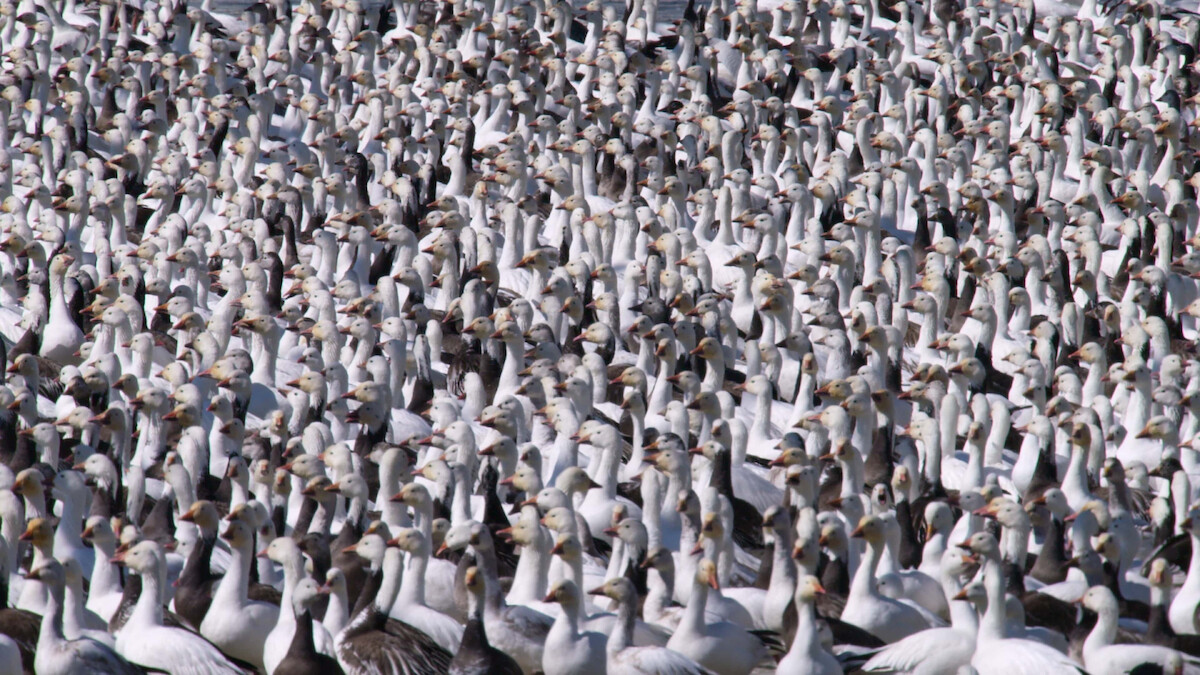
How did they manage to film several hundred thousand snow geese?
“There’s this amazing stop-off point that the geese use in Missouri called the Loess Bluffs National Wildlife Refuge, and it’s probably the most important stop-off point on their journey. I think the largest number ever recorded there was a million birds. This footage was at least several hundred thousand. The flocks disperse and go into the fields and farmland to feed, and the biggest flocks are easily 10,000 geese. The noise of 10,000 geese is a very physical sensation. They’re constantly honking and squawking — it’s incredibly loud. Quite often, when they take off en masse like that, it’s because something spooked them or panicked them — it’s like a ripple effect, one will go, and suddenly it’s all just erupting in front of you.
“We wanted to film, but the problem is geese are pretty big birds — and when they’re flying in flocks of hundreds or thousands, they’re pretty hard to film. Eventually, we used two techniques, a helicopter and a drone. We tried with the drone first because flying a helicopter around these flocks is a very dangerous thing to do. On day 1, we put the drone up and we were getting some fantastic footage, filming a flock of probably about a thousand geese. We were tracking alongside them, but then another flock suddenly took off — they just erupted from the ground in front of us. There was a collision, and we very quickly learned that the geese were absolutely fine. The drone, however, did not survive.” — Ed Charles, producer
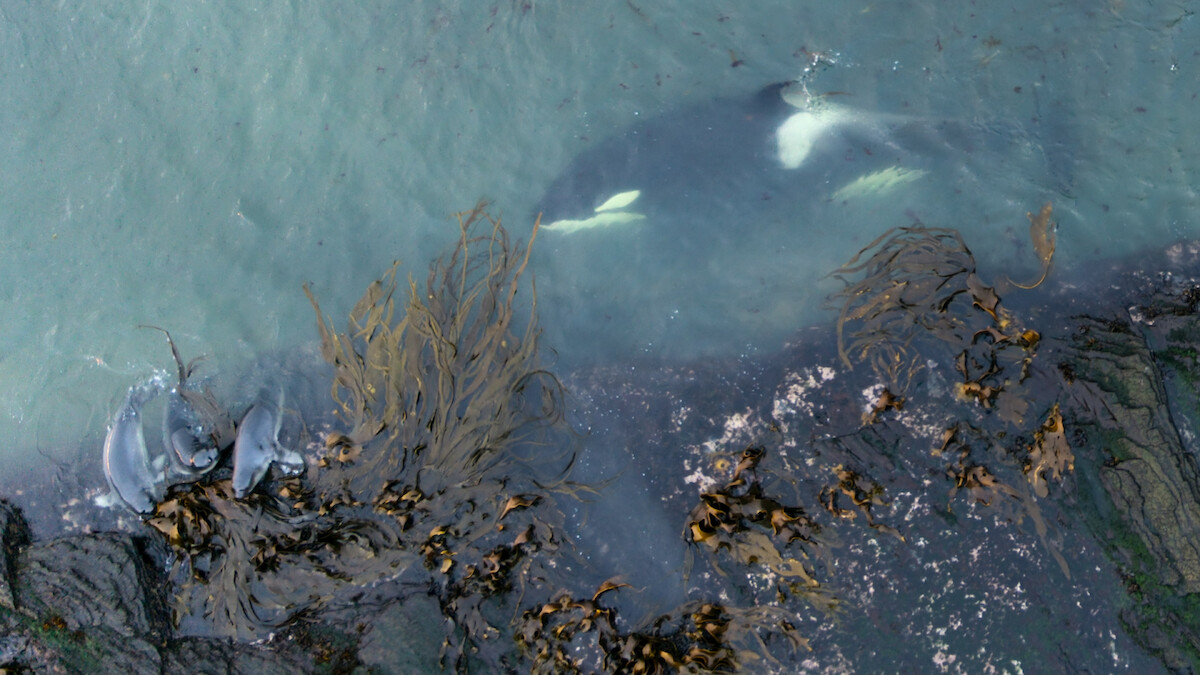
Why is that orca’s hunting technique so noteworthy?
“This orca, Puma, is the first to learn to hunt this way, and the only orca that’s ever managed to successfully make a kill [by entering a weaning pool to hunt seals]. It’s just the most extraordinary behavior — it’s essentially a learnt behavior that adapted around this really reliable ancient elephant seal migration. It shows the adaptability and flexibility of these giant predators. They’re basically able to create entirely new behaviors around reliable breeding events. Now there are more and more orcas turning up, and we think the behavior might be being taught, but still, she’s the only one who has ever been able to actually kill pups.” — Toby Nowlan
What did it take to see that Laysan fledgling take off for the first time?
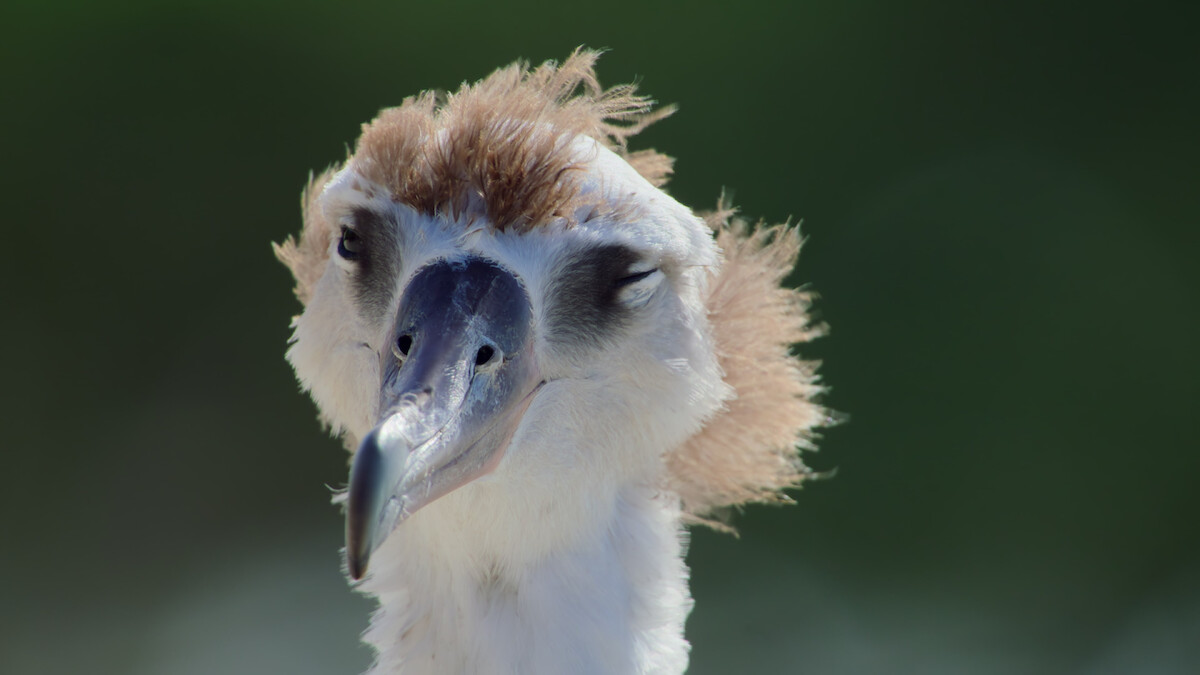
“This scene was in the Papahānaumokuākea National Marine Monument, which is the native Hawaiian name for the northwestern Hawaiian Islands. It’s a thousand miles from the main Hawaiian island, so it’s super remote. These islands are completely dominated by seabirds, and the Laysan albatross really rules the roost. Every day, we came back to the same chick. He was incredibly comfortable with us — I always say he could have been a sheep. Each day, he lost more and more of the down on his head. Because Laysan albatross are so black and white, and their down is kind of chocolate-colored, their hairstyle changes radically every day. They go from a mohawk to a Friar Tuck to this crazy fringe — they’re real characters.
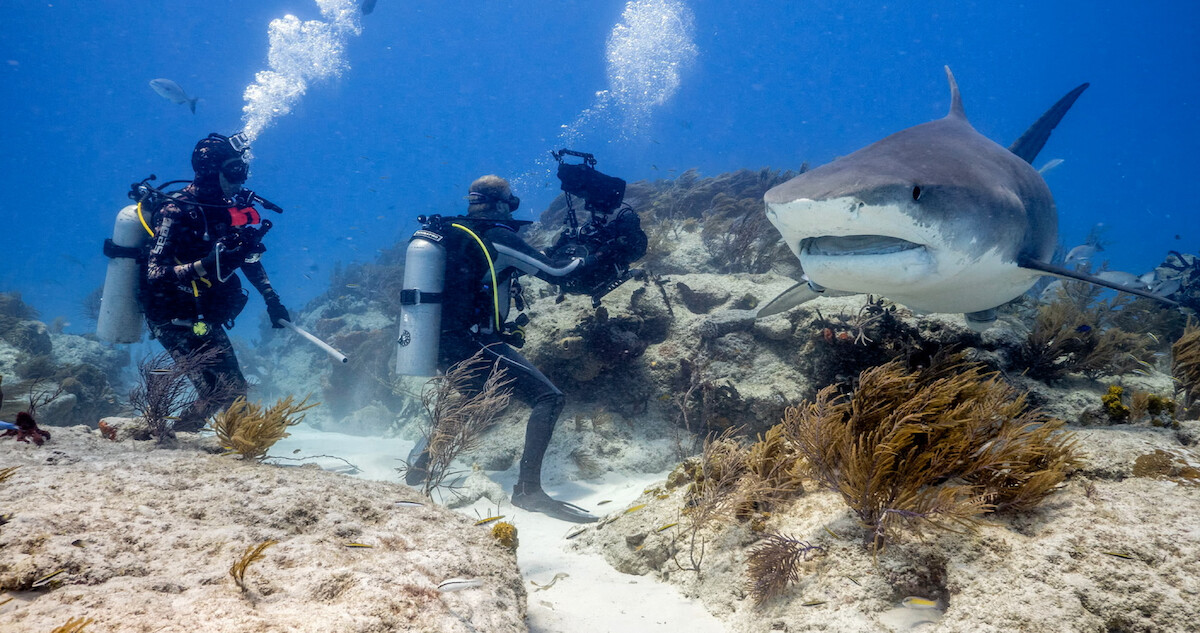
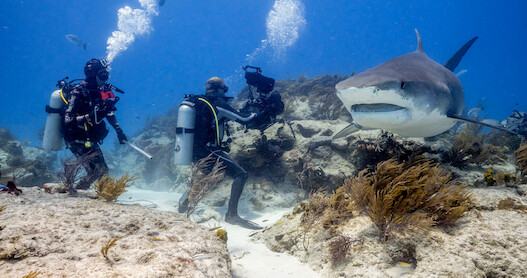
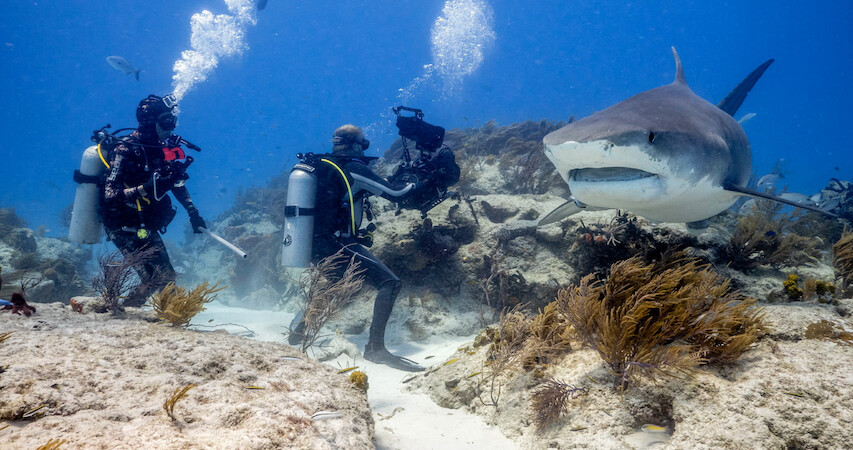
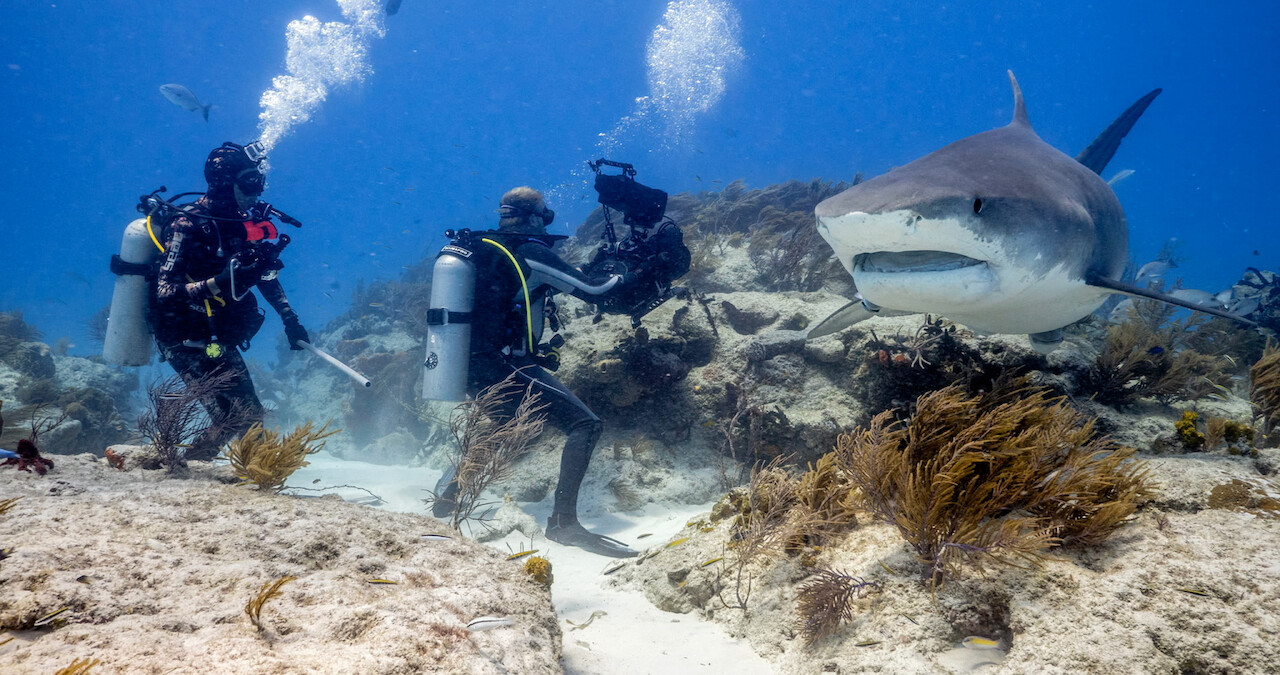
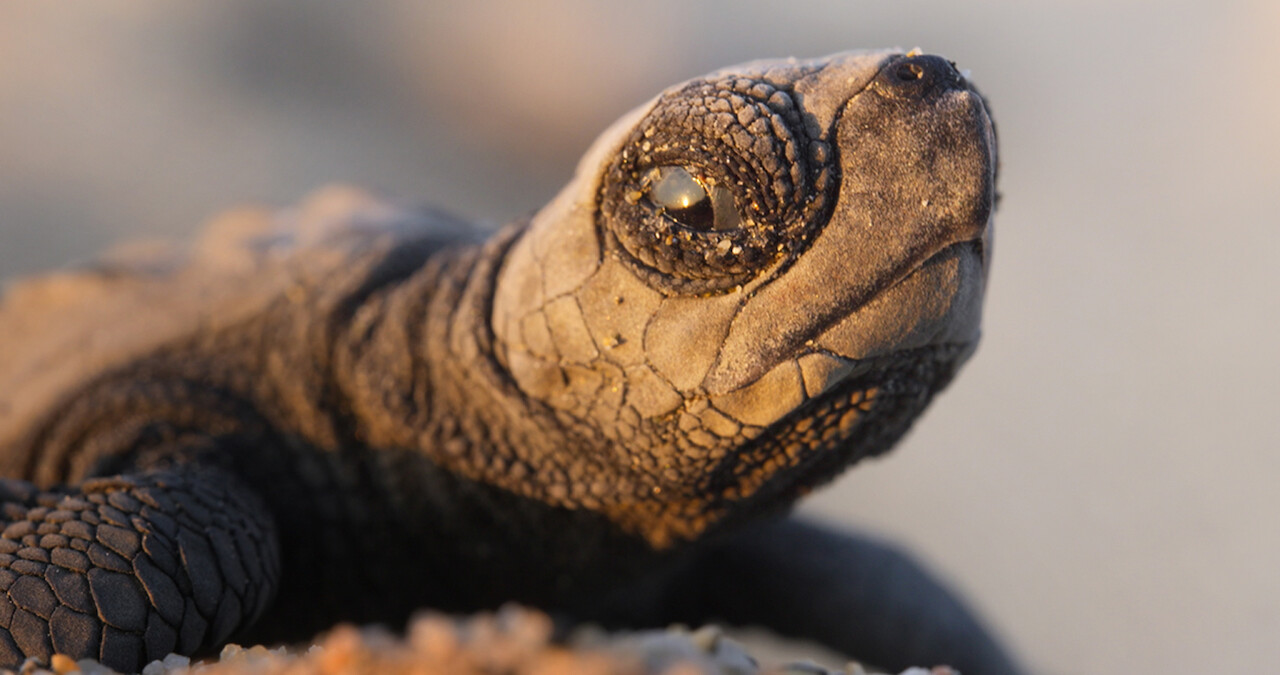
“Suddenly, the right wind will arrive just before a storm. They start marching up the beach to the point that leans most into the wind, their liftoff point, and that’s where they decide to go. They’ve got to get so much lift to take off — they’re the biggest birds in the word. They do a couple of test flights, collapsing in the sand. Then suddenly, they manage to do it, and their legs are trailing behind them and dangling into the water and they’re off. They land on the water, because their first flight is pretty weak and feeble and doesn’t amount to much. And that’s what the tiger sharks have come for — some of them thousands of kilometers to be here for that specific moment when the albatross chicks land on the water and they just grab them. There are seals and turtles in the water, but the sharks have albatross on their mind, and they’re absolutely enormous. The first time we were in the water in an inflatable boat, a 15-foot shark lunged at the boat and bit a massive hole in the side of it. The boat exploded, and we had to do an emergency landing on shore. That’s very unusual behavior. But we think the sharks were just extremely hungry and having a go at anything in case it was an albatross. They weren’t going home empty-finned. But the one we filmed definitely escaped. I don’t know what happened to him now, but he survived the worst.” — Toby Nowlan
And finally, you said there are how many locusts?
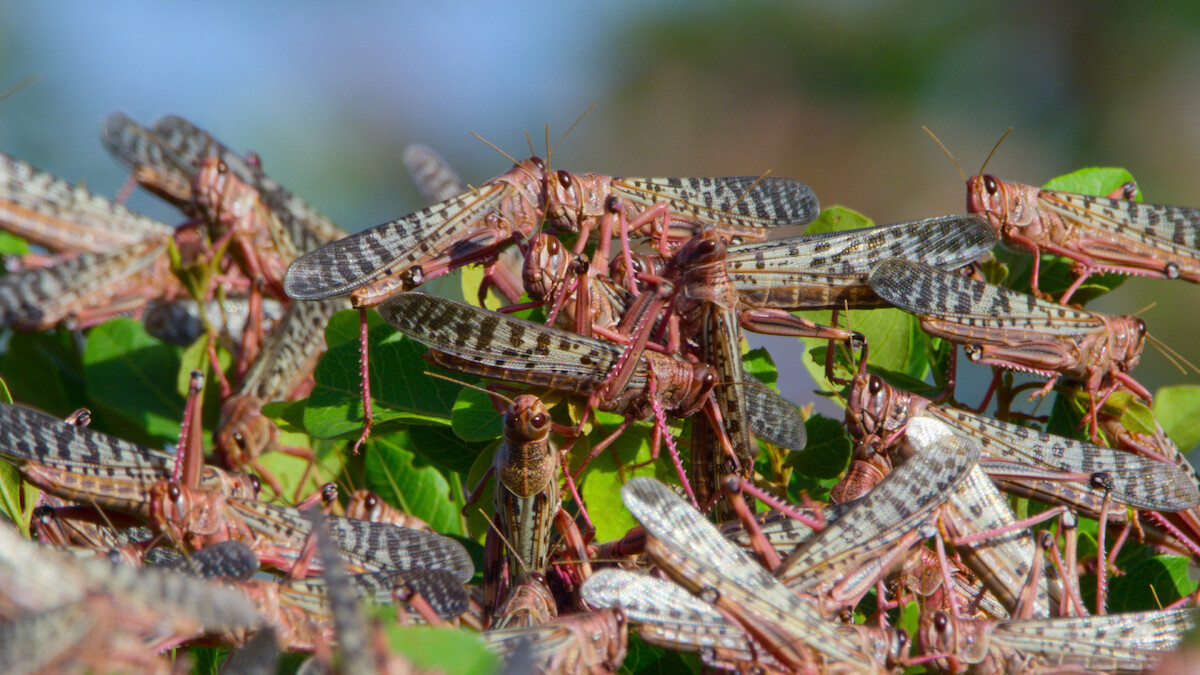
“These were some of the biggest swarms anyone had ever filmed before. Each locust doesn’t live very long, but the problem is that each generation quickly lays eggs — they’re very good at propagating whilst the conditions are good, they’re very good at propagating the next generation. It’s kind of a treadmill that just motors on — it’s not the same locusts in Kenya as in southern India, but the swarm just never dies when conditions are good. And then they go into a hyper-swarm mode when they’re together, and they start crowding, and that triggers more swarming and rapid reproduction. Within a few weeks, their reproductive rates increase by 8,000 times.
“The numbers were just absolutely mind-blowing to be around — completely biblical. Some were tens of billions strong. They were the size of small countries. One of them was the size of Luxembourg, hundreds of square kilometers long. The largest was 2,500 square kilometers in size. And that one would’ve had hundreds of billions of locusts in it, and that’s moving thousands of kilometers crossing country after country. And they covered a big area of the globe in the end, all the way into India and Pakistan and Tibet.”— Toby Nowlan
Watch Our Planet II on Netflix now.