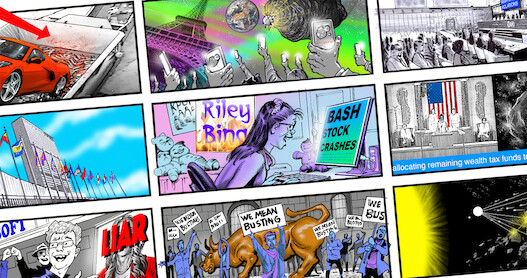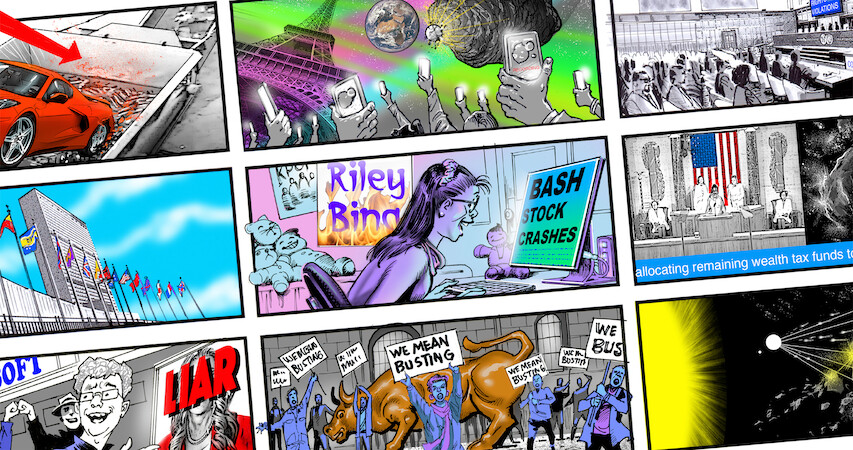
Illustration by Mark Harris
Director's Cut
Adam McKay Wants to Make Movies for The Now
The Don’t Look Up director talks influences, improv and impending catastrophe.
By Karen Han
Dec. 24, 2021
Since making his feature directorial debut with Anchorman: The Legend of Ron Burgundy in 2004, Adam McKay has carved out a niche for himself making movies that take on the now and how we got to where we are. The Big Short (2015) took on the financial crisis and housing bubble of the late 2000s. Vice (2018) took on former US Vice President Dick Cheney and the Afghanistan and Iraq Wars. Even Talladega Nights: The Ballad of Ricky Bobby (2006) took on American exceptionalism. McKay’s latest feature, Don’t Look Up, focuses on the great issue of our time: the climate crisis.
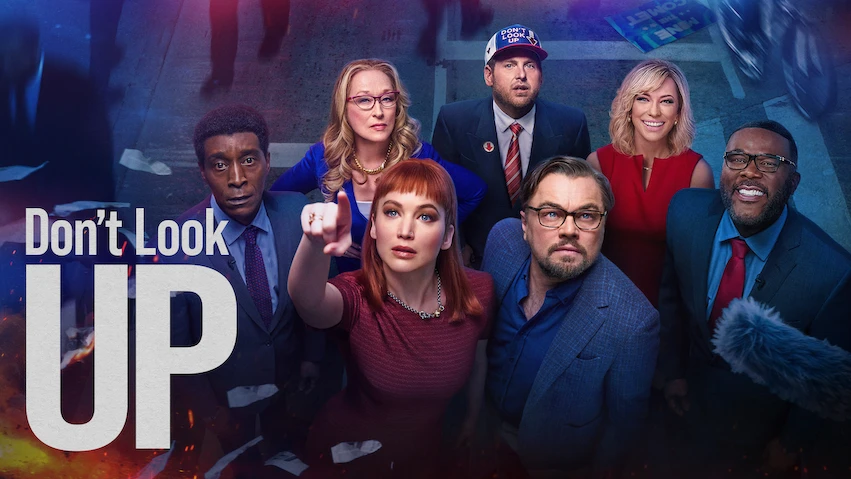
Leonardo DiCaprio and Jennifer Lawrence star as Randall Mindy and Kate Dibiasky, two scientists who discover that a comet is on track to hit and destroy Earth. As they attempt to convince the rest of the planet that something has to be done to save humankind, they realize that the bigger task facing them might be getting anyone to listen. After all, who wants to hear bad news? The film — which also stars Meryl Streep, Jonah Hill, Rob Morgan, Mark Rylance, Cate Blanchett, Tyler Perry, Timothée Chalamet and Ariana Grande, among others — balances drama and comedy as the people Mindy and Dibiasky encounter squabble over whether or not the Earth is really in danger, or if there might be some way to turn a profit off of the impending catastrophe. To learn a little more about how the film came together, we talked to McKay himself, though be warned: You may encounter the tiniest of spoilers.
You’ve said that you wanted to work on a comedy after Vice because that film was so bleak to you. How did you land on the end of the world as the subject for your next movie? I knew I wanted to do something about the climate crisis, and I was trying to figure out a way to address it. Part of what you do when you make movies is you try and make movies that you personally would like to see, so I just felt like, “Can you do something about the climate crisis and still laugh a bunch?” Fortunately, I came upon this idea that seemed like the perfect blend of the two. No doubt about it, after Vice, I was in the mood to laugh.
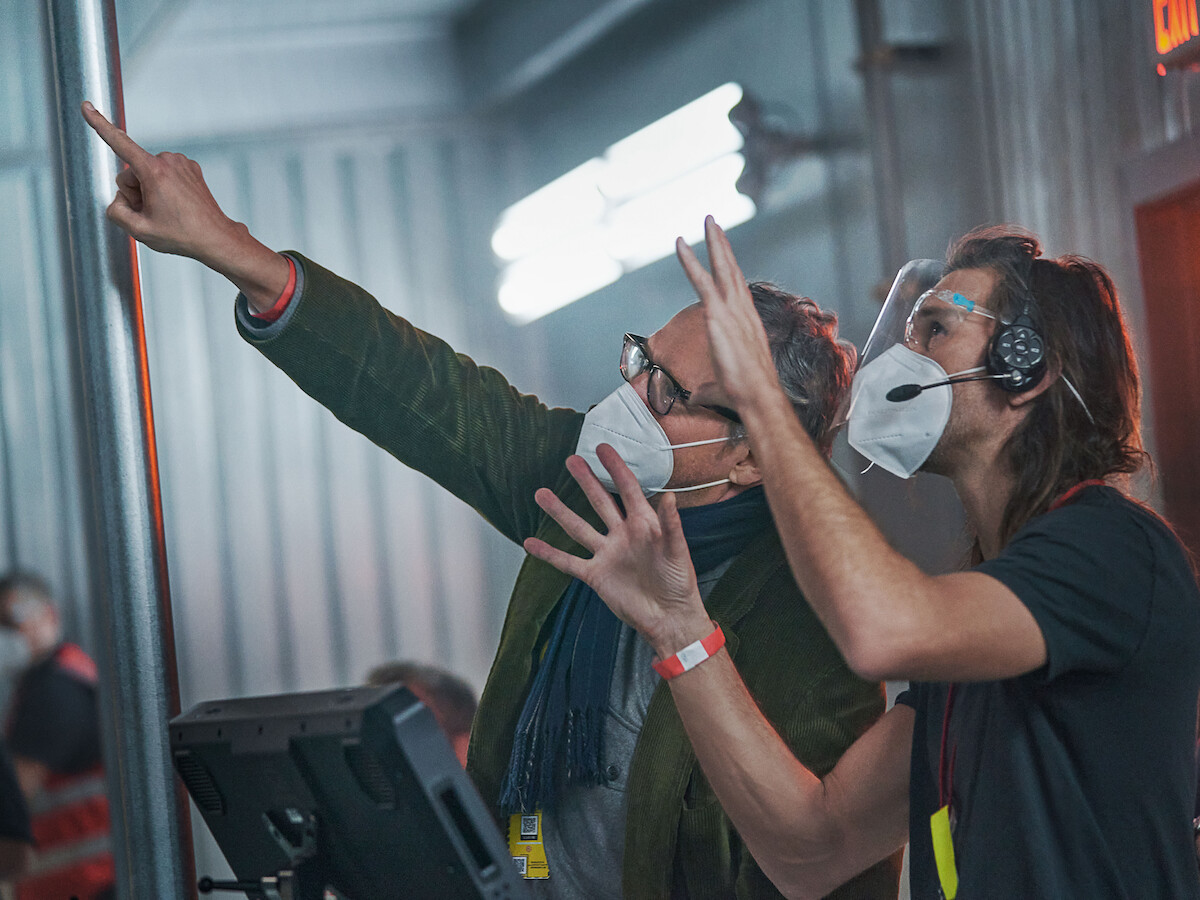
Where did the title and slogan “Don’t Look Up” come from? It’s sort of Chicken Little-esque. Initially, for quite a while, I was calling the movie Boom! The more I fleshed out the idea of, “Just look up,” “Don’t look up,” [and] people telling me, “You don’t tell me where to point my eyes,” I just liked that title. But it was kind of 50/50. Up to the last minute, I was like, “Do I call this Boom!, I’m not quite sure.” But somehow, I can’t remember the decision moment, it became Don’t Look Up. I think we’d been seeing it for quite a while here in the US and even to some degree around the world, that there’s this feeling of people not wanting to hear bad news. The news has to be kind of enjoyable or titillating. So much of our culture has become a sales pitch, and so the idea, “Don’t look up, avoid the truth that’s coming,” I thought was sort of appropriate. And it hints at the comets, and I liked that it appears in the movie towards the end.
This is also very much a movie about media and the way that we consume it. Was that an intrinsic part of the story to begin with? That definitely was part of it, but I feel like one of the most enjoyable experiences when you make a movie is that it always becomes at least slightly something different than what you planned. In the middle of making this movie, we had to shut down because of COVID, and I didn’t pick the script up for, like, four months, or maybe it was even five months, and when I picked it up finally and read it, it almost read like a different script to me because it was entirely about what you just said. It was entirely about how our lines of communication have been profitized and broken and twisted and manipulated. It excited me in a way that I didn’t expect, that it was not just about the climate, not just about COVID, not just about pollution, income inequality, violence, whatever you want to think of — it’s about the fact that we no longer really are able to talk to each other in a clean and clear way.
You’ve mentioned Network and Wag the Dog as influences on this film. Did you have a sort of movie syllabus? They used to make a lot of those movies in the ’60s, ’70s, early ’80s. For some reason they stopped at a certain point, but there’s a bunch of great ones. Ace in the Hole, Network, Wag the Dog, Dr. Strangelove, The Russians Are Coming... Mike Judge, I feel like, kept doing them a little bit with Office Space and Idiocracy, but neither one of those played very big in the box office, although both became cult classics later. I was looking at those movies, and I was like, “Wow, could you make a movie like that now, in 2021, 2022? Is it even possible to make a movie like that now?” I looked at those, but then at the same time, I wanted to make sure that this was a movie that was made for now, because it’s such, such different times if you look at the ’70s, when Network came out. Our society was functioning on an entirely different level at that point. Given that we’re living in such wildly chaotic times, I knew it had to have a different tone, and so I pushed the tone a little bit more. It sometimes gets into the ridiculous or the farcical a little bit more, which is kind of what the real world feels like now. I always describe the movie as a combination of It’s a Mad, Mad, Mad, Mad World, and the rapture.
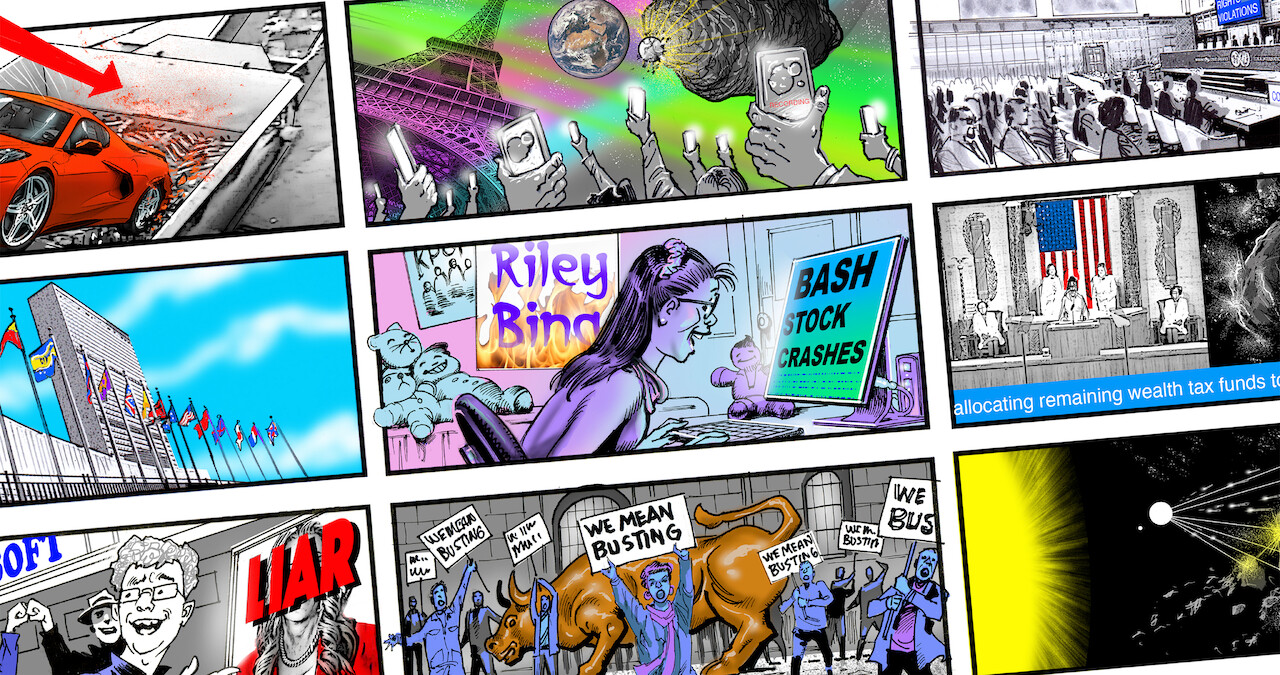
A big part of making a movie right now is having characters engage with social media. How did you decide how you were going to visually portray social media? We took quite a while on that. Initially, it started with my editor Hank Corwin and Scott [Morris], our assistant editor, putting together a bunch of versions of pieces of social media. What they really did was they set the pace for it, a kind of frenetic, building, overwhelming pace. It starts with a couple of clicks, they get faster and faster, and kind of take over and spread. They did some rough cuts of that to really get the pace and the feel of it, and then the graphics house that I’ve worked with for, I think, 20 years now — they’re just the best — Picturemill, came in, and we said, “Okay, we have these rough cuts of this. We like the chaotic pacing of it. See what you can do with that. It’d be nice to give it a little bit more of an artful feeling.” It was one of those great times — and Picturemill tends to do this, Bill [Lebeda] and David [Midgen] over there — where they just came back and it was, right away, really good. I got to call Bill and David and go, “Holy crap! I already love this!” I was really quite pleased with the way that turned out, because social media needed to be like a character in the movie, a driving force. That collaboration between myself, our editors and Picturemill really turned out quite nicely.
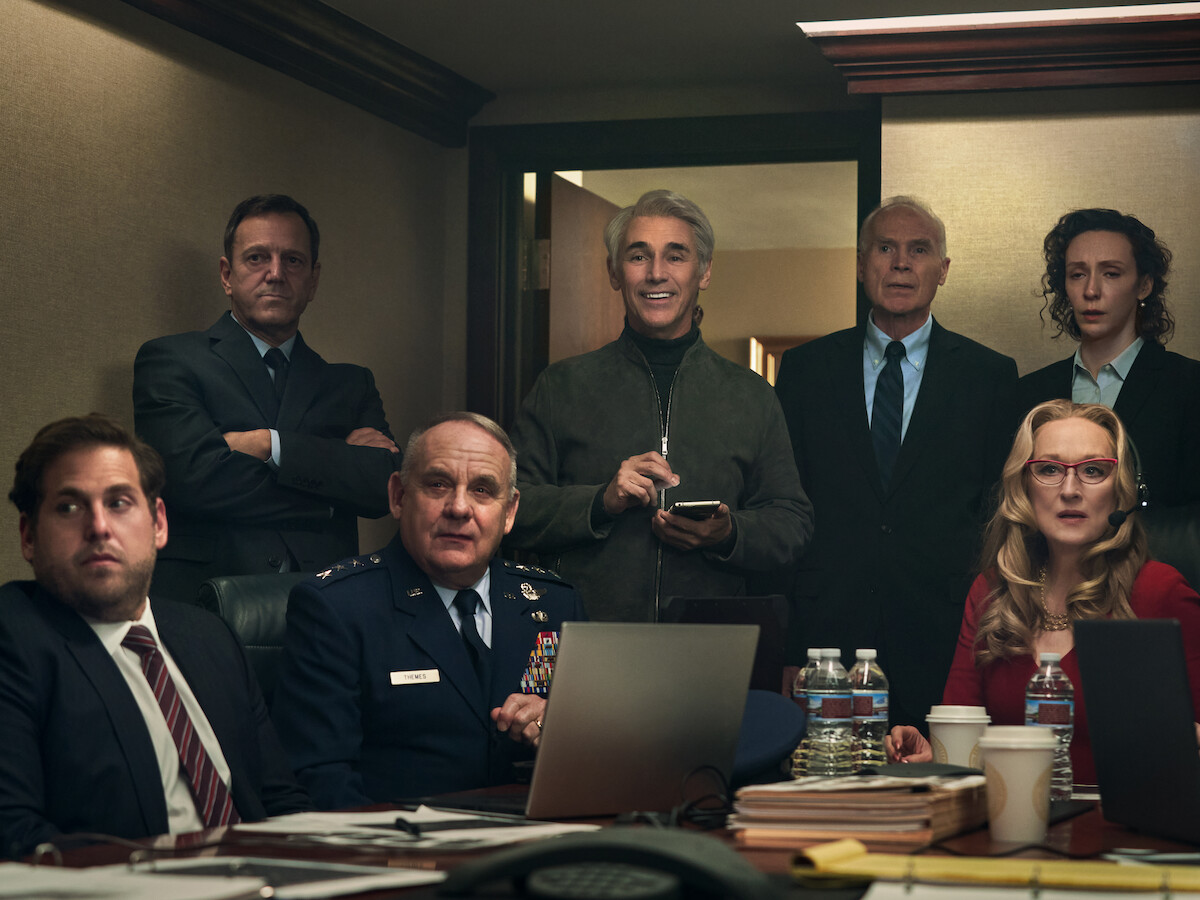
You’ve mentioned that there were some things you made “crazier” because of what you were seeing during the pandemic. Can you recall anything in particular? A lot of it was small stuff, making things a little wilder. Ron Perlman’s character became much more of a reactionary extremist. The denial of the comet became a little bit bigger. It was always in the script, but it just got a little larger. Certain lines of dialogue that maybe would have been a bit over-the-top, I suddenly realized maybe weren’t over-the-top enough. I did a whole pass, and there were some things that didn’t make the final cut. We ended up shooting a press conference scene with Meryl as the president and Jonah as her son/chief of staff, with Leo up there as the science expert, and it just felt too much like the Trump press conferences. I didn’t want the movie to just be a retelling of that, so we ended up cutting that, even though they were really funny. All those guys were improvising up a storm. We just felt like it was too much like what we just lived through. We always wanted to make sure we were adjacent, not just directly retelling.
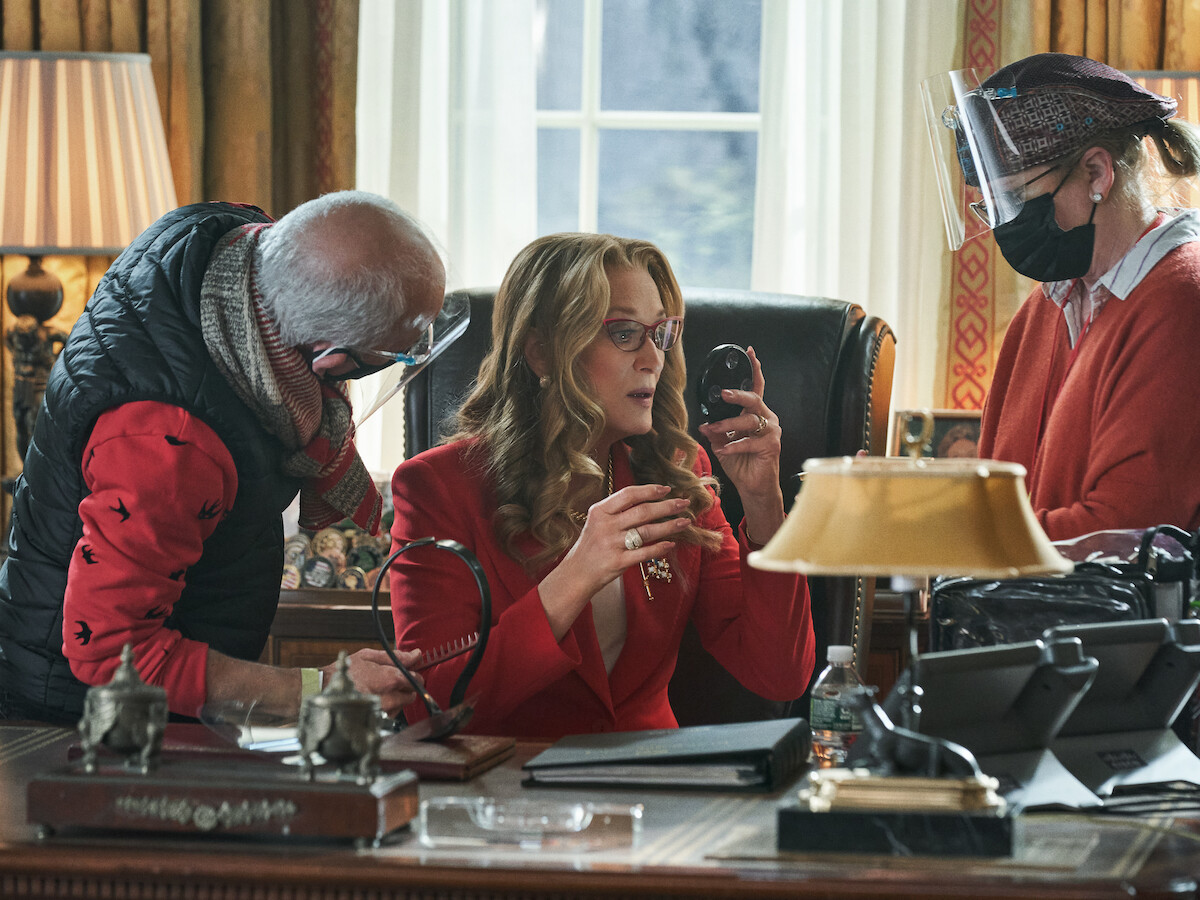
Hearing about the press conference that got cut and other scenes that got left out, it sounds like there’s a lot. You created an entire separate movie out of Anchorman outtakes, Wake Up, Ron Burgundy: The Lost Movie. Would or could you do the same thing here? We did it with Anchorman 2. We replaced every single laugh line in the movie with an alternative laugh line. There’s actually a cut of that version out there that you can watch. I don’t think we did quite enough improv to do that on this, but we did a lot. My favorite one was Meryl doing a phone call before that first meeting at the Oval Office, and without any exaggeration, she improvised a completely different phone call 15 to 20 different times. She was so comfortable with improv. There’s a bunch of her improv in the movie, and certainly Jonah was letting it fly, and the whole cast — Jen Lawrence has a bunch of improv moments, Leo’s got some. But could we replace every line? I don’t think we did quite that much.
Were there any other less extreme changes that also came about because of a moment of improv? Jonah improvises this great prayer for stuff at one point in the movie, and that was completely improvised, one of my favorite moments. It captures the world we’re living in perfectly and is also laugh-out-loud funny. That led to us having to get shots of crowds around the world listening and recutting the whole sequence. Oh, another one was Jen Lawrence with the general charging for the snacks [that are later revealed to be free]. That was scripted, but a lot of the beats later where she kept kind of harping on it, we were improvising. A lot of runners throughout the movie that we kept coming back to — the Bash phones, when they can sense that you’re sad, will play a video to cheer you up — there are a bunch of beats in scenes that didn’t make the final cut, where we were improvising people’s phones playing videos of cheery animals and reaction. There’s one moment where one of the sons talks about how his phone purchased songs by DJ Chello, he didn’t ask for it to do it, that was an improvised line. I threw that out for that actor from behind the monitors. A lot of little beats like that, that became runners throughout the movie.
Speaking of crowd shots, you’ve mentioned in previous films that some of the stuff that looks like stock footage was actually shot for the movie. What’s the balance between the two in this movie, and how do you decide what you need to get versus what you can grab from pre-existing footage? I really love shooting my own footage that looks like it’s stock. As you’re watching the movie, you kind of can’t tell what’s been filmed for the movie and what’s stock, and what’s real and what’s fictional. We did that same thing in this movie, we did it a lot in Vice, we did it some in The Big Short. You see plenty of scenes in the movie that are shot off of cell phones…we shot stuff using security video cameras. You want that feeling of what it’s like to live in our culture now, where you’re seeing cell-phone footage, security cam, dashboard cam, there’s just all kinds of different looks and qualities and grains that we’re constantly encountering. In Vice, we were able to do it even more because that movie spanned decades, so we were using Super 8 footage and 16mm that was overly saturated. It is really fun, and I want the audience to not know what’s stock and what isn’t when they’re watching the film, because that’s kind of how the real world feels.
I loved the detail about Jonah Hill’s character’s Birkin bag, which I understand was his idea. How did he pitch it to you, and did he supply the bag himself? He definitely did not supply the bag. It was a very expensive bag that our costume designer got a hold of. I think it was loaned to us, that’s how expensive that bag was. I think it was returned at the end. That was an idea Jonah had right from the jump. “I wanna carry a Birkin bag.” I’ll be honest, I wasn’t so sure about it. I thought, “Jonah, won’t it look like you’re carrying the nuclear codes?” And he goes, “No, no, I’m gonna carry it constantly, and I’ll carry it in such a way that it’s clear that’s not what it is.” I’ve known Jonah for years, he’s so great and talented, and his instincts are so good. He pushed on that one like three times, and I’m like, “You know what, Jonah? I’m gonna go with you on it.” And I’m glad I did, because every time I see him carrying the bag in the movie, I laugh.
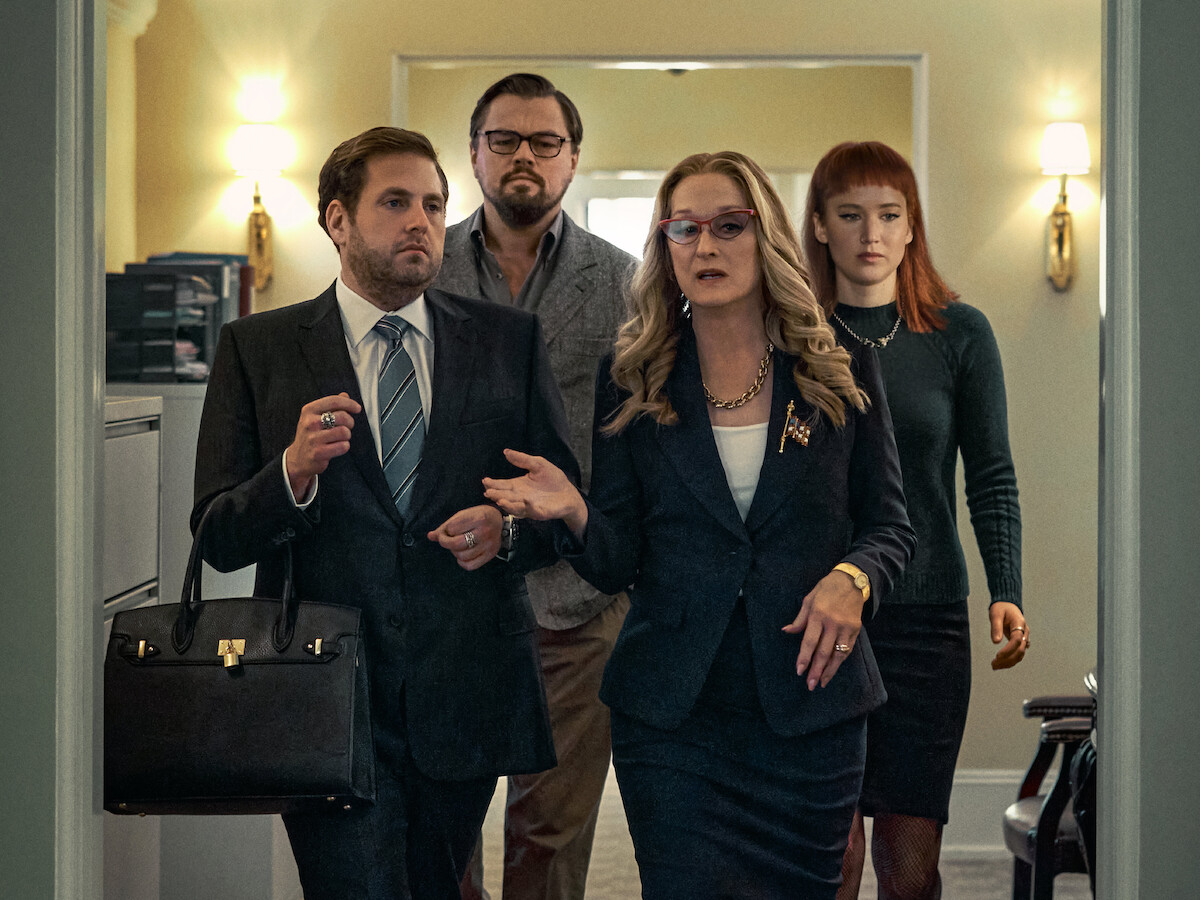
Were there any other character details like that that came from the actors or you and the production team? It was a big discussion I had with Jonah because I wanted the president and her son to not be just directly Trump. I wanted it to be a mixture of a lot of presidents. Jonah really wanted that half-unshaved beard look, which is a lot like Trump Jr. I was like, “I really don’t want it to just be Trump. I want it to be all of the terrible presidents we’ve had come through that White House.” He was like, “Ah, I really like it,” so there was this debate about it. Finally, I was like, “You can put a little dash of Trump in there. There’s enough other things that aren’t like Trump.” All the actors had things like that, that you kind of discuss and you go back and forth with them on. It’s half the fun of making these movies — you get to work with these great actors, and they have such wonderful instincts.
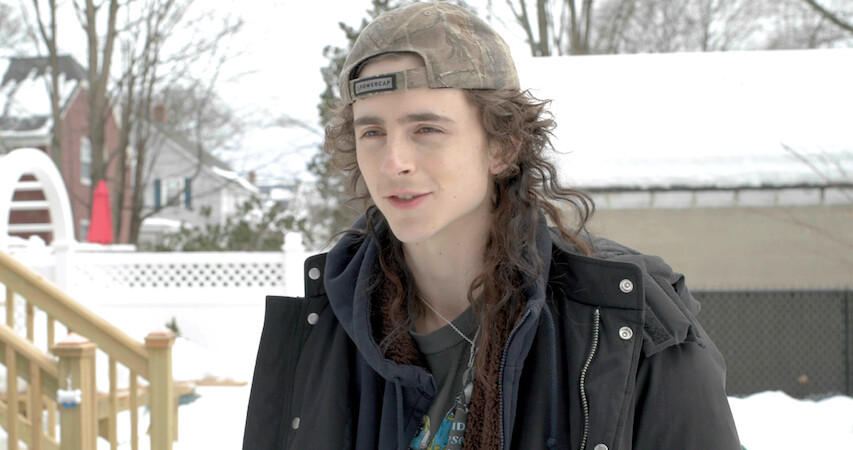
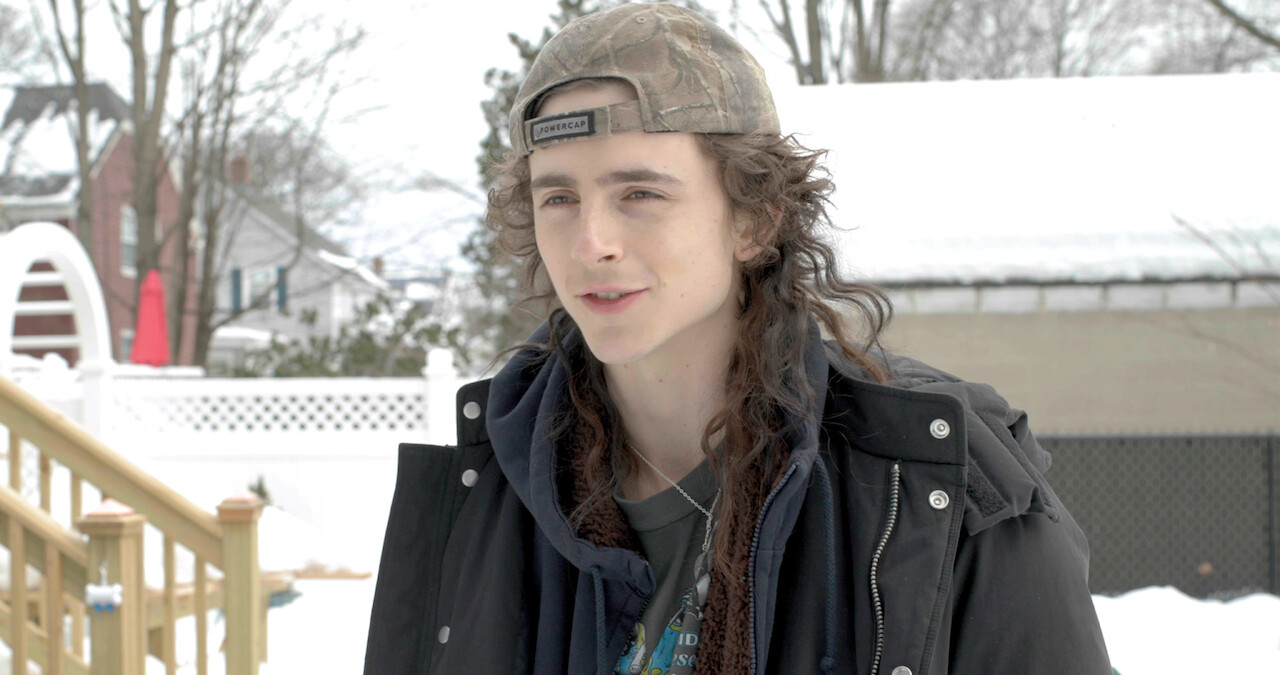
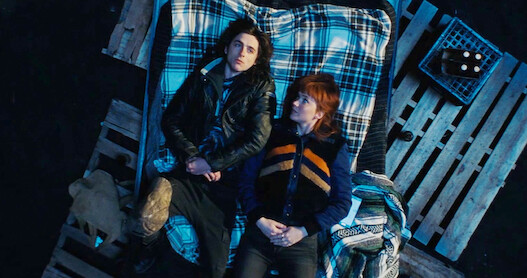
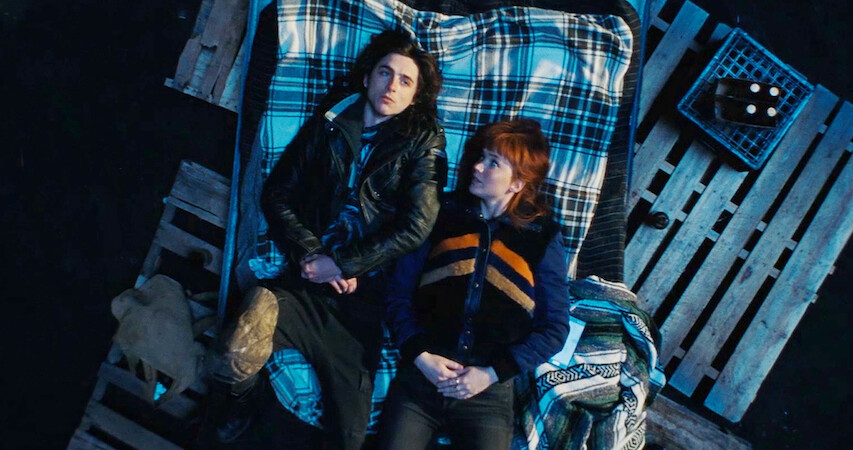
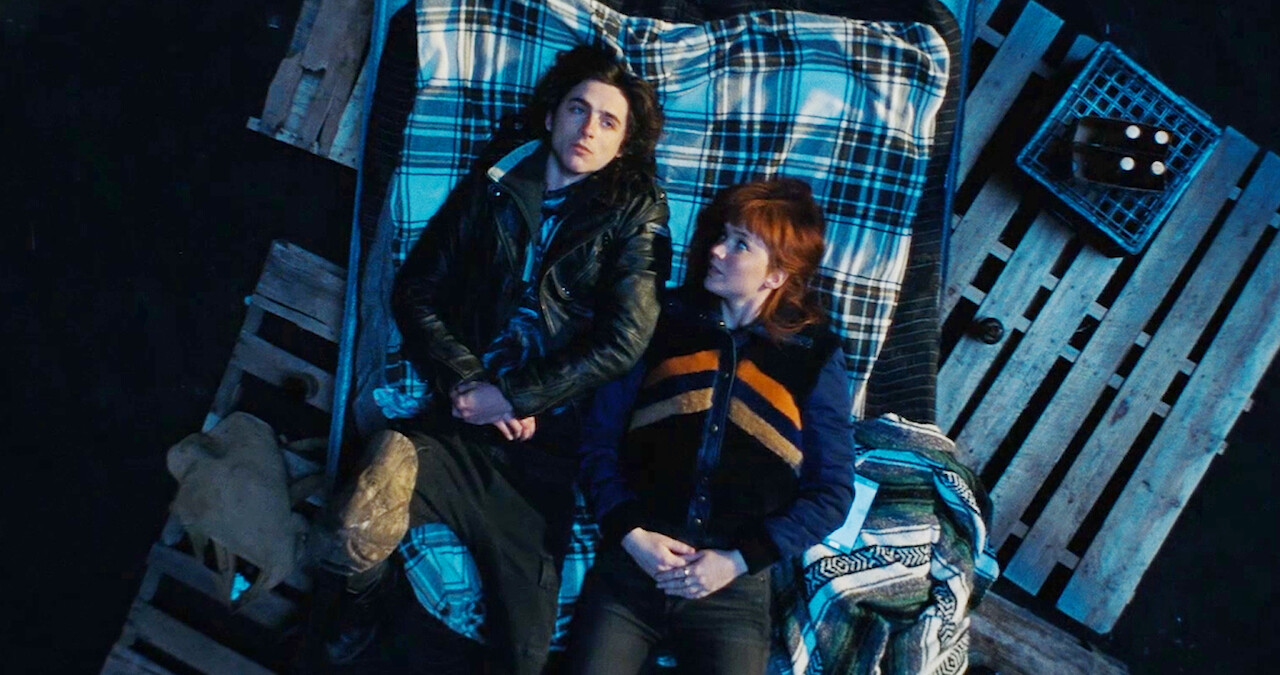
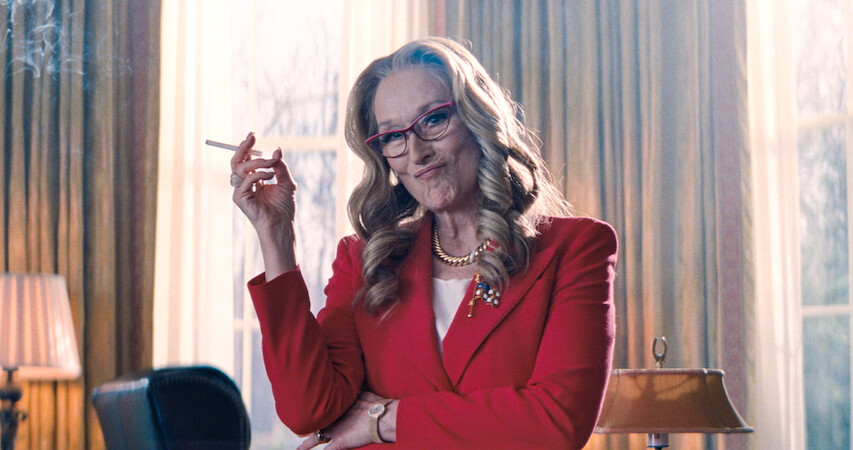
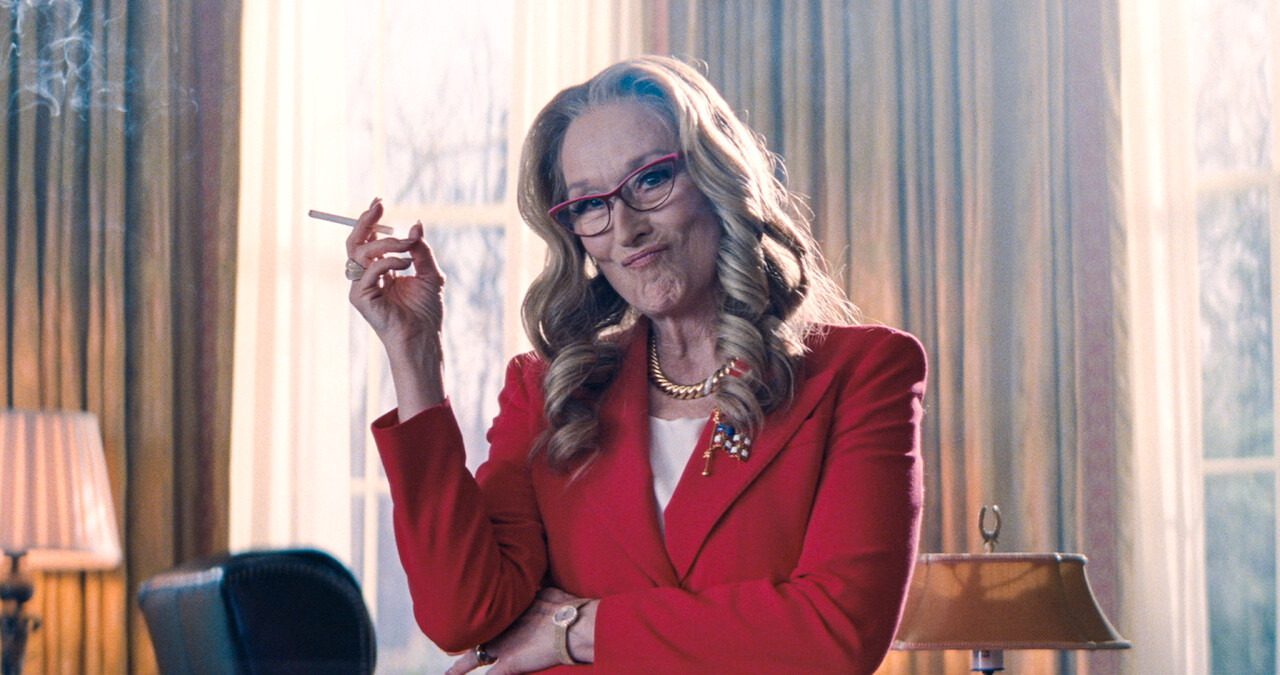
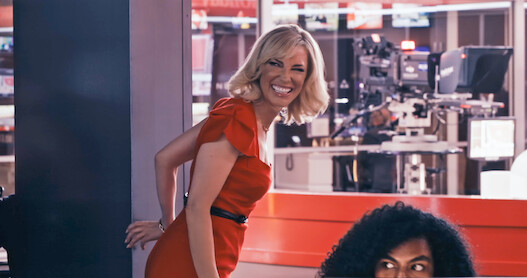
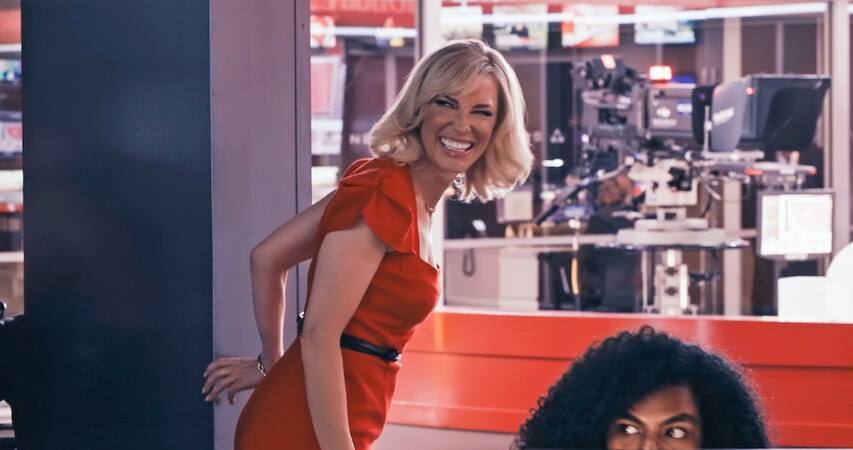
Cate Blanchett, right away, had this idea for her hair that I was like, “Oh, really? I kind of wasn’t thinking of that.” And she’s just like, “Don’t worry! It’s gonna work.” And you’re like, “Well, it’s Cate Blanchett! I’m gonna trust her instincts.” And sure enough, the look was perfect. Same thing with Tyler Perry. He had a hairstyle and a beard look he wanted to do, and I was able to see a rough example of it. Once again, he’s like, “Oh, no, it’s gonna look great. Don’t worry.” “Okay, let’s do it!” Sure enough, [we] showed up on the day, looked at it, and it [looked] fantastic. Timothée Chalamet, too, for his character, this evangelical skate punk, he had some really specific ideas about the hair, the look, the vibe. I really just love what he created with that character. It’s so specific. They’re supposed to be in southern Illinois, and by the time we were done with it, it really just felt like these would be the skate punk kids in a southern Illinois town. I loved the reveal that his name’s Yule and his religious background and what that means to him in the movie. I love that kind of stuff. It’s just really fun getting those specifics, and all of our department heads are so good at it. [Costume designer] Susan Matheson found this hideous yet wildly expensive American flag pin that President Orlean wears. All those kinds of details are so enjoyable.
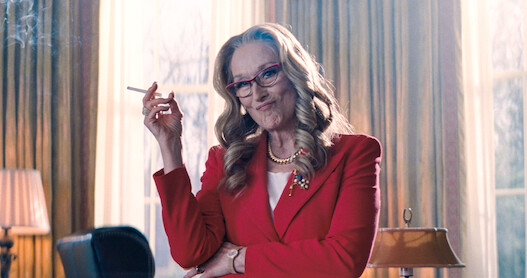
President Orlean’s look is very distinct. I had suggested Suze Orman, who writes these popular financial advice books and is a speaker. The breakthrough idea for her, all credit goes to Meryl on this one. Meryl said, “She seems like the kind of lady who would still wear her hair like she’s 24 years old.” I was like, “Is that gonna be extreme?” And she’s like, “No. If you look at it, there’s a lot of women that do this.” I believe she sent me some pictures, and I said, “Let’s go for it! But let’s have another wig that’s a little more subtle, just in case. I don’t want to be painted into a corner.” Lo and behold, what the hell am I doing questioning Meryl Streep? The wig went on her, and it was just glorious the second I saw it. I was like, “Oh my god, it’s so perfect.”
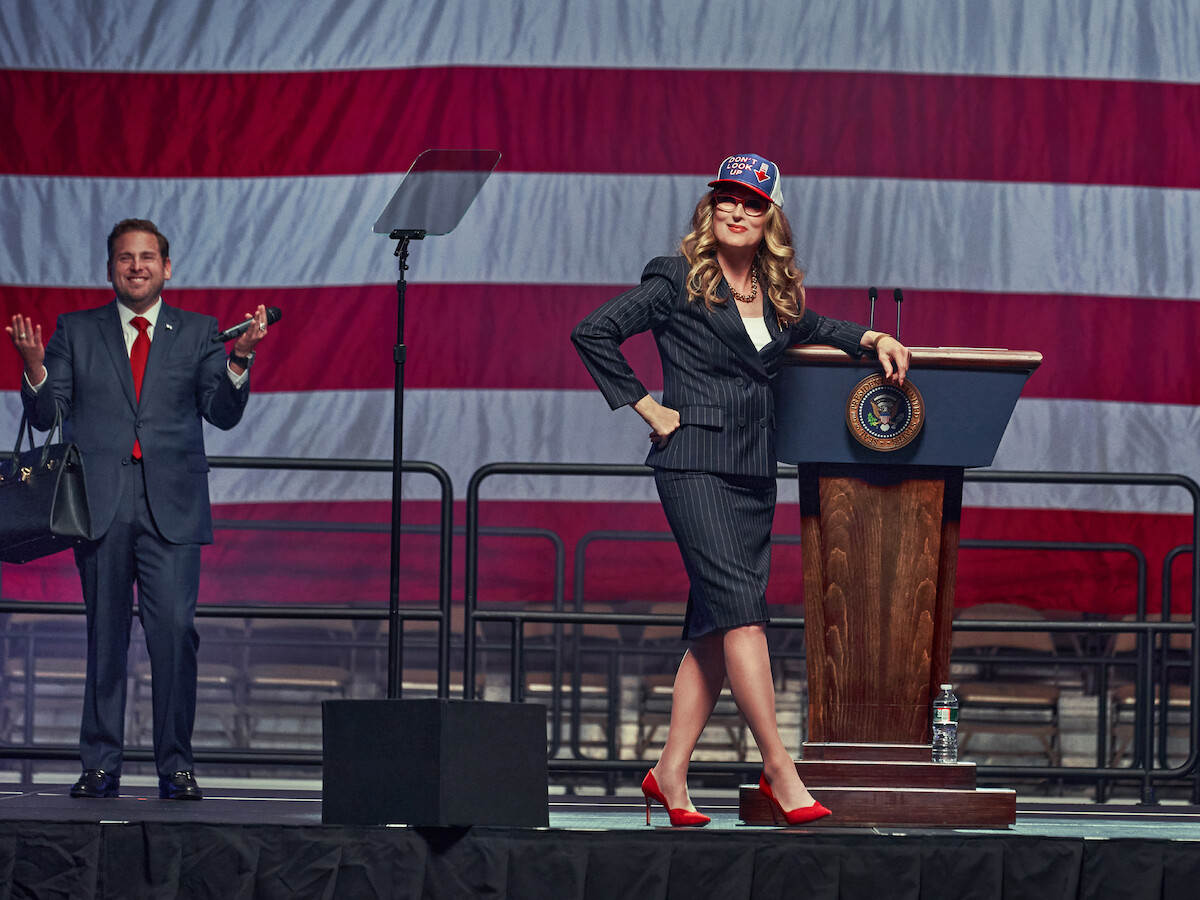
Streep said she had a “crisis of confidence” during one of the scenes where she’s addressing a crowd. Do you recall that trepidation, or did she not show it? It was a scene where she’s addressing a giant anti-comet rally. We’d all been inside our house for five to six straight months, so this was the first time she’s coming out onto a set, and then in addition to that, it’s supposed to be a rally of 25,000 people. Well, we have 80 people who are spread out, and we’re going to CG the rest. On top of that, it was scripted to be a pretty short little run, and of course, I’m there with her, I’m there with Jonah, we start improvising and playing around. It was one of those sneaky, tricky days where Meryl’s emerging from quarantine after five, six months, having to play to a crowd that’s nonexistent; it’s basically me yelling from the back of the stadium, pretending to be the crowd. And we’re improvising like crazy. I didn’t think twice about it because the way I look at it is, I just need some good runs, and she hit three or four runs beautifully. I knew we were in good shape, but she was apologizing to me. She was like, “I’m sorry, that was terrible.” I told her, “Honestly, it wasn’t! I got these really good runs!” Then she went on the Stephen Colbert show and was beating herself up again, and I had to tell her, “Meryl! I’m not just saying this! We got good runs!” And you see them! They’re in the movie, and they’re excellent. But when you’re dealing with someone of her caliber, I guess she can be a little hard on herself sometimes, which surprised me.
One of the funniest parts of the movie is when Jennifer Lawrence’s character becomes a meme. Was there a particular real-life corollary for that, and would you consider yourself to be “very online”? I used to be. Like a lot of us, I used to have a Facebook account, I had Instagram, I had Twitter, and I remember the innocent early days where I was connecting with old high school friends I hadn’t talked to in years, and Twitter was a bunch of comics and we were doing jokes. It was like, “Hey, this is a blast!” Then slowly it started to turn. I remember thinking, “No, maybe this is a good way to have political arguments that don’t get heated,” because people would post things, and I would say, “Well, let’s not argue! Let’s talk about that.” I wasted some time doing that for about three years before I realized, “No, these people don’t sincerely want to have a discussion.” What I’m describing is probably what we’ve all gone through with social media. Then I went through the phase where, because you have access to it all the time, it catches you in bad moments and broadcasts them for the whole world to see. I had a couple of moments like that, where I got mad at someone or started arguing with someone and you forget, like, “Oh yeah, I’ve got nearly a million followers. I’m broadcasting this to the world.” I had a couple of embarrassing experiences like that, and finally I came to my senses, and maybe I heard Mark Zuckerberg talk enough and saw the onerous activities that they were involved in that I shut down my Facebook account. That was about three, maybe four years ago. And immediately, I noticed my life improving. Then I realized, “Oh, wait, Mark Zuckerberg owns Instagram,” so I deleted my Instagram account. I switched my Twitter account. I gave it to one of our producers here at the company, and I said, “You’re now in charge of it. If I’m going to tweet something, I have to send it to you first.” It’s an extra barrier between Twitter and myself. I rarely engage with it on a comment-by-comment basis. I think I tweet about a third as much as I used to. Once again, I tangibly [noticed] my life improve, my mental health improve. So yeah, that’s my relationship with social media, which I think, from talking to friends, tracks pretty nicely with how a lot of people have experienced it.
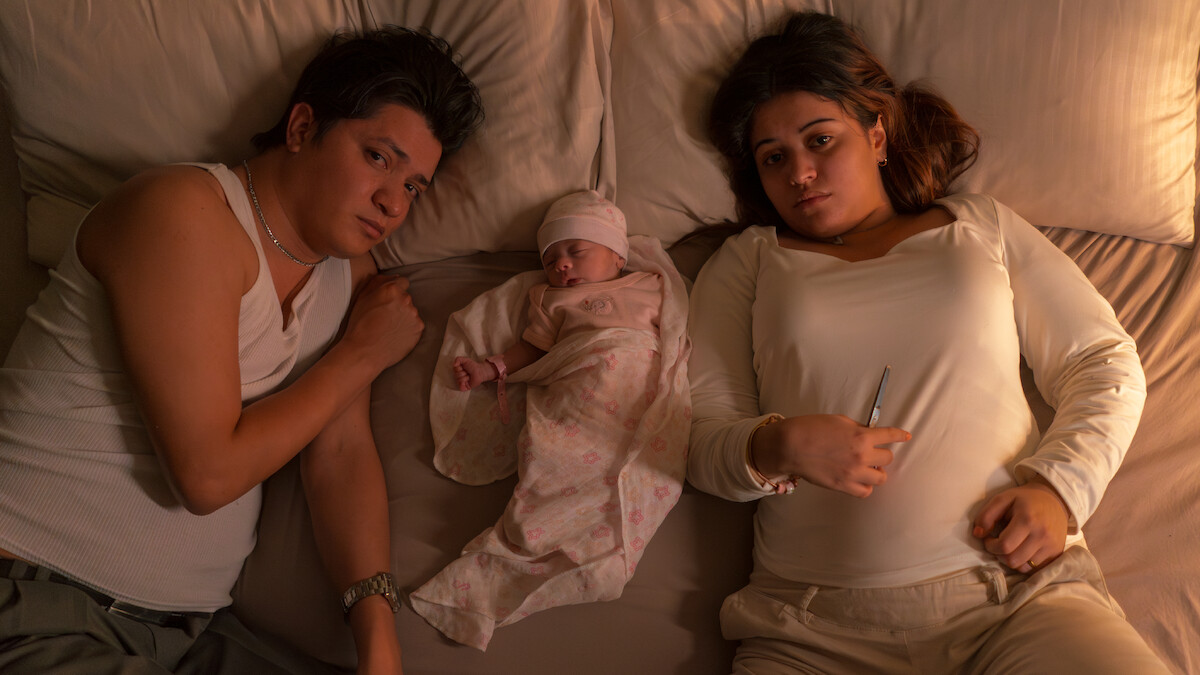
We looked a lot at a bunch of the memes that were already out there. Some of the nastiest ones you can find tend to be targeted at Hillary Clinton, so there were a couple where we got ideas. The image of Kate Dibiasky eating a baby is drawn directly from that. We had some young people in our edit crew who did a really great job of combing the internet, seeing what was popular at the moment, mocking up different versions of the memes. We probably went through about 15 or 20 different ones before we settled on the ones you see in the movie. The same thing with the viral videos, like the puppy riding the rooster. We must have tried about six different versions of that, trying to get it to feel sort of like the internet. You’re not gonna exactly capture that, there’s too many sub-communities out there to really get that feeling, but we wanted to be in the ballpark.
The Dibiasky memes obviously had to be created for the movie, but for stuff like the puppy riding the rooster, were you looking for that online or was that shot for the film? That’s a video that actually existed. Sarah [Russell], one of our assistant editors, she was the master of finding crazy viral videos that already existed. We had a couple of different versions of that, and kept playing around with pieces of it being put in other montages. We’re friends with Sarah Silverman, so I wanted some kind of comic making a comment, and she was kind enough to let us film her doing a couple runs, so she ended up popping up in there, because you always see stand-up comics having a say on social media. We got friends of ours to yell in the camera, “Just look up!” “Don’t look up!” We shot people on set. Our playback guy, he played a crazy conspiracy theory guy who’s putting forth the idea that DiCaprio’s character is actually someone else, who’s a pornographer. We just had tons of people shooting things, looking for memes, because you’re trying to create that dense universe of social media, which is almost impossible to replicate. We were just shooting stuff while we were filming, after we were filming, building memes, looking for videos. It was a never-ending process.
What was the process of working with Nicholas Britell on finding the sound for the film? Nick is obviously one of the great composers out there. I just love working with Nick. This was the trickiest, though, as far as the tone went. He and I will still laugh about it, because you have to keep the stakes up, that it really is a comet that’s going to destroy the Earth, it really is terrifying, and you have this beautiful planet that’s in jeopardy, but at the same time, it’s a farce. Our current day culture is a living farce. It’s ridiculous and funny and clownish, and at the same time, there’re also characters that are genuinely terrified, and so how do you combine those sounds? We tried a bunch of different stuff, and the breakthrough was a conversation that I had with Nick about that sound of World War II big band music, how it’s both rollicking and kind of dark at the same time. We talked about Elmer Bernstein’s score for The Man with the Golden Arm, how it’s this big-horn jazz, and it’s fun, but it’s a little messed up, it’s a little violent underneath. That conversation led to the opening credit piece that Nick wrote, which is really the main theme for the movie. There are other themes as well, but that was the breakthrough. When he got that, I was like, “You found it, you found the sound of the movie.”
From there, we were able to find out where to go with the other pieces — when the first launch is happening, it’s this glorious, “mankind reaching for the stars” music that’s just a little bit over the top. Then there’s cases where Nick just writes beautiful pieces of music, because there are moments in the movie that are very sincere. Very few people could do what he did with this score. It’s really tremendous. The hardest cue that Nick had to write was a cue early on when it hits Leo’s character and Kate that this comet is going to hit Earth. It had to be an incredibly stressful cue, yet not terrifying. It was this odd, exact line that it had to walk, and poor Nick, he must have written 25 versions. I really told him, “It’s kind of the cue that describes the times we’re living through. It’s so over-the-top stressful that it’s almost funny.” We kept looking for examples from movies and there weren’t a lot of examples. There’s one cue in Election we looked at, and then there was that series The White Lotus that did some of that, but none of it was exactly what we were looking for. That really became this holy grail cue, and right in the last week, he nailed it. I was like, “You got it!” I think by then he was so exhausted he couldn’t even feel good about it — like, “Alright, good.” He’s tremendous, beyond talented, but also a really brilliant, thoughtful collaborator.
Did you have a similarly strenuous experience finding the sound for the song that Ariana Grande’s character sings, or was that smoother sailing? Much smoother sailing. Nick hit that right out of the gate, found that melody line, started talking about how he was going to build it. The only tough thing on that was I kept trying to write the lyrics. I’m like a C- lyricist. I’ve written lyrics for some songs, like the all-time great American classic “Boats ’n Hoes,” from Step Brothers, but I’m definitely not a high-level lyricist. I kept trying to write it, and finally I just told Nick, “Look, you should bring in a professional lyricist.” And he did! He brought in this wonderful lyricist, Taura Stinson, who nailed it, and really the cherry on top with that, all credit to Ariana, who ended up improvising this run for the end of the song where she started singing in her angelic, amazing voice, “We’re all gonna die, I’m serious, everybody, why don’t you just listen to the damn scientists?” She improvised that when she and Nick recorded it, and I immediately said, “That’s going directly in the movie.” It’s a beautiful song in its own right. Kid Cudi came in with the rap verses that were just incredible. I was like, “Wow! This sounds like a giant hit song.” And he was incredible. He really worked with Nick on those verses and just nailed them. That one was pure joy.
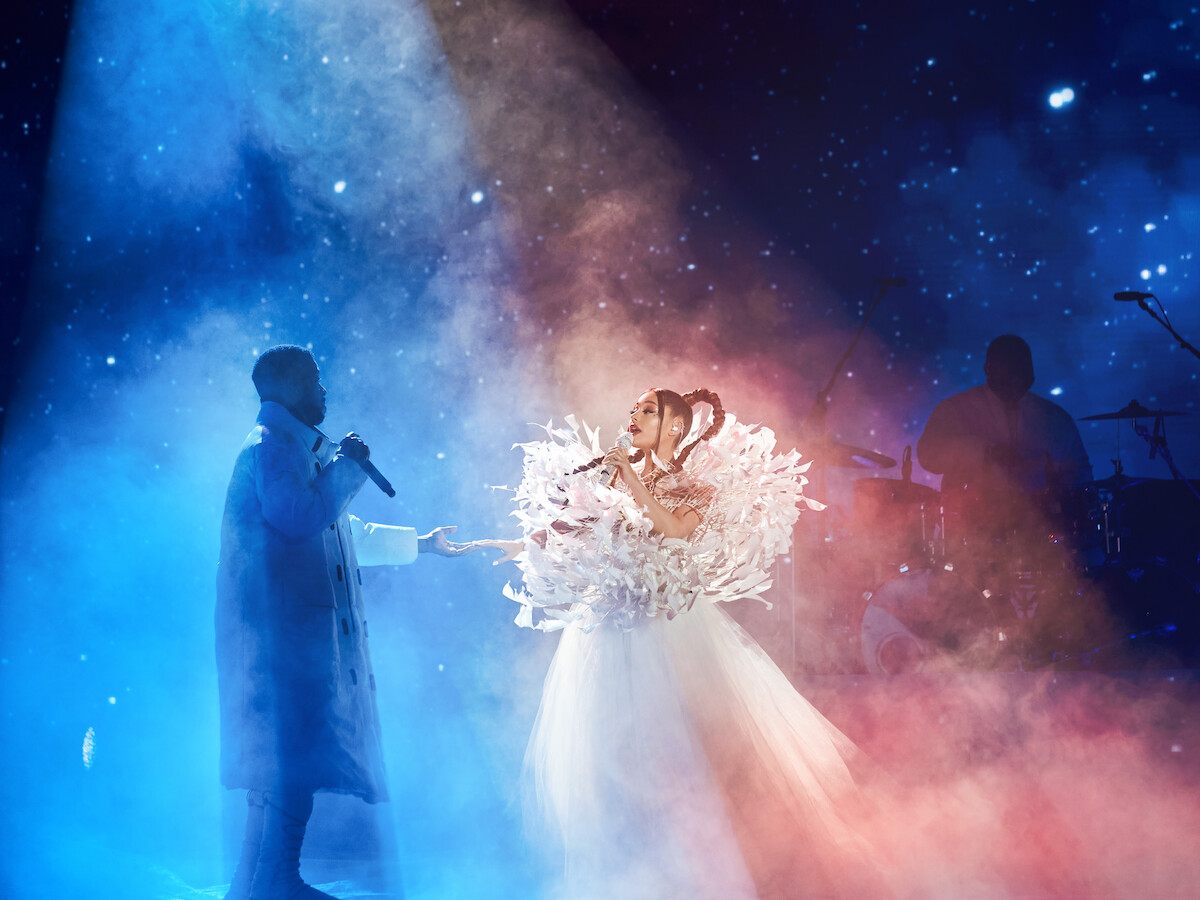
Ariana Grande makes one of the splashier cameos in the movie. With all of this amazing acting talent, how many of these roles did you write with the actor in mind, if any? From the initial script that I wrote, there were two names I was writing for. One was Jen Lawrence. I’ve known Jen for a while, and I knew I wanted that character to be spitting fiery truth throughout the whole movie, and pay the price for it. Just from hanging out with Jen and seeing her in movies like Silver Linings Playbook, I don’t think there’s anyone out there who lets the truth fly like Jen Lawrence. Kate Dibiasky is specifically written for her. Then Teddy Oglethorpe was written specifically for Rob Morgan. He has an incredible presence, and he’s a wonderful actor to work with. Those were two out of the gate. Then every writer/director has the delusion in their head that they’re gonna get Meryl Streep to play a role, so I always was half-thinking of Meryl for President Orlean but just assumed we’d never get her, so when she said yes, I was definitely flabbergasted by that. Jonah for the son, the second his name was said, it was like, “Oh, it has to be Jonah.” And that ended up happening with all of the casting. Once we got the person, you really couldn’t imagine anyone else but Timothée Chalamet playing Yule the evangelical skate punk, or Cate Blanchett playing Brie Evantee, or Tyler Perry, the second he was Jack Bremmer, you’re like, “Oh my god, how could anyone else have done this?” Himesh Patel as Jen’s boyfriend in the movie was just incredible. It was one of those casting experiences that I’m positive I will never have again, where every perfect choice actor landed in the right role.
What about Mark Rylance? He’s playing a character that’s arguably the most removed from what we’re familiar with seeing him play. Peter Isherwell was the last character that was cast, and that was probably the most difficult character to write in the script, only because these tech billionaires are so over-the-top in reality. They’re giant children shooting themselves up into space. Someone like Zuckerberg almost seems like an over-the-top supervillain from a comic book, so when the reality is so extreme, it’s very hard to craft something. I joked, “Let’s cheat, and get one of the best actors on the planet, Mark Rylance, and he’ll help us figure it out.” Mark Rylance is such a highly regarded actor that I remember the day when we cast him, I was on set with Meryl and DiCaprio, and Meryl pumped her fist in excitement, and Leo said, “Oh, yeah!” That’s how highly regarded Mark Rylance is as an actor. He’s the actor that gets Meryl Streep and Leonardo DiCaprio excited. He was key, because he came in, and then he and I just started collaborating on the character and had a few breakthrough ideas. The one idea that I really love that we came up with was that you think Peter Isherwell is shy and has social anxiety, but what you realize as you go along, whether you realize it consciously or not, is that he’s so disdainful of people that he won’t make eye contact. It’s that line between disdain for people and social anxiety that I think some of these tech billionaires kind of straddle. You see it in the way they behave. Mark’s another one who can really improvise, and ended up adding tremendous flourishes to the character. His whole speech when he’s describing the mission to harvest the comet, the whole thing about “striding naked through the gates of [Jachin] and Boaz,” that was all improvised. That’s just Mark riffing.
Peter’s teeth are particularly unsettling. There’s a prosthetic there. Those are incredibly fake-looking teeth. That was Mark’s idea right out of the gate. We came up with this idea of him being slightly ageless. He could be 80, he could be 55, he’s somewhere in between there. We’re not quite sure. The teeth were definitely key to that.
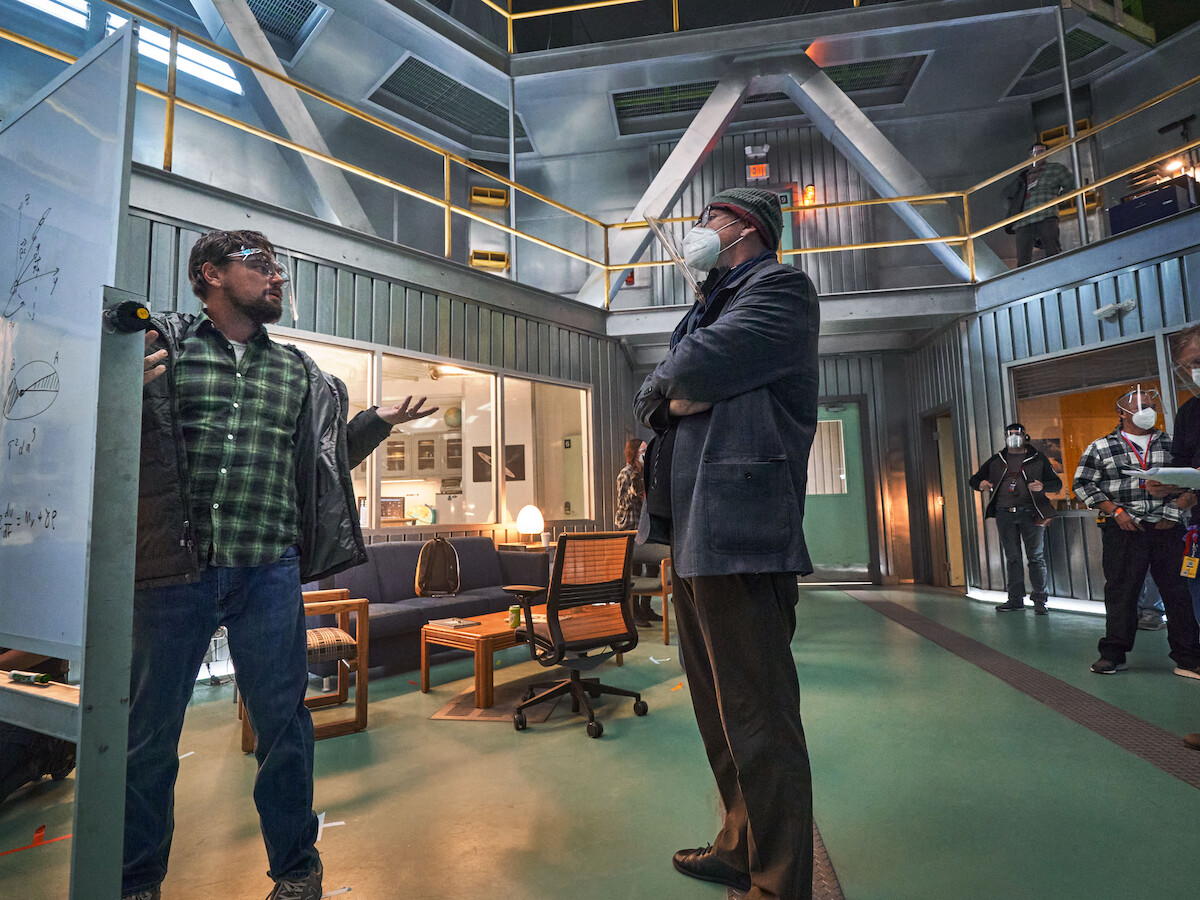
You’ve mentioned that Leonardo DiCaprio, when he came on board, helped to vet the script as someone passionate about climate change. What was that process like? We had three meetings at my house, and they were long! Three hours long, four hours long. I remember one time we went in, and when we came out, it was dark. He’s really rigorous and really smart about movies, about characters, about story. He’s obviously been doing it for a long time. He’s worked with some of the all-time greats — you could argue the all-time great, Martin Scorsese. He put me through my paces, and he questioned and talked about tone, he talked about story, he talked about his character and where he is at certain points, and would he do this, and could he do this, and what if we tried something like this. That’s my favorite stuff. I sort of said it earlier when we were talking about the wardrobe or the details for the character, and he was really doing it on a script level, and so many good things came out of it.
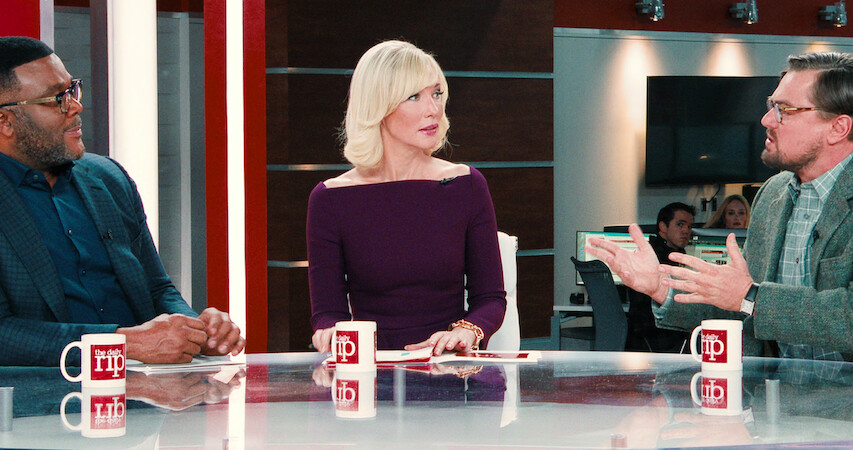
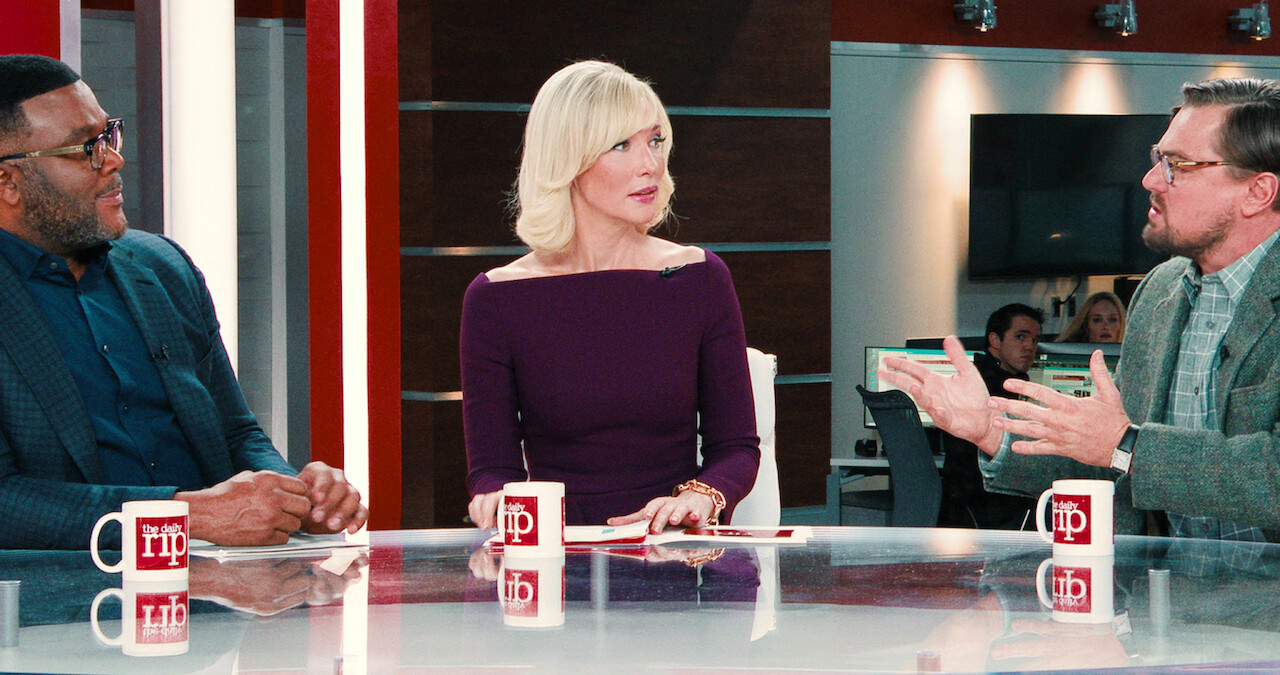
The big one was the speech that he gives when he’s on The Daily Rip. That was not in the script. I had him exploding in that moment, but it wasn’t what it ended up being, which was more of a full speech. He was referencing Network; he was referencing these movies, and I was a little reticent: “Speeches are a little old-fashioned these days, are we sure we want to try it?” He brought up a good point: “Well, don’t write it old-fashioned.” I had to laugh. The breakthrough idea was, and this is a bit of a spoiler for anyone who hasn’t seen the movie, the speech ends with a smash cut to him in a car with a hood over his head. As soon as I had that idea, I knew the speech could work, because I had a really good out for it. And sure enough, when we shot it, I must have rewritten the speech with him 15 times. We just kept working it and working it. We got there on the day, and he just nailed it. Everyone in the crew could feel it. It had this electric quality to it. There were some runs in it that really summed up how a lot of us feel about the world right now. The very first time I screened it, usually when the movie’s in the worst shape it’s gonna be, right out of the gate, that speech worked. The cut to the hood got a huge laugh. That’s a great example of Leo really pushing and pulling and asking questions. What’s great about the way he does it, too, he’s very respectful. It’s never a lead actor pushing or demanding, it’s always a collaborative conversation. I already was very impressed with him, already loved his work, already had met him and really liked him as a guy. He really blew me away with how he was able to have those discussions and really made the movie better for it.
With regard to that scene, and to the movie’s overall message, when making something that’s overtly political, how do you walk the line between sending the message you want to and not pushing away those who might not immediately be receptive? The whole idea of that speech was for [it] to be anti-political. The speech was supposed to be, “What happened to us? Why can’t we just talk to each other? Why can’t we just listen to each other?” The goal of the speech was to be the opposite of political, and to just get back to hearing basic information that we need to hear, and his frustration boiling over at the inability of the characters in the movie to do that. Right now, in America, we live in such crazy, divided times that even a message that’s anti-political, some people will still try and frame it as political. One of the things we tried to do in this movie is try and call out the whole system. The Daily Rip is not a right-wing show, it’s clearly a show that would be on MSNBC or NBC or ABC, so we’re making fun of that. We’re making fun of a lot of different targets, then there are elements that are making fun of the right as well. But there are always going to be people that are going to filter things, no matter what, through a political lens, through a divided lens, through a liberal Hollywood lens. But the intention of the entire movie is — hopefully you feel it while watching it — to get back to being able to communicate in some fundamental ways that I think we’ve lost. Also, you just have to be realistic with a movie. Not everyone is going to have that reaction, and that’s okay. But hopefully some people will.